Time to Eat the Dogs
A Podcast About Science, History, and ExplorationArchive for Popular Culture
The Myth of Pure Experience
The Hero’s Journey
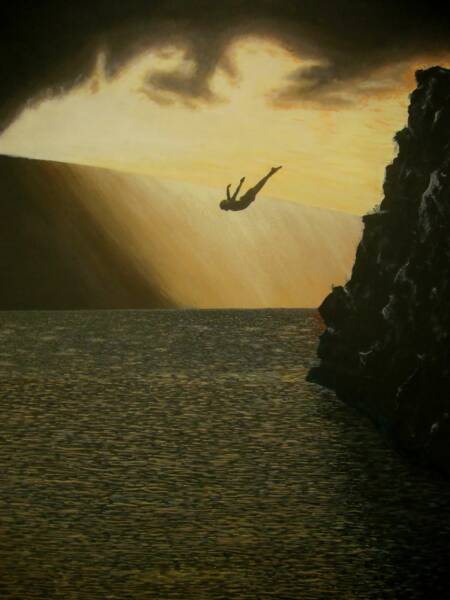
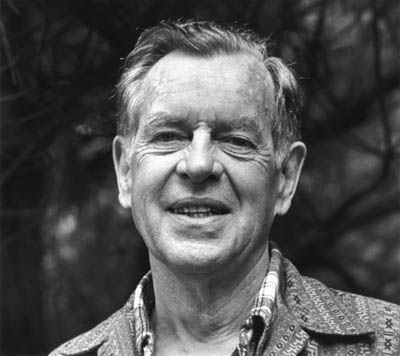
The hero’s journey is a story common to all human cultures. While this story varies from from place to place and era to era, there are deep structural similarities among its forms. So common were these basic structural elements that comparative mythologist Joseph Campbell called the hero story a “monomyth.”
The story has a structure that we recognize in Bible stories and big-screen films alike: a hero departs the comforts of the known world on a quest. She endures physical and emotional trials, gains wisdom, and returns home to impart lessons learned on the journey.
Joseph Campbell
Campbell’s eagerness (following Jung’s) to reduce all stories to basic structures makes me a little uneasy. (Can we really blueprint all human art forms?) But in the case of the hero story, I think he was on to something. The power of the journey story does appear to have almost universal expression and a common lesson also: that we gain knowledge by our encounter with the unknown and its perils.
That doesn’t mean, however, that the monomyth is monolithic. I see two important variants: some heroes gain knowledge in their quest that adds to things they already know (e.g. Moses and Jesus). Others discard their possessions and beliefs in order to find the truth (e.g. Plato’s prisoner of the cave, Siddhārtha Gautama, and St Francis of Assisi).
Since the late 1700s, the latter variant of the hero monomyth — that one must escape civilization in order to find oneself — has gained a strong foothold in the West. Although the idea that civilization corrupts is an old one, it has blossomed with the writings of Jean-Jacques Rousseau, Ralph Waldo Emerson, and others.
In its most extreme form, the escape-civilization-to-find-enlightenment myth suggests that the traveler or explorer gains wisdom only when civilization is burned away by extreme experience. As climber Robert Dunn put it in 1907: explorers were “men with the masks of civilization torn off.”
Or as climber David Breashears expressed it a century later:
The idea is that all the artifice that we carry with us in life, the persona that we project—all that’s stripped away at altitude. Thin air, hypoxia—people are tremendously sleep-deprived on Everest, they’re incredibly exhausted, and they’re hungry and dehydrated. They are in a very altered state. And then at a moment of great vulnerability a storm hits. At that moment you become the person you are. You are no longer capable of mustering all this artifice. The way I characterize it, you either offer help or you cry for help.
But if the journey does its wisdom-building work by tearing off the mask of civilization, by stripping away artifice, we are left with this question:
What’s underneath the mask?
Dunn and Breashears imply that the true self is revealed: the intense experiences of the journey shear the subject of culture and its trappings. This is a comforting idea at first glance because it presumes that
1) you can find yourself by setting out on an exceptionally difficult adventure.
2) your problems are the result of your culture rather than your essential nature.
John Locke
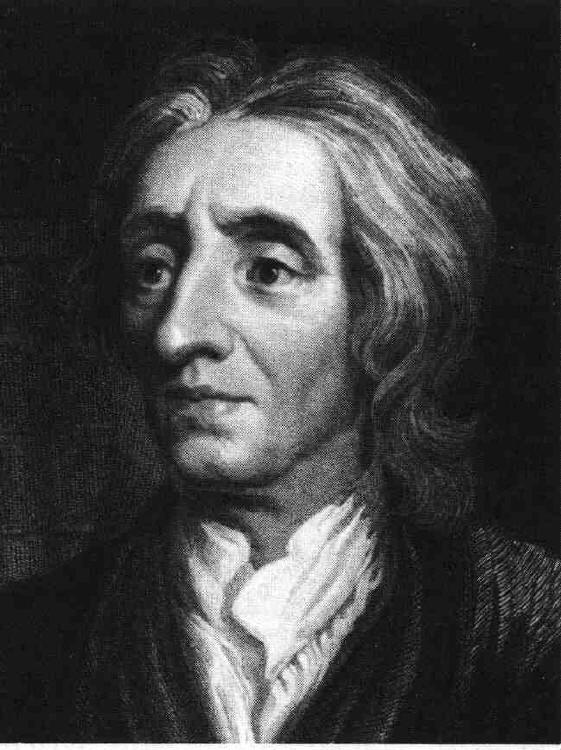
This reminds me a lot of John Locke who also believed that you could neatly separate the original self from one imprinted by civilization. In An Essay Concerning Human Understanding (1690), Locke argued that human beings begin their journey tabula rasa — as blank slates — waiting to be shaped by experience. The Lockian newborn was a human TiVo pulled from its styrofoam packing, waiting to be filled by sounds and images that would give it its special identity.
I doubt that Dunn or Breashears believe the journey can return the explorer to the perfect self of the infant. I expect they see the perilous journey as a way of re-booting the TiVo rather than wiping it clean, clear out old programming to make space for new material.
The Cult of New Experience
The important point here is this: those who think of the self as something that can be purged of culture, like a psychological master cleanse, tend to weight the power of new experience over the power of reason or ideas, to prefer the bungee jump over the writer’s retreat. In their view, traditional ideas impede our understanding rather than advance it. To access the new, we need to leave our old selves — like a pair of flip-flops — at the door.
Perhaps this obsession with the power of experience explains why so many travelers and explorer seem concerned with having “authentic” experience rather than ones they see as packaged, hybrid, or touristy. In the traveler’s search for the truly different, she must avoid experiences that carry the whiff of world left behind. She avoids the McDonalds in Karachi. She turns down the tour bus to the pyramids. She resists the urge to text-message home from the summit of Everest.
But is our faith in the uber-experience wise? Can we peel away our culture like the rind off an orange? Closer inspection shows how much culture enters the flesh, shapes us, makes us. Humans have an innate form, of course, but its a form that cannot function without an environment. So speaking about one without the other is like asking “Which do plants need more: water or light?”
Before we make pure experience the holy grail of the self-knowledge, then, we need to pay closer attention to the way humans think about these experiences.
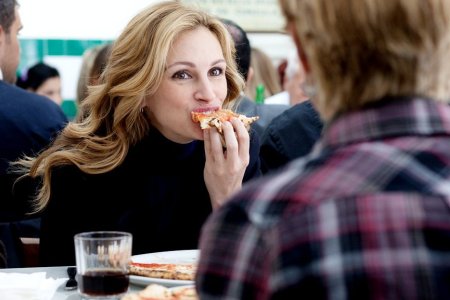
First, authentic is a rather squishy concept. Cultures routinely borrow and import what they need from other cultures. For example, in Eat Pray Love, Elizabeth Gilbert discovers herself in part through her ecstatic encounter with Italy. Italy’s authenticity is expressed through its foods: it is a place of fried zucchini blossoms and sizzling Margarita pizza. Yet the core ingredients of these foods — zucchini and tomatoes — are foreign to Italy. They are both New World species, brought back to Europe and incorporated into Italian cooking in the 19th century. What is authentically Italian experience for Gilbert was, two centuries earlier, suspiciously foreign and non-Italian.
Julia Roberts as Elizabeth Gilbert in Eat, Pray, Love (2010)
Second, experience itself is never pure, never unmediated (as I wrote about in my recent post about Moscow). Even those experiences which seen so expressly sensory — the joy of food, sex, art — feel different according to our beliefs about them. In his book, How Pleasure Works: The New Science of Why We Like What We Like, Paul Bloom explodes the myth of pure experience:
What matters most is not the world as it appears according to our senses. Rather, the enjoyment we get from something derives from what we think that thing is. This is true of intellectual pleasures, such as the appreciation of paintings and stories, and also for pleasures that seem simpler, such as the satisfaction of hunger and lust. For a painting, it matters who the artist was; for a story whether it is truth or fiction; for a steak we care about what sort of animal it came from; for sex, we care about who we think our sexual partner really is [xii]
Can we apply Bloom’s analysis of pleasure to the explorer’s experience of pain? Does the ascent up Everest gain meaning because of the pure experience of frostbite and hypoxia? Or does it matter more that the climber is enduring such pain on the slopes of the world’s tallest mountain? The mask of civilization is not something that the climber rips away. It’s the reason the climber is there in the first place.
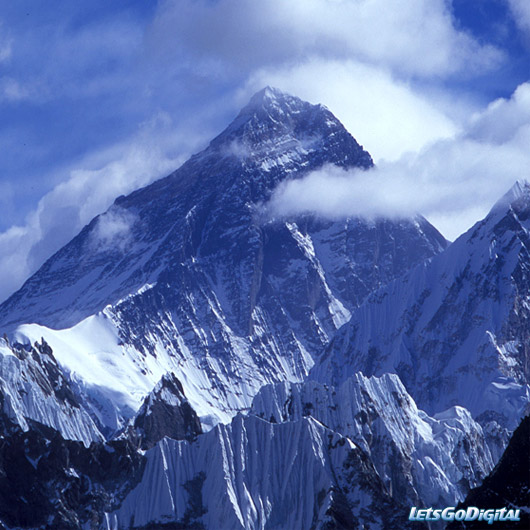
Mt Everest
Autumn
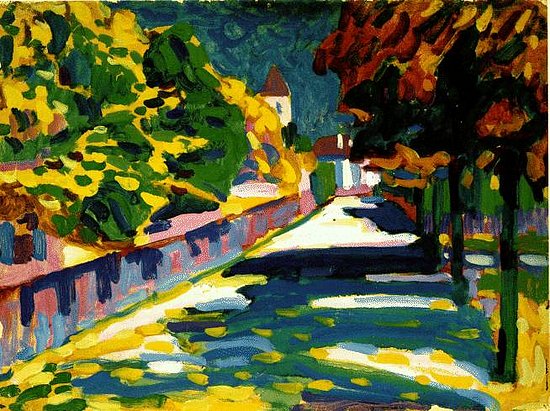
Autumn in Bavaria, Wassily Kandinsky, 1908
Poets coo about autumn as a gentle season, a time of harvests and golden light. It is Dickinson’s cool orchard where “the berry’s cheeks are plumper” and Keats’ quiet time scattered with grain “drows’d with the fume of poppies.”
But berries and poppies have no place in my autumn, which announces itself to summer like an air-raid siren. Deadlines have arrived for two articles (on Mars and the historiography of exploration). Copy edits for a third are overdue. My book project, drows’d with the fumes of neglect, crawls into a corner to die. Students flutter and spin towards my office like falling leaves. Classes begin in three days.
Wonderful, wonderful posts wait to be written, to be plucked from the golden orchards of science and exploration. They hang unripe, waiting for more fertilizer, or maybe more pesticide.
So no deep thoughts today, just some links that I’ve found:
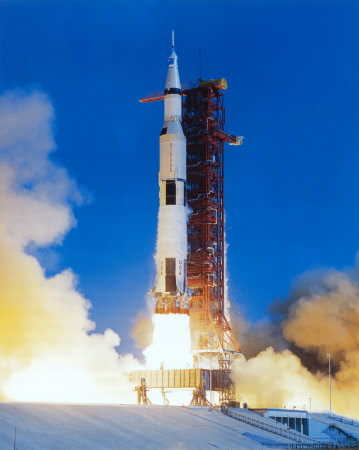
Apollo 11 Launch, 1969. http://launiusr.wordpress.com/
Roger Launius’s Blog. Launius is a sharp historian who focuses on the history of space exploration. I’m currently reading his book Robots in Space and was excited to see that he has entered the blogosphere. If you want my recommendation of things to read on his site, check out his piece on the popularity of the Apollo Program.
Jaipreet Virdi http://jaivirdi.wordpress.com/
From the Hands of Quacks. Jaipreet Virdi’s history of science blog covers a number of topics, from history of medicine to the challenges of being a grad student. It’s got a nice list of links too.
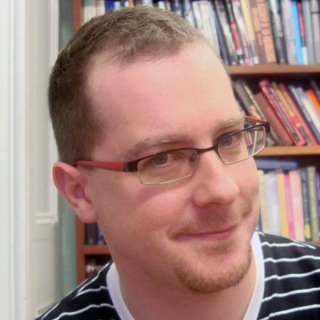
Jesse Bering http://www.scientificamerican.com
Bering in Mind I can’t think of a way of connecting Bering’s research psychology blog to exploration, so I won’t try. I like his pithy writing style and spin on contemporary issues from a variety of perspectives including evolutionary biology. His latest post on polyamory is also well-done in pointing out the widespread use of the naturalistic fallacy in defending human sex behaviors.
 Cosmic Variance. A group blog on physics and astrophysics that is hosted by Discover magazine. The posts often give a lot more depth and perspective on astronomical discoveries than regular media outlets provide.
Ok, done. May your autumn be filled with berries and poppies – or poppy derivatives – as your needs dictate.
Radio, Audience, and Exploration
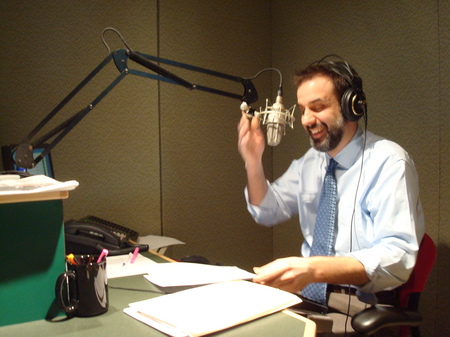
John Dankosky, host of Where We Live, WNPR 90.5
Writing is lonely work. But it is not always solitary. Despite the isolation that I sometimes feel pounding out text on my laptop, I work in the presence of an audience, or rather, a perceived audience. The perceived audience is a tough crowd usually, tougher than the real one. It is with me as I write this — sitting at the oak table at the Eastham Public Library– watching me.
My perceived audience is made up of three groups: academics who work on the same subject as me (I know their names and see their faces), academics who work in the same or overlapping disciplines (hazier) and everybody else: non-specialists who are interested in the Arctic, or exploration, or who typed in the wrong search term on Google.
In graduate school, I paid attention to the first two groups. In particular, I tried to interpret the reactions of the specialists. Nothing that I wrote, at that point, seemed likely to find its way into the hands of lay readers, so I didn’t trouble myself with them.
Mapping out a graduate essay was like planning a war game: anticipating threats and finding tactical responses. I became adept at different weapon systems. My arsenal included the obscure, the arcane, and the highly theoretical.
Planning papers in graduate school.
This has changed over the last decade as I have started writing and lecturing for a broader audience. The lay audience that once sat at the back of the room has edged closer to the front. This is not simply because they make up a larger percentage of my readership.
It is because they ask the best questions.
For example, last week I was a guest on WNPR’s Where We Live show about exploration. No one who produced or called in to the show was a specialist or an academic. Nor was the host, John Dankosky, an exploration expert (although he’s a whip-smart journalist).
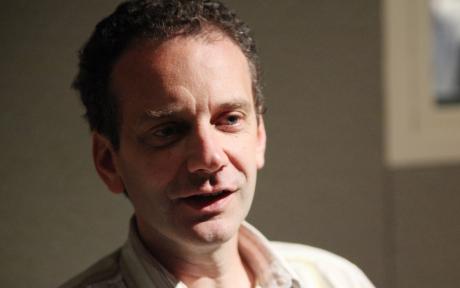
In the studio
Yet the questions were tough and incisive. “At the beginning of the 21st century, what’s left to explore?” “Do Americans have a special relationship with exploration?”
Dankosky raised one of the best questions after the show was over. “Why do politicians defend human space flight as a jobs program for engineers and astronauts? Aren’t these the windfalls of discovery rather than the heart? Would we defend money given to artists through National Endowments for the Arts as a great way to employ artists?
A very good question.
You can listen to the full show here.
Field Notes: Moscow
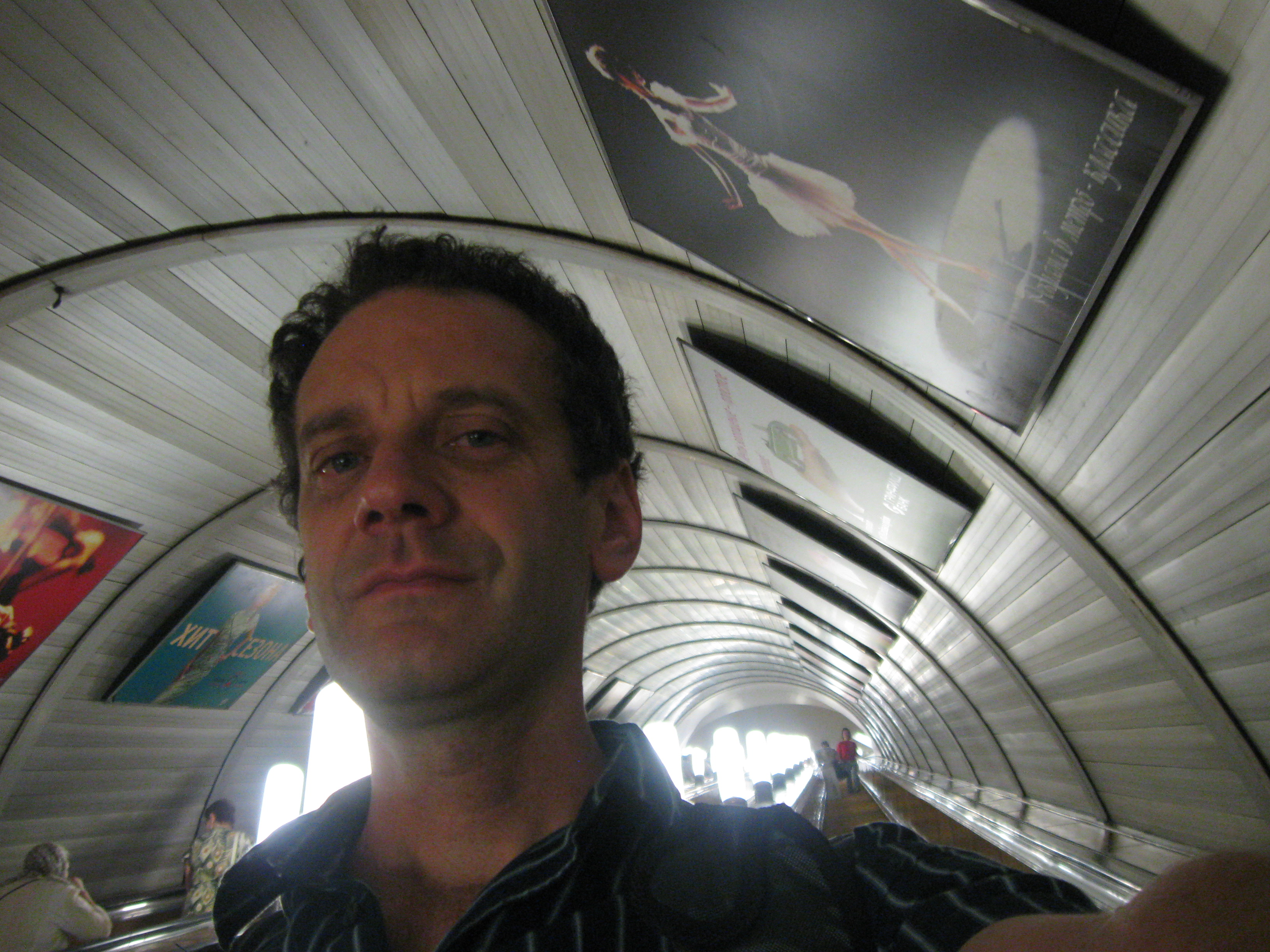
In the Moscow Metro
As someone who studies travel, and loves to travel, it still makes me feel self-conscious at times to BE a traveler. This is because the experience of travel rarely feels purely experiential to me: sensations of places, people, and things are always mediated by ideas of travel, by my awareness of the histories of exploration, contact, and encounter. In short, I rarely seem to find the “raw feed” of the travel experience. When it arrives, there is always a news ticker scrolling somewhere at the bottom of the screen.
I imagine that psychologists go through something like this when talking to their therapists. Does the shrink-on-the-couch recall her experiences as pure sensory feed, a chronicle of acts and feelings that follow in easy succession? I doubt it. She must be analyzing these acts as she recalls them, “shrinking” her own actions as she relates them to her therapist.
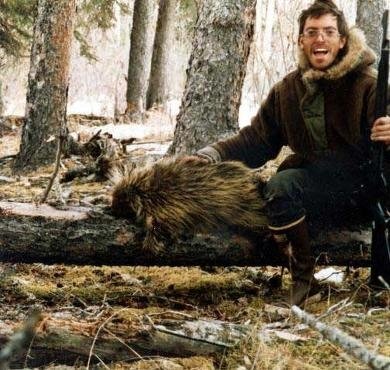
Chris McCandless
This is not unique. One does not have to be a historian of exploration or therapist to weave third-person narratives out of one’s first-person encounters. Chris McCandless, idealistic explorer of Jon Krakauer’s book Into the Wild, writes a journal about his travels as if they were happening to someone else, an else that McCandless even gives a name “Alex Supertramp.”
In this conscious creation of an alternate self, McCandless is tipping his hand: travel is not really the subject of his drama; it is merely the stage for self-discovery, a platform upon which he (Chris/Alex) acts the part of heroic protagonist and omniscient narrator. Not all travelers are so dramatically inclined, but it does lead us to a broader question: can we ever experience the journey as raw feed of new experience? Is it ever possible to turn the news ticker off really?
And if travel experiences are unavoidably hybrid and impure, jumbled together with ideas about places and our ideas about ourselves, why do they still manage to affect us so deeply? These were the questions that took hold of me in Moscow as I prepared for my journey to Naryan-Mar, a small Arctic city near the Barents Sea in a region known as the Nenets Autonomous Okrug (NAO). I was heading there for the Arctic Perspectives XXI Conference, an international, interdisciplinary gathering of scholars talking about about circumpolar issues in the far north.
By any literary measure, my 48 hours in Moscow were uneventful. I did not get arrested. I wasn’t poisoned or ransomed. I did not suffer from a temporary bout of amnesia. Nor did Moscow resemble the exotic communist fantasy of the Western imagination. The Moscow of 2010 is not Stalin’s Moscow or Gorbachev’s or even Yeltsin’s. It is a modern European capital ablaze with neon, populated by chic clubs and fast food restaurants.
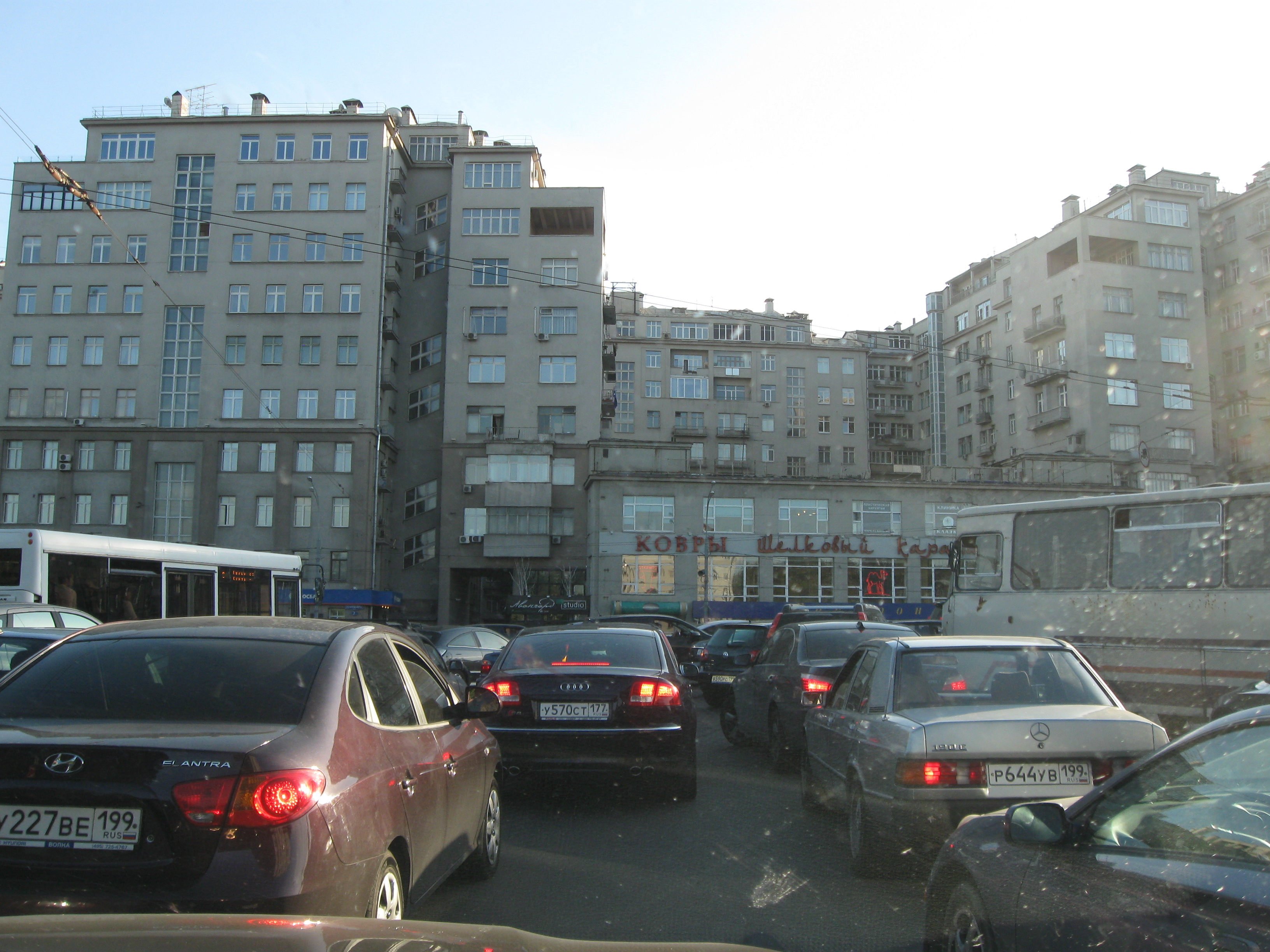
House of the Embankment (Dom Naberezhnoy) during rush hour
And yet I found it amazingly, frighteningly, marvelously other. It was most dramatically other in language. I do not speak more than 50 words of Russian and can only slowly decipher Cyrillic script. But the experience of foreignness went deeper, attaching itself to little things rather than big ones. Circular outlets. Underground crosswalks. Conventions of dress. Codes of conduct in the metro. On the train. In the airport. In the cafe. These are the quotidian marvels that every traveler experiences, the state of being a stranger in a strange land.

Outlet in my hostel room
Yet however small, they are pervasive and all-encompassing. At one level, the traveler sees Moscow as the Muscovite sees it: a landscape of imperial edifices and perpetual motion. Yet for me, it was a landscape of little differences, some of them comprehensible, others not. Yet more affecting was the sense that these surface differences – in language, brand names, architectural style – were the thinnest film over a great well of difference lurking beyond the visible. Who do Russians watch at 11:30pm while Americans are watching the Late Show? When do they file their taxes? What are the Russian equivalents of the televangelist, the road trip, the visit to Burning Man? And if there are no equivalents, what are the Russian customs which defy cultural translation? What are the rhymes that parents sing to their children at night?
How can any traveler fathom the depths of such difference? How many years in Moscow would be required to apprehend it from the inside? And in this feeling of profound otherness, I suspect there is an answer – a partial answer at least – to the question of why we travel even as we are constantly trying to analyze and box what we experience. We adopt these analytical modes — seeing oneself as a character, comparing experiences with other events, recalling background literature — because the experience of difference would otherwise overwhelm us. They give some order – a shabby, imperfect order – to the flood of unfamiliar sights and sounds.
Even those of us who enjoy the vertigo of travel – this feeling of incomprehensible otherness – still need this crutch I think, a way of organizing what we see so we are capable of functioning. And perhaps it is more than just a crutch too. Because in rendering it in familiar terms, the travel experience becomes integrated into the world back home, a part of us despite its unfathomable nature.
Next post: Field Notes: Naryan-Mar
The Secluded Parts of the Soul
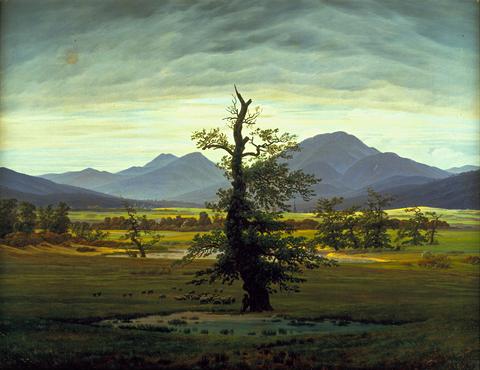
Solitary Tree, Caspar David Friedrich, 1822
Tim Noakes has learned many things from his journeys, most of them personal rather than geographical. About humility, honesty, perseverance. Not all of the lessons have been easy. They “taught me a heightened degree of self-criticism and self-expectation.”
Surrounded by fellow travelers, Noakes noticed things about them too. He saw patterns of behavior similar to his own “a love of privacy, an overwhelming desire for solitude, and an inability to relax or talk in company.”
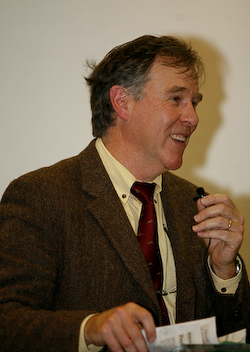
Tim Noakes
They shared “mental behaviors that include daydreaming, absentmindedness, procrastination and … the eternal quest to understand the riddles of life.”
“The point is reached when fatigue drives us back into ourselves,” Noakes writes “into those secluded parts of our souls that we discover only under times of such duress and from which we emerge with a clearer perspective of the people we truly are.”
These are interesting points, if ones commonly invoked in the literature of exploration and adventure. What makes Noakes’ points particularly interesting though is that he is not describing explorers or adventurers.
He is talking about runners.
“Runners have been shown to score higher on psychological scales that measure needs for thrill and adventure, and one study has suggested that running may be an important method for thrill and adventure seekers to acquire sufficient sensory input to keep their needs satisfied.”
As I read this in Noakes’ thousand-page book, The Lore of Running, I took notice. It not only spoke to my interests as a scholar, but profiled me precisely as a runner.
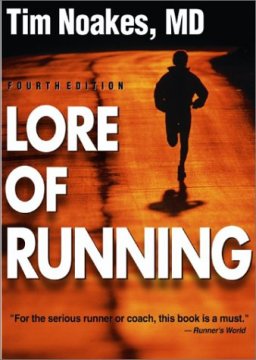
I’ve loved running since high school, when I abandoned swimming for cross country. I didn’t think much of the switch at the time. Swimming was boring. In the blue nothingness of the pool, I felt like I was exercising in space, struggling to feel something in a sensory deprivation tank.
Running cross country, by contrast, set me on fire. The world moved by so quickly, in a blur of forest, root, and field. And each race was a story, a chase up and down muddy paths. It hurt. It was exhausting. It filled me up.
After high school, I ran less. Or more accurately, I ran too much and, once hurt, stopped altogether. In college and during my years in Egypt, I gave into other pursuits, found other ways of reaching “the secluded parts of the soul.” And since then I’ve oscillated between lifestyles active and passive, running, resting, running again.
But over the last twelve months I’ve come back to the road with new resolve. I’ve been offering the same justifications for it that I always have: It’s good for me. It calms me down.
Yet reading Noakes makes me realize that there are deeper motives too.
Thrill-seeking and risk taking were once a big — perhaps the biggest — part of my life, but it’s a part that I’ve had to alter to fit with my other roles as husband, father, and professor. This is a common experience, I know. We are led to believe that perilous experience, both physical and emotional, is a young person’s game, that age induces caution as if it were encoded into our DNA, as biologically determined as a receding hairline.
But is it?
Does the hunger for transcendent experience really fade? Or is it that our lives become more complicated, forcing this desire to become something else? Do we lose it, or simply transmute it into something less volatile, something that will fit within the structures of the middle-adult life without blowing it apart?
The explorer risks death. He spends months or years away from home. But the scholar of exploration sleeps at home at night, works inside, gives himself over to the experience of hypoxia and frostbite without trips to the hospital.
So too the act of running creates a world of thrills with comparatively few risks. Most of the time my runs are routine, but every few weeks there are moments which are special, even transcendent.
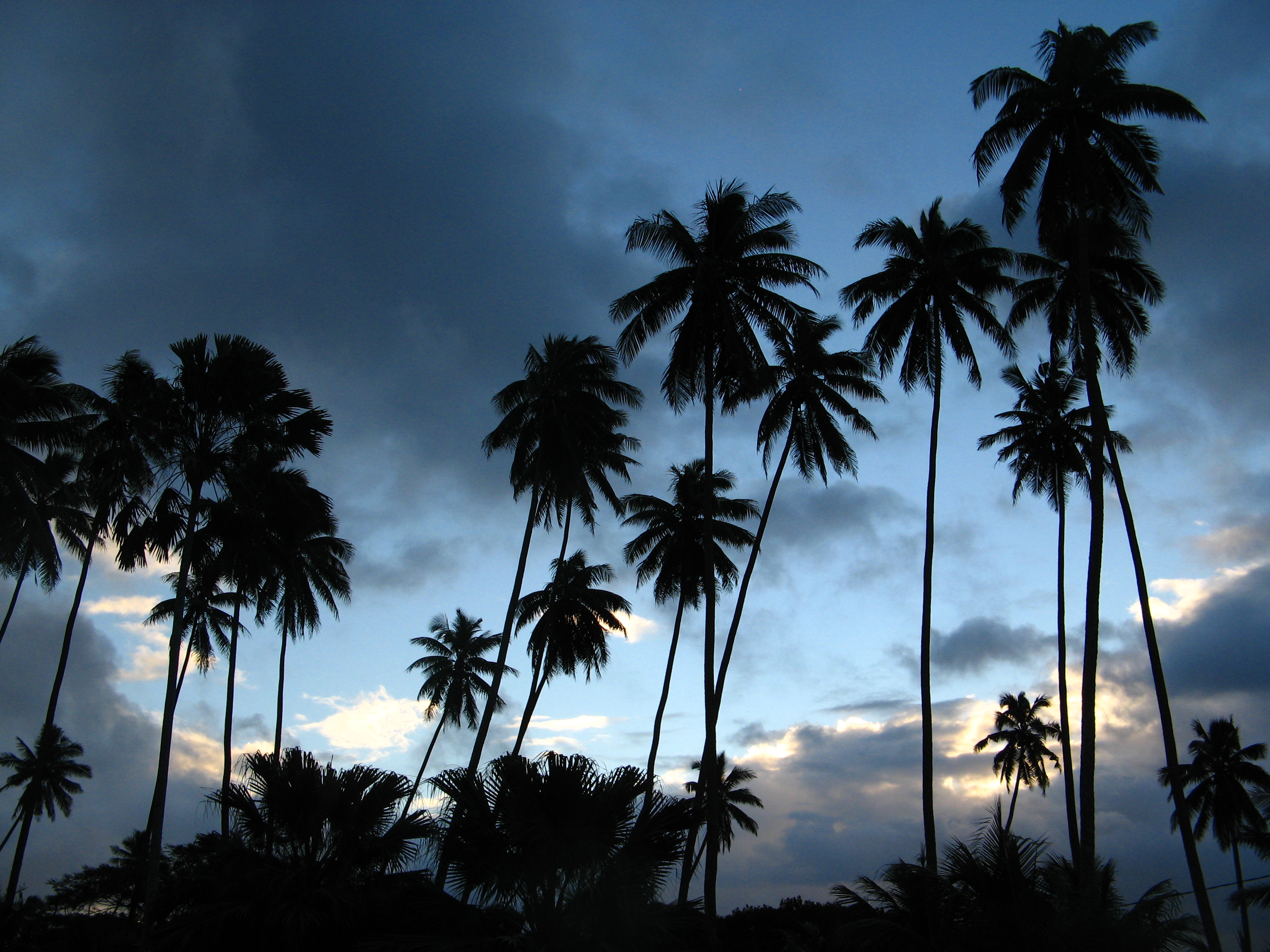
Last November, I went running in Phoenix at dawn. Mexican fan palms towered above me on each side of 9th Avenue. Even in the middle of the city, the mountains and sky seemed everywhere, the world so big and quiet that I felt, as Noakes would put it “driven back into myself” an experience of beauty and aloneness so profound I had to stop and give myself over to it. Maybe this was really the point, the true object of my perpetual motion. I thought about this for a minute. Then I kept running.


 Time to Eat the Dogs