Time to Eat the Dogs
A Podcast About Science, History, and ExplorationStorm Over Everest
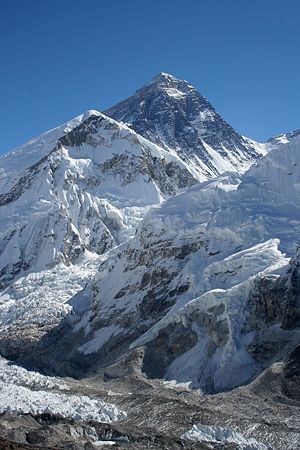
Tonight PBS’s Frontline will air Storm Over Everest David Breashears’ documentary about the tragic 1996 Everest expedition that left five climbers dead. It’s been a while since I read Into Thin Air by Jon Krackauer, but I seem to remember him portraying Breashears as a solid guy, willing to put his film on hold in order to help out the struggling climbers above him on the mountain. That being said, I had problems with Breshears’ IMAX film about the expedition which came out a few years later. It gave stunning footage of the climb, but one thing I didn’t like: the film tells the story of Breashears Ed Viesturs and two other climbers, but gives little mention of the many sherpa guides who were hauling supplies, IMAX cameras, etc to 28,000+ feet (their names flash by quickly in the credits at the end of the flim). Watching Breshears Viesturs climb near the summit, one gets the sense that he is on the mountain by himself (filmed by…God?). This reminded me a lot of the Arctic explorers I’ve written about in my book: though they depended upon the efforts of hundreds of guides, hunters, and sledge drivers, the photographs still usually wipe these away. We are left with an explorer, a mound, and a flag. Still, tonight’s documentary got a good write-up yesterday in the New York Times. For different perspectives on the subject, check out this post at the Adventurist.
Chasing the Moon
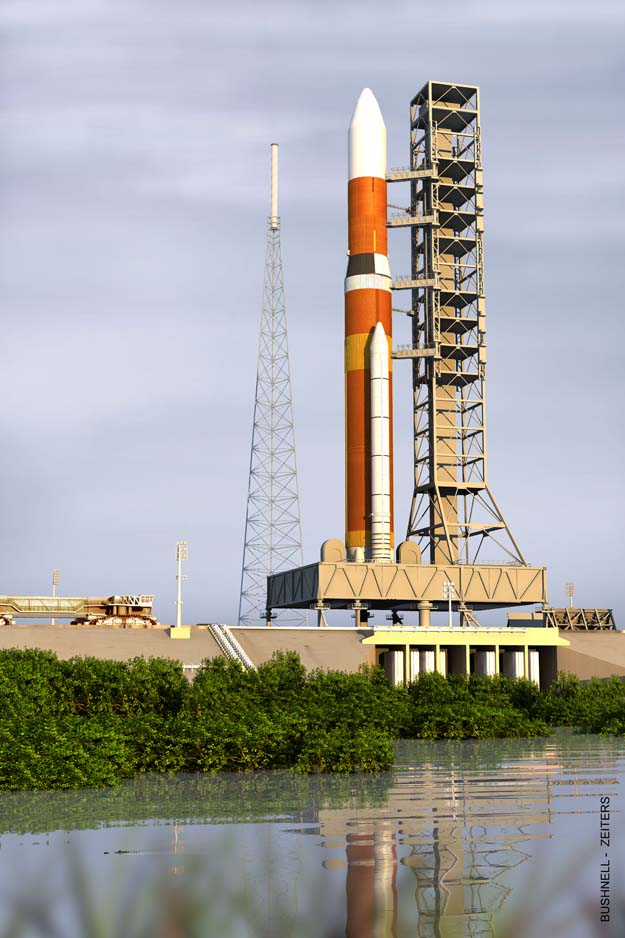
Time Magazine writes in a online special report about NASA’s current “Constellation Program,” a plan to send astronauts back to the Moon in preparation for a Mars mission in 2020. One of NASA’s first steps will be to launch the Lunar Reconnaissance Orbiter (LRO) in Fall 2008, a craft that will be able to make detailed, wide-ranging surveys of the lunar surface. I wonder how long it will take Google Moon to get hold of these surveys. I admit, the LRO piece of this mission seems very cool, but I still have serious doubts about the broader mission as I have written in an earlier post. The Time report doesn’t talk much about the utility of the mission, or its possible negative impact on space science, but it does talk about the daunting budgetary hurdles NASA faces for the next fifteen years:
It’s unlikely, then, that any future President will make manned lunar exploration a real priority. Which means inadequate funding for NASA and a tough bind for the agency’s administrator, Michael Griffin. “If the President says you’re going to the moon with this amount of money,” says [Astronaut Alan] Bean, now 76 and an artist in Houston, “you’d better say yes, because if you don’t you aren’t going to have a job anymore.” In effect, he says, the space agency must go through the motions of building hardware until the money runs out, knowing it won’t be enough to make it to the moon.
So here’s the question: when the funding does fall short on the Constellation Program at some point over the next decade, what’s Plan B? What will we plan to do with these jacked-up Ares rockets, Orion crew exploration vehicle, etc? And in the interim, how many science projects will be the “fat” that gets trimmed in order to put humans on Mars? Will the expense justify the money spent to send them there? Spirit and Opportunity seem to be doing a terrific job on Mars as we speak, and they don’t require food, water, back pay, or golf clubs.
Digital Archive: The U.S. Exploring Expedition
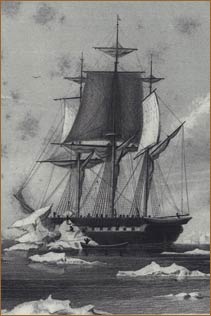
Which is the most significant expedition in U.S. history? I would put my money on the U.S. Exploring Expedition (1838-42). Today Lewis and Clark get most of the attention for their impressive trek to the Pacific in 1804. Yet they were not very well known in the 19th century and did not leave much of an impact on scientists or the general public. But the U.S. Ex Ex, as it came to be known, helped shape American exploration for the rest of the century. As America’s first international discovery expedition, it was a way to show the world that the United States had come of age as a civilized nation. Where the government had frowned upon all but the most practical goals in exploring the west, it proved more indulgent of scholarly objectives in exploring the world. It was not that the government placed greater significance on the geography outside its borders. Rather, it was that the wider world offered a more prestigious stage for explorers than the American West, a place where their actions would be more keenly noticed. Under such scrutiny, U.S. expeditions put on their best face, sailing with corps of “scientifics” to advance geographical knowledge, and in the process, to persuade other nations that the United States was more than a republic of untutored farmers. In short, pursuit of knowledge gave U.S. expeditions symbolic heft. It ushered the United States into an enlightenment tradition of imperial voyaging and – its organizers hoped – into the ranks of civilized nations. Back home, the collections of the US Ex Ex became the basis of the Smithsonian Institution when it opened under the direction of Joseph Henry. Read the rest of this entry »
Book Review: The Making of John Ledyard
Edward G. Gray, The Making of John Ledyard: Empire and Ambition in the Life of an Early American Travel (New Haven: Yale University Press, 2007)
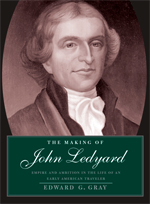
John Ledyard, America’s first man of the world, spent most of his time in motion: outrunning debtors, impressing patrons, exploring the unknown. It was a kinetic approach passed on to him by his father, who captained vessels in the West Indies trade in the mid-1700s. Young Ledyard would also take to the sea, serving as a sailor on commercial ships bound for Europe. Read the rest of this entry »
Popular vs Academic History


Dan Todman, British cultural historian, writes in Trench Fever that an increasing number of popular, poorly researched, histories have come out recently. Shoddy works not only dupe the public – but make it more difficult for serious researchers to get their work published. Read the rest of this entry »


 Time to Eat the Dogs
','210153main_constellation01_100x75.jpg','115104'))