Time to Eat the Dogs
A Podcast About Science, History, and ExplorationThe Last Flight of the Jules Verne
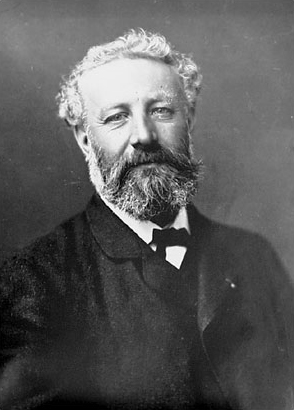
Jules Gabriel Verne
All hail Jules Verne, French author and fin-de-siecle politician, the father of science fiction, the creator of Twenty Thousand Leagues Under the Sea, Around the World in Eighty Days, and Journey to the Center of the Earth. And, as of yesterday, the inspiration for the first in a new class of space garbage transports developed by the European Space Agency, the Jules Verne ATV.
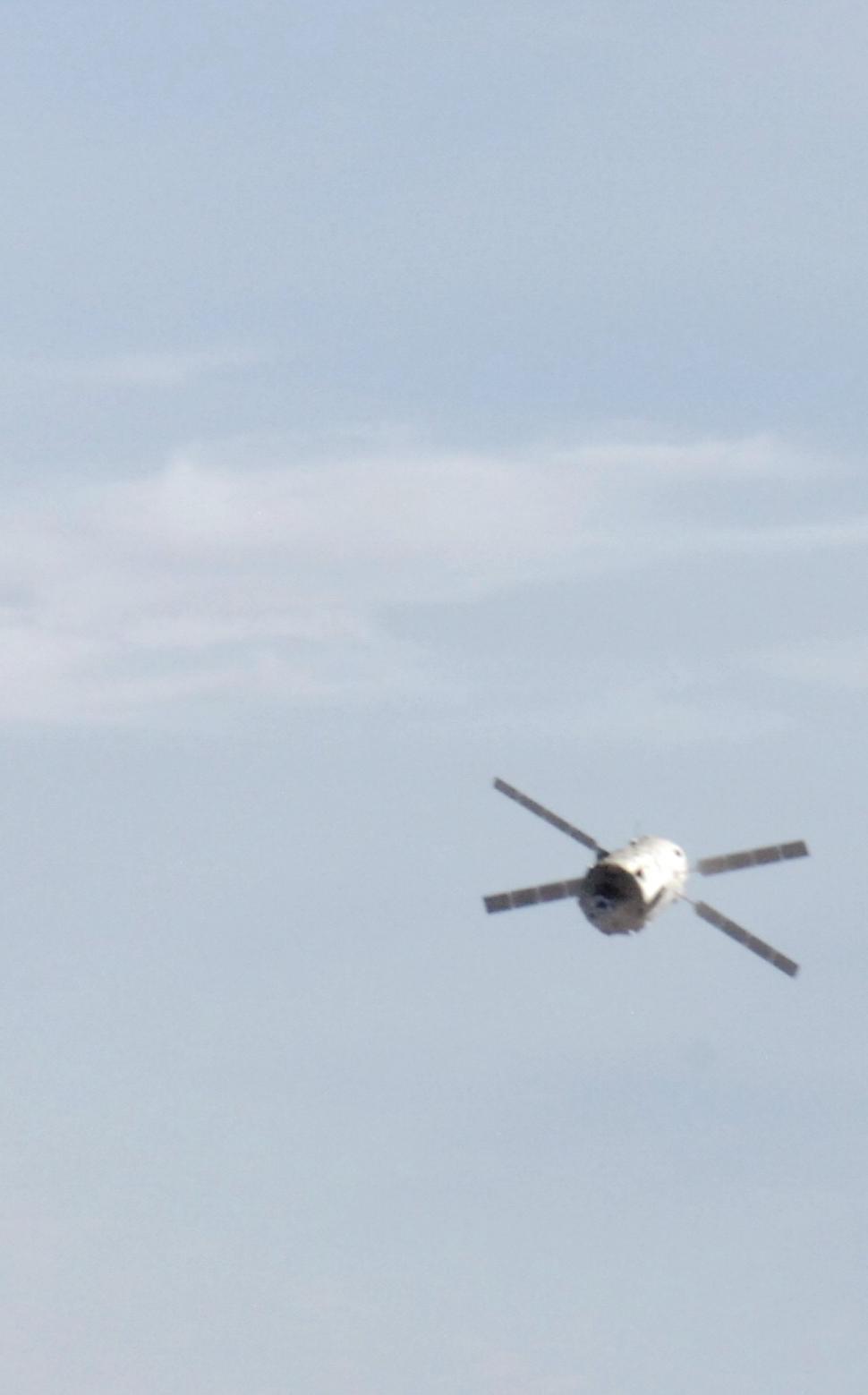
Jules Verne ATV. Courtesy of the European Space Agency (ESA)
The ATV stands for “Automated Transfer Vehicle,” not All-Terrain Vehicle which I think Verne would have preferred. For months, the Jules Verne has dutifully supplied the International Space Station (ISS) with water, oxygen, and cargo, and propellant. It has gently nuzzled the ISS into higher orbit. Then, last week, astronauts loaded it with 2.5 tons of trash and human waste and instructed the craft to immolate itself in the Earth’s atmosphere.
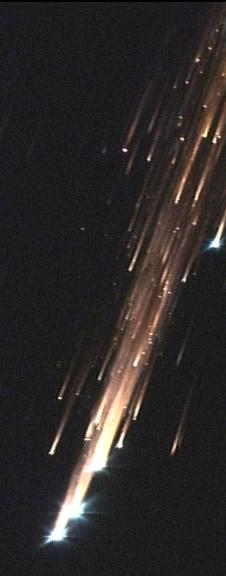
The Jules Verne, disgorging trash into the Earth's atmosphere
This part, at least, was as spectacular and luminous as a Vernian novel. As for choosing Verne’s name for the newest craft in expensive waste management, I don’t get it. Why not the Tony Soprano ATV ?
Oil Exploration
As I’ve said elsewhere, exploration is a term that is almost too malleable to be useful, a word that has can be almost anything you want it to be. This point was driven home as I watched this Chevron advertisement at the beginning of the PBS Newshour:

Chevron Ad: New Frontiers
Transcript:
We are explorers, humans are, endlessly curious, always looking for answers. Today there is a new frontier: the search for energy. Where is it? How do we find it? We’re trying to answer those questions in ways once unimaginable: cleaner ways, smarter ways, mapping uncharted territory five miles below the sea, long before a single mark is ever put in the ground so we drill more intelligently, more efficiently, more respectfully, finding energy in places thought impossible as people demand more energy we must look everywhere for it… to power the new explorers. This is the power of human energy.
The Chevron ad begins with images of iconic explorers, Admiral Richard Byrd and an Apollo astronaut, in regions well known to those of us living through the late 20th century, Antarctica and the Moon. These images are juxtaposed with an African man, perhaps Maasai, walking on the Sahel and a European or Euro-American man biking along the side of the road. The ad builds an argument of inclusiveness: explorers are not simply at the polar regions or out in space, they are us.
The ad now shifts its focus to speak about the search for energy, a “new frontier.” The shift is subtle. From speaking about this large, inclusive group of explorers, the ad now urges us to see exploration itself as a large, diverse project. That is, its not just about Antarctica and the Moon, but about places beneath the earth. There are no drills to be seen here. Indeed, the narrator tells us that Chevron is “mapping uncharted territory five miles below the sea, long before a single mark is ever put in the ground.” Guiding this narration is a montage of school children, jellyfish, and sea divers. There is a mother and child on a moped (petroleum helps get child to school, mom to work?). The ad ends with two students in a science class watching their teacher conducting a demonstration with bunsen burner (using natural gas?) as the narrator tells us that energy is required to “power the new explorers.”
No surprise that Chevron would put out an ad emphasizing how green its oil exploration has become. Chevron’s got a pretty spotty record, including an 18 billion dollar toxic wastewater dump in the Amazon rainforest by one of its acquired businesses, Texaco; poor control of toxic sites in Richmond, California which have lead to hundreds of accidents, along with 95 other Superfund sites tagged by the EPA as requiring clean-up.
This being said, Chevron seems to be trying to change the way it does business, increasing its funding of R&D in alternative energy sources. It’s own site claims that it has become the biggest supplier of geothermal energy in the world.
The ad is very forward-looking, but in emphasizing that we should think about resource extraction as a viable form of exploration, it harkens back to the 19th century where governments would routinely demand economic payoffs to “discovery expeditions” to unknown parts of the globe. Most of these economic arguments for exploration were shelved around the turn of the century for more symbolic, nationalistic goals, a practice which continued through the Soviet-NASA space race in the late 20th century.
So perhaps the Chevron ad signals that we are coming back full circle, moving into a new phase of exploration which is based upon multi-national commercial goals rather than unsustainable national competitions. Or perhaps its just a good way to sell more oil.
Saturday’s Big Stories
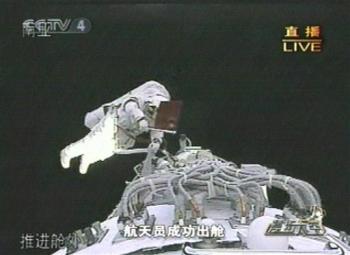
In the news for Friday and Saturday:
Chinese astronaut Zhai Zhigang opened the hatch of his Shenzhou 7 and took a brief stroll in orbit Saturday. This makes China only the third country in the world, after the United States and Russia, to have completed a space walk. More to the point, it demonstrates that China is ramping up for some of the heavy lifting required of long-term space projects (e.g. space stations and moon missions) which would require people moving outside of spacecraft for construction and repair projects.
Why are such journeys outside of spacecraft called “space walks”? It’s an interesting choice of words since there is no real walking as far as I can see. “Space crawl,” “space climb” and “space float” would all be more accurate if less pithy. We must scout out the etymology of the term. It strikes me that NASA and cold-war space enthusiasts would like “walking” because it is far more active, self-directed and dignified verb than floating and crawling. Another question, what are the Russian and Chinese terms for these ex-craft jaunts?
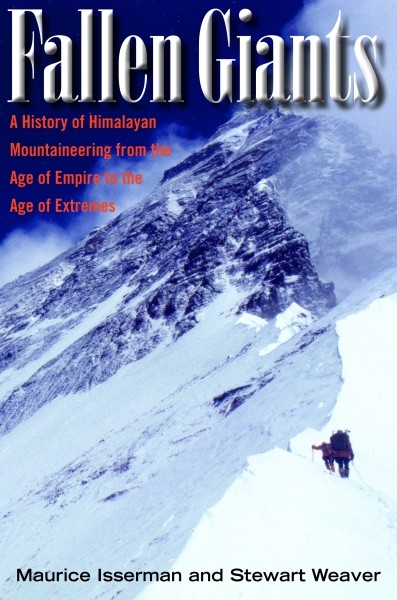
The New York Times Book Review features Bruce Barcott’s write up of Maurice Isserman and Stewart Weaver’s new book Fallen Giants: A History of Himalayan Mountaineering from the Age of Empire to the Age of Extremes. I’m only a couple chapters in, but Fallen Giants promises a comprehensive, socio-cultural look at high-altitude mountaineering in the last 150 years. Despite the vast heap of books written on the history of mountaineering, this type of project is sorely needed.
Deep Sea News has now made the move to Discovery Blogs.
In other news:
There was a presidential debate.
The world economy is in free-fall.
The Coldest Crucible: Web Simulcast

I’m at the University of Delaware this week to give some lectures related to my book, The Coldest Crucible. My Wednesday night talk will be simulcast on the web (and on Second Life, a world I have never visited). The lecture starts at 7:30 EST and goes for about an hour. I think the webcast will be archived if you have something more pressing to attend to at 7:30 like open heart surgery. For everyone else, I expect to see you there. Wish me luck!
Katherine Pandora on “Science in the Everyday World”
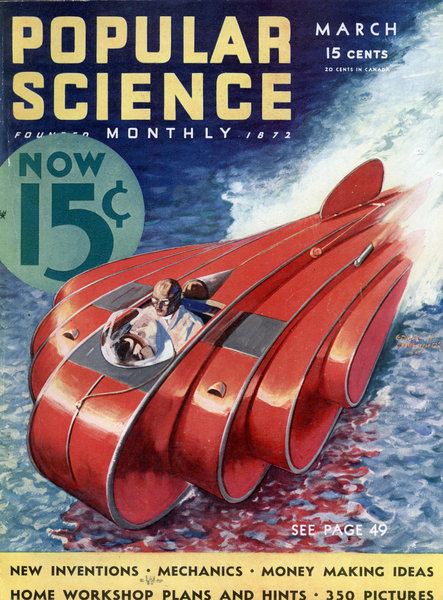
A little while ago, the journal Isis came out with a series of articles exploring the intersection between science and the history of science. Katherine Pandora and Karen Rader’s article “Science in the Everyday World” generated quite a bit of discussion in the science/history of science blogosphere. Pandora has written an account of the goals of this paper and responds to some of the comments made here and elsewhere.
Check it out: Petri Dish


 Time to Eat the Dogs