Time to Eat the Dogs
A Podcast About Science, History, and ExplorationEpisode 12: Chasing Exoplanets
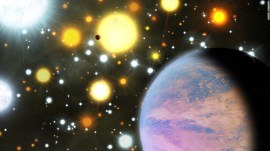
One of the things you hear about space exploration is that if humans aren’t involved — that is, being hurled into orbit– no one’s going to pay much attention. Robots are one thing, astronauts are another. There may be some truth to this. But I think exoplanets — planets that orbit stars outside our own solar system– are soon going to prove this maxim wrong. No one is traveling to extra-solar planets any time soon, (especially Kepler-10b, a planet so close to its sun that its surface is a glurping ocean of molten lava) but they are the coolest thing coming out space science these days – an ever expanding menagerie of the spherically weird and wonderful. Scientists have identified almost 4000 exoplanets so far and — with powerful new telescopes about to come on line — they’re just getting started.
Today I speak with exoplanet scientist Hannah Wakeford, Giaconni Fellow at the Space Telescope Science Institute. Wakeford has also served as a NASA Postdoctoral Research Fellow at NASA’s Goddard Space Flight Center and as a Research Fellow at the University of Exeter. She is also a host of the podcast, Exocast, along with co-hosts (and exoplanet scientists) Hugh Osborn and Andrew Rushby.
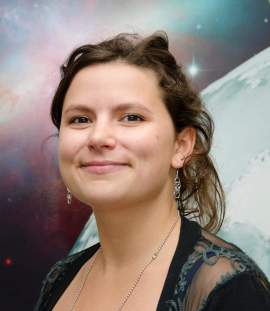
Hannah Wakeford
Episode 11: Monsters on the Map
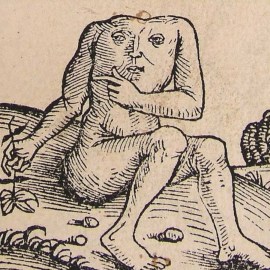
“Blemmyae,” from Liber chronicarum (Die Schedelsche Weltchronik, Das Buch der Croniken und Geschichten von Hartmann Schedel), woodcut, 1493
Cannibals, headless men, and giants were common figures on Medieval and Renaissance maps. Historian Surekha Davies tells us why we need to take these figures seriously. Davies is the author of Renaissance Ethnography and the Invention of the Human: New Worlds, Maps and Monsters (Cambridge University Press, 2016) winner of the 2016 Morris D. Forkosch Prize (Journal of the History of Ideas) and the 2017 Roland H. Bainton Book Prize (Sixteenth Century Society and Conference).
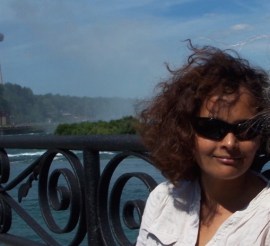
Surekha Davies
Read about Surekha Davies’ work on her website
Episode 10: The Amazing Phytotron
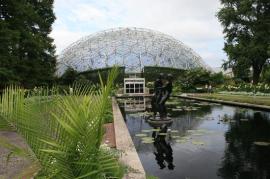
Climatron, Missouri Botanical Garden
“Phytotron” is such a great name for something that is, when you look at it, a high-tech greenhouse. But don’t sell it short! The phytotron was not only at the center of post-war plant science, but also connected to the Cold War, commercial agriculture, and long-duration space flight.
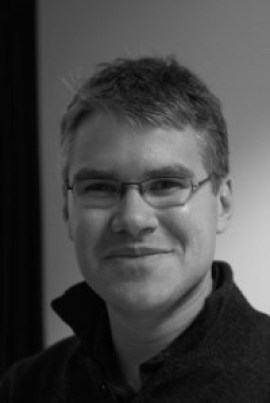
Today I speak with David Munns, professor of history at John Jay College, about his new book, Engineering the Environment: Phytotrons and the Quest for Climate Control in the Cold War, but we also talk about Matt Damon, shitting in space, and growing pot in your dorm room.
Check out David Munns’ website on The World of Trons.
Episode 9: The History of UFOs
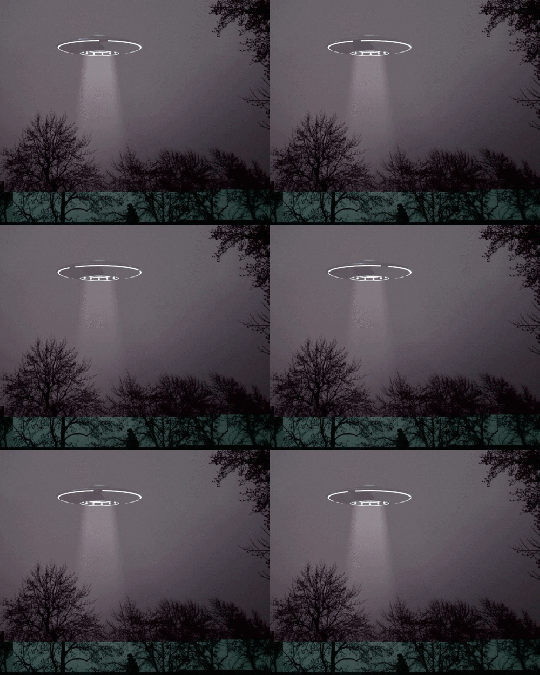
Who knew that Harry Reid was so concerned about UFOs? As reported in Politico this week, he secured twenty million dollars in appropriations for the Advanced Aviation Threat Identification Program (AATIP) in 2009. The program conducted pilot interviews and gathered flight recordings until 2011.
So here’s the question: why was the AATIP kept secret? National security? Or perhaps national embarrassment? Whatever one thinks about UFOs — are they natural phenomena, military aircraft, mass hysteria, or alien visitors? — we can agree that they are freighted with a lot of meaning. Everyone has an opinion.
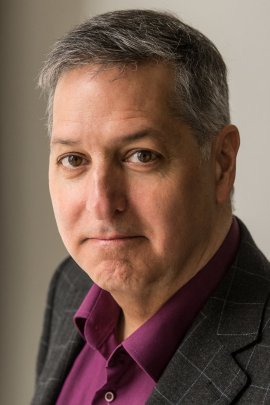
Greg Eghigian
How did this come to be? In 1946, Swedish and Finnish observers reported “ghost rockets” flying over Scandinavia. In the United States, they became known as “flying saucers.” This is the starting point for historian Greg Eghigian who discusses the science and culture of UFOs in the twentieth century. Eghigian is professor of history at Penn State University. He also holds the Charles A. Lindbergh Chair in Aerospace History at the Smithsonian Air and Space Museum.
Read Eghigian’s essay, When Did Alien Sightings Turn into Alien Abductions?
Episode 8: Can You See the Ice?
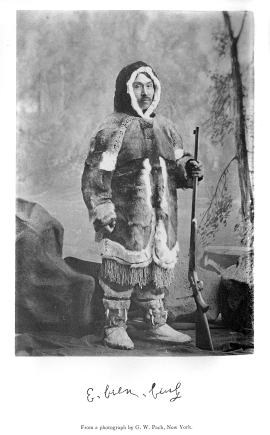
Ipiirvik of Cumberland Sound
In the 1800s, explorers and whalers returned home from the Arctic described a cold, desolate world, one that could swallow up expeditions without leaving a trace. But this did not describe the Arctic of the Inuit, who called this world their home.
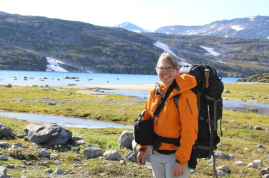
Karen Routledge
Today Karen Routledge tells the story of Baffin Island’s Inuit community as they came into contact with western whalers and explorers in the nineteenth century. Routledge is a historian for Parks Canada. She works and travels in the parks of Nunavut. Her new book, Can You See the Ice (University of Chicago Press, forthcoming), tells the story of the Inuit of Cumberland Sound. Even though the Inuit worked closely with outsiders, their views of the Arctic world, of the meaning of home, even time itself, remained far apart.


 Time to Eat the Dogs