Time to Eat the Dogs
A Podcast About Science, History, and ExplorationEpisodes 17 & 18: The First Americans on Everest, Parts I & II
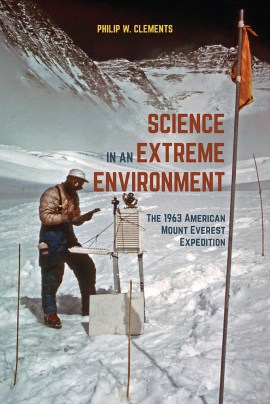
Historian of Science Phil Clements discusses the 1963 American Mount Everest Expedition. His book, Science in an Extreme Environment: The American Mount Everest Expedition, is now out with University of Pittsburgh Press.
Part I, originally posted in November 2017, focuses on the goals and events of the expedition. Part II offers new material from the interview in which Clements discusses the expedition party’s scientific findings and treatment of local Sherpas. It also discusses the expedition’s broader relevance to the study of environmental history and climate change.
Part I:
Part II
Episode 16: The Falcon Heavy
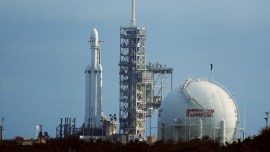
The Falcon Heavy on Launch Pad 39a, Kennedy Space Center
Today is launch day for a new space launch system – the Falcon Heavy – a rocket that may revolutionize spaceflight. If it flies, it will be the most powerful rocket in the world by a factor of two. It is also the first rocket of this size that will be reusable.
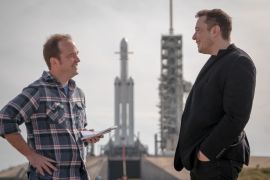
Eric Berger (left) with Elon Musk (right)
Eric Berger talks about the Falcon Heavy – how it works, where its going, and what it’s good for. Berger is the senior space editor for Ars Technica. In addition to his work as a space journalist, he writes about meteorology. For his reporting on Hurricane Ike, Berger was named as a finalist for the Pulitzer Prize 2009. His interview of Elon Musk – conducted this week at the Falcon Heavy launch site at the Kennedy Space Center – is currently up on the Ars Technica website.
Episode 15: How We Got the Scientific Revolution Wrong
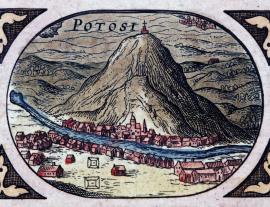
Potosí from a 17th century atlas engraving
In the late 1500s, the mines of Potosí –a mountain in southern Bolivia — produced 60% of the world’s silver. It was a place of great wealth and terrible suffering. It is also a place, Jorge Canizares-Esguerra argues, that challenges the very idea of the Scientific Revolution.
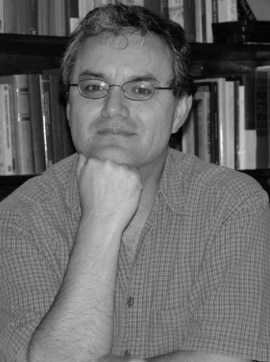
Jorge Canizares-Esguerra
Canizares-Esguerra discusses Potosí and how its peoples and technologies shaped 16th century science. He is the Alice Drysdale Sheffield Professor of History at the University of Texas at Austin. His work has been honored by awards from the American Historical Association and the History of Science Society. His book How to Write the History of the New World was cited as one of the best books of the year by the Economist, Independent, and the Times Literary Supplement.
Episode 14: The Egyptologist
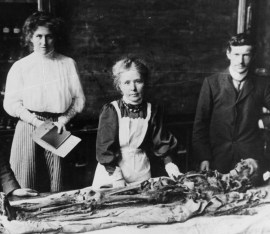
Margaret Murray unwraps an Egyptian mummy in 1908
After Napoleon occupied Egypt, Europeans became obsessed with the ancient cultures of the Nile. In Britain, the center of Egyptology research was University College London (UCL). At the heart of the UCL program was the Egyptologist, Margaret Alice Murray. During this golden age of Egyptian Archaeology, Murray was training students, running the department, and publishing dozens of books. So why haven’t we heard of her?
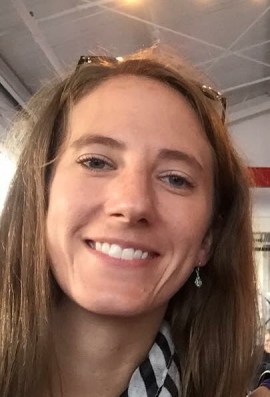
Kate Sheppard
Historian Kate Sheppard discusses the life and work of Murray. Sheppard is an associate professor of history at Missouri University of Science and Technology. She is the author of The Life of Margaret Alice Murray: A Woman’s Work in Archaeology.
Episode 13: In Search of Brightest Africa
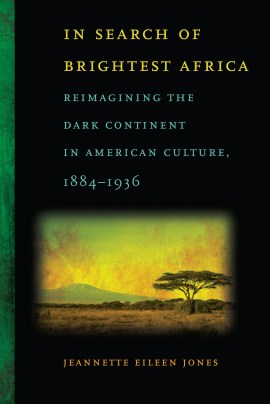
When President Trump talked of Africa as a continent of “shithole countries” where people lived in huts, he was drawing on a set of ideas made popular in the 19th century. “Darkest Africa” became a favorite trope of explorers like Henry Morton Stanley who promoted his books and lectures by pushing the idea of Africa as a dark place – a phrase that had all kinds of meanings – racial, intellectual, geographical.
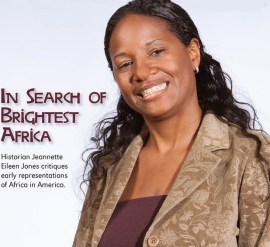
Today I speak with Jeannette Eileen Jones, author of In Search of Brightest Africa, Reimagining the Dark Continent in American Culture, 1884-1936. Jones talks about the many different groups, from naturalists and conservationists to African American artists and intellectuals, who begin to recast Africa in the America imagination in the early 20th century. Jones is associate professor of history and ethnic studies at University of Nebraska Lincoln.


 Time to Eat the Dogs