Time to Eat the Dogs
A Podcast About Science, History, and ExplorationEpisode 22: The History of Madagascar in Trade and Exploration
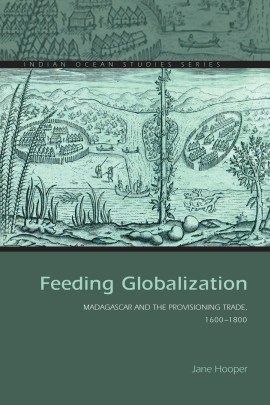
Madagascar lies so close to the African coast –and so near the predictable wind system of the Indian Ocean– that it’s easy to overlook the island, the fourth largest in the world, when talking about oceanic trade and exploration. But there is a lot to tell.
Jane Hooper talks about Madagascar and its importance to the history of Indian Ocean trade and exploration. Hooper is the author of Feeding Globalization: Madagascar and the Provisioning Trade, 1600-1800, recently published by Ohio University Press.
Episode 21: Lands of Lost Borders
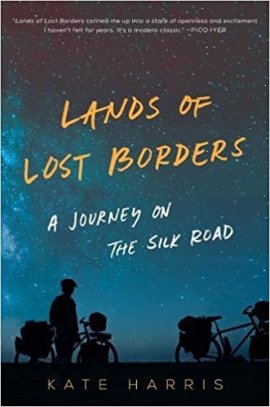
Kate Harris — writer, scientist, and extreme cyclist – talks about the trip she made with her friend Mel, tracing Marco Polo’s route across Central Asia and Tibet. The journey is the subject of Harris’s new book, Lands of Lost Borders: a Journey on the Silk Road

The Myth of the “Lost White Tribe”
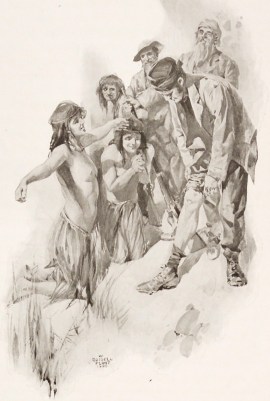
Illustration from H. Rider Haggard’s King Solomon’s Mines (1905)
Zocalo’s Public Square ran my essay this week about the global, largely hidden, history of white supremacy. It was picked up by the Boston Globe. Thanks to Andrea Pitzer for being a terrific editor.
Episode 20: The Ebola Outbreak of 2013

Why did Ebola, a virus so deadly that it killed or immobilized its victims within days, have time to become a full-blown epidemic? That’s what happened in 2013 in when the virus, already well-known to virologists and epidemiologists, broke out in West Africa, infecting twenty-eight thousand people and killing eleven thousand.
Stephan Bullard, associate professor of biology at the University of Hartford, discusses the 2013 outbreak which is the subject of his new book, A Day to Day Chronicle of the 2013-16 Ebola Outbreak, which will be released soon with Springer Press.

Stephan Bullard
Episode 19: Inventing the American Astronaut
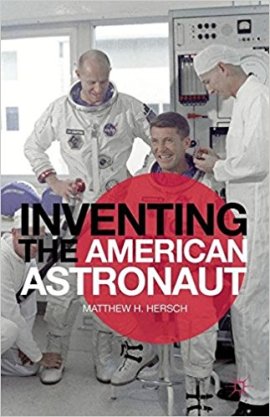
It seems logical that would NASA select military test pilots to be the first astronauts, right? They were used to risk. They were good with machines. They already explored extreme environments. But these skills were not unique to test pilots. There were also mountaineers, scuba divers, and explorers. They too were considered. So why did NASA choose test pilots?
Matthew Hersch, assistant professor of history at Harvard University and author of Inventing the American Astronaut, talks about this and other aspects of the astronaut program.

Matthew Hersch


 Time to Eat the Dogs