Time to Eat the Dogs
A Podcast About Science, History, and ExplorationEpisode 28: The Journeys of Eslanda Robeson
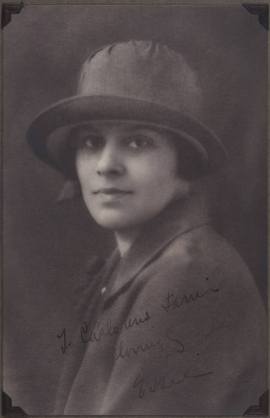
Eslanda Cardozo Goode Robeson
Annette Joseph-Gabriel talks about Eslanda Robeson — chemist, political activist, anthropologist, and traveler — and the significance of her journeys. Robeson’s 1946 trip through the Congo is featured in Joseph-Gabriel’s interactive website Digitizing Diaspora. Joseph-Gabriel is an assistant professor of French at the University of Michigan Ann Arbor. She is the managing editor of Palimpsest: A Journal on Women, Gender, and the Black International (SUNY Press), a regular contributor to the African American Intellectual History Society blog, and an active podcast host on the New Books Network.
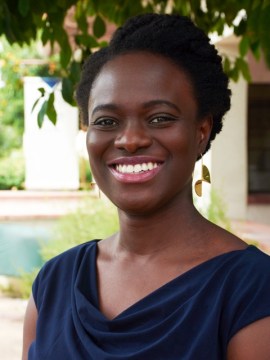
Annette Joseph-Gabriel
For more on Eslanda Robeson, read Barbara Ransby‘s biography Eslanda: The Large and Unconventional Life of Mrs. Paul Robeson
Selected works by Joseph-Gabriel include:
“‘Ce pays est un volcan’: Saint-Pierre and the Language of Loss in White Creole Women’s Narratives.”
“‘Tant de silence à briser’: Entretien avec Evelyne Trouillot.”
“Mobility and the Enunciation of Freedom in Urban Saint-Domingue.”
Episode 27: The Medieval Pilgrimage
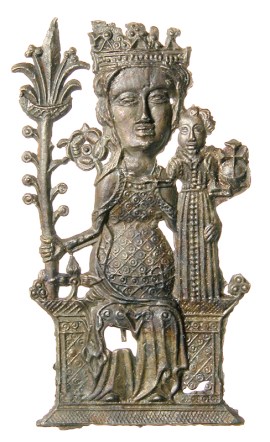
A pilgrim badge portraying Our Lady of Tombelaine, early 1400s
Fran Altvater talks about the Medieval Pilgrimage, a practice that became central to Christian Europe in the early Middle Ages and evolved into the military pilgrimages of the Crusades in the 11th, 12th and 13th centuries. Altvater is a professor of art history at the University of Hartford. Her book, Sacramental Theology and the Decoration of Baptismal Fonts, was published recently by Cambridge Scholars Publishing.

Fran Altvater
Here are some of Altvater’s other writings as well as a good overview of pilgrimage in the Middle Ages by Jean Sorabella:
Calendar Images and Romanesque Baptismal Fonts
Saintly Bodies, Mortal Bodies: Hagiographic Decoration on English Twelfth Century Baptismal Fonts
Pilgrimage in Medieval Europe (Sorabella)
Episode 26: The Last Uncontacted Tribes
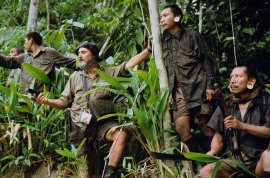
Sydney Possuelo, Tepi Matis, and Txema Matis in the Vale Do Javari Indigenous Land, 2002
Journalist Scott Wallace talks about a 2002 FUNAI expedition to find the Arrow People, one of the last uncontacted tribes in the world. Wallace is a writer and photojournalist who covered the wars in El Salvador and Nicaragua in the 1980s for CBS and the Guardian. Since then he has written extensively for National Geographic. His book, The Unconquered: In Search of the Amazon’s Last Uncontacted Tribes, tells the story of this expedition. Wallace’s work about the Amazon has also recently appeared in the New York Times.
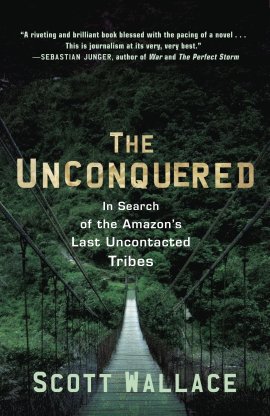
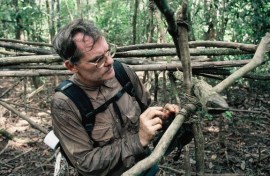
Scott Wallace
Episodes 24 and 25: The Biggest Exploration Exam Ever

Doctoral candidate Sarah Pickman talks about studying exploration: specifically what it’s like to read three hundred books and articles and to be able to discuss them for hours in front of a committee of professors. This event, the preliminary or comprehensive exam, is the last step a graduate student takes before beginning her dissertation. Pickman also discusses recent trends in exploration literature and her top five list of exploration books.
If you like the discussion, you may also want to listen to the bonus episode where we give our top picks for some unconventional categories of books. Pickman also talks about the exam experience at Global Maritime History in her essays “Surviving the Qualifying Exam” (Part I)(Part II)
Texts discussed:
Jace Weaver, The Red Atlantic: American Indigenes and the Making of the Modern World, 1000-1927
Coll Thrush, Indigenous London: Native Travelers at the Heart of Empire
Nancy Shoemaker, Native American Whalemen and the World: Indigenous Encounters and the Contingency of Race
Isaiah Lorado Wilner, “A Global Potlatch: Identifying the Indigenous Influence on Western Thought,” in American Indian Culture and Research Journal vol. 37, No. 2 (2013), pp. 87-114.
Beau Riffenburgh, The Myth of the Explorer
Sarah Pickman’s Top Five
Surekha Davies, Renaissance Ethnography and the Invention of the Human: New Worlds, Maps and Monsters
Dane Kennedy, The Last Blank Spaces: Exploring Africa and Australia
David Blackbourn, The Conquest of Nature: Water, Landscape, and the Making of Modern Germany
Lisa Messeri, Placing Outer Space: An Earthly Ethnography of Other Worlds
Peter Redfield, Space in the Tropics: From Convicts to Rockets in French Guiana
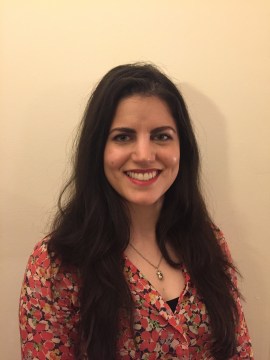
Sarah Pickman
The Biggest Exploration Exam Ever:
Bonus Episode: Exploration Books
Episode 23: Backpack Ambassadors
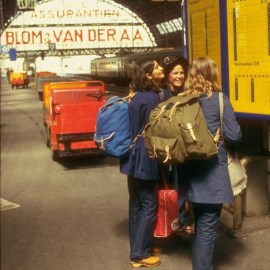
Backpackers in the Netherlands, 1969. Life Photo: Carlo Bavagnoli
Richard Ivan Jobs talks about the rise of backpacking in Europe after the Second World War. Jobs argues that youth travel helped create a new European culture after the war, contributing to the integration of Europe during the 1960s and 70s. Jobs is a professor of history at Pacific University. He is also the author of Backpack Ambassadors: How Youth Travel Integrated Europe recently released by University of Chicago Press.
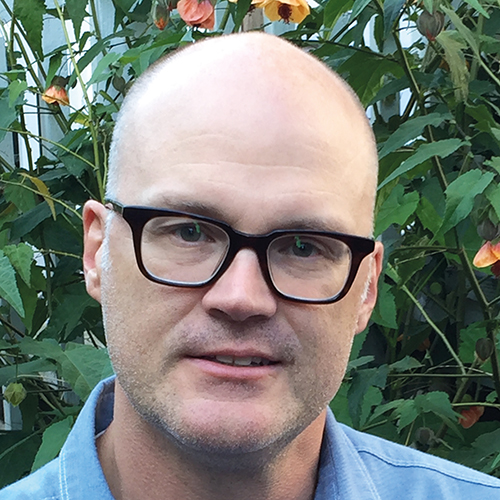
Richard Ivan Jobs


 Time to Eat the Dogs