Time to Eat the Dogs
A Podcast About Science, History, and ExplorationEpisode 33: What the Dead Can Teach Us
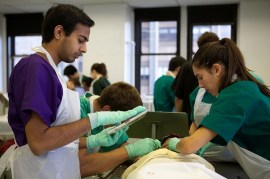
Too often keeping patients alive gets in the way of helping them as they approach death. Dr. Pauline Chen shares her experiences as a medical student and transplant surgeon and how they’ve shaped the way she practices medicine.
Chen is the author of Final Exam: A Surgeon’s Reflections on Mortality and the New York Times column “Doctor and Patient.” Her essays have appeared in the Washington Post, New York Times Magazine, and the New York Times Book Review. Her work has been nominated for a National Magazine Award.
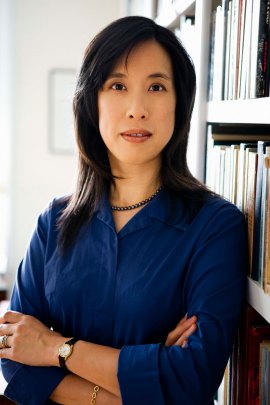
Pauline Chen
Episode 32: Rethinking Humboldt
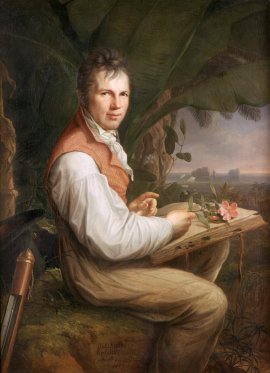
Alexander von Humboldt by Friedrich Georg Weitsch (1806)
It’s hard for 21st century audiences to understand the fame and admiration that followed Humboldt after his 1799 expedition to South and Central America. In the early 1800s, he was the most famous explorer in the world. While his fame would be eclipsed by other explorers, especially in the Anglo-American world, Humboldt is working his way back into the conversation. Patrick Anthony discusses Humboldt and his complicated legacy.
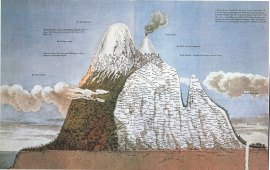
“Geographie des Plantes Equinoxiales.” Tableau Physique des Andes et Pays Voisins (1805)
Anthony is a PhD candidate at Vanderbilt University. His essay “Mining as the Working World of Alexander von Humbolt’s Plant Geography and Vertical Cartography” recently won the Nathan Reingold Prize from the History of Science Society. It is published in the spring issue of the society’s journal, Isis.
Patrick Anthony
Links:
Susan Faye Cannon, Science in Culture: The Early Victorian Period
Mary Louise Pratt, Imperial Eyes: Travel Writing and Transculturation
Michael Robinson, “Why We Need a New History of Exploration”
Aaron Sachs, The Humboldt Current: A European Explorer and His American Disciples
Laura Dassow Walls, Passage to Cosmos: Alexander von Humboldt and the Shaping of America
The Revolution in Paleoanthropology
Homo Naledi
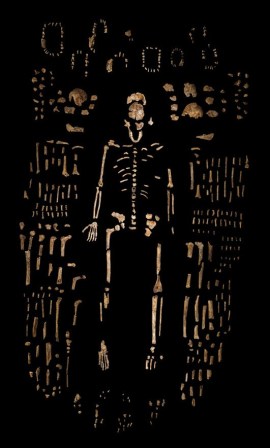
John Hawks talks about new developments in paleoanthropology – the discovery of a new hominid species Homo Naledi in South Africa, the Neanderthal ancestry of many human populations, and the challenge of rethinking anthropological science’s relationship with indigenous peoples and the general public. Hawks is the Vilas-Borghesi Achievement Professor of Anthropology at the University of Wisconsin-Madison. He is the co-author of Almost Human: The Astonishing Tale of Homo naledi and the Discovery That Changed Our Human Story
John Hawks, (photo credit Russ Creech)
Links:
John Hawks blog
Almost Human: The Astonishing Tale of Homo naledi and the Discovery that Changed the Human Story
Episode 30: The Vanguard Project
Vanguard team prepares satellite for lauch (1958)
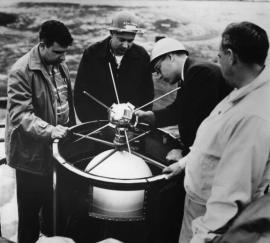
Angelina Callahan talks about the Naval Research Laboratory’s Vanguard Project. While the launch of Vanguard 1 in 1958 was part of the Cold War “Space Race,” it also represented something more: a scientific platform for understanding the space environment as well as a test vehicle that would provide data for satellites of the future. Vanguard 1 is still flying. At 60 years, it is the oldest artificial satellite in space.
Callahan is the Naval Research Laboratory Historian. She is also a co-author (with John Krige and Ashok Mahara) of NASA in the World: Fifty Years of International Collaboration in Space. Her work has also been featured in NASA Spaceflight: A History of Innovation, the Navy War College Review, Seapower Magazine, and Federal News Radio.
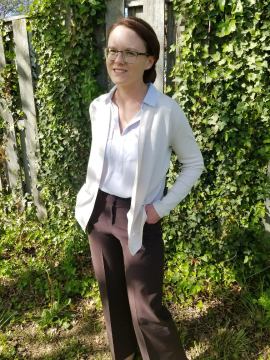
Angelina Callahan
Links:
NRL Celebrates Sixty Years in Space with Vanguard
J. Krige, A. Maharaj, and A. Callahan, NASA in the World
Fifty Years of International Collaboration in Space
Angelina Callahan, “The Origins and Flagship Project of NASA’s International Program: The Ariel Case Study” in NASA Spaceflight: A History of Innovation
Michael J. Neufeld, Von Braun: Dreamer of Space, Engineer of War
David H. DeVorkin, Science with a Vengeance: How the Military Created the US Space Sciences after World War II
Episode 29: Descartes, Traveler
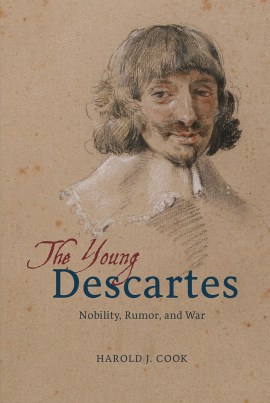
Hal Cook talks about the travels and trials of the young Descartes, a man who spent as much time traveling and fighting as he did studying philosophy. Cook is John F. Nickoll Professor of History at Brown University. He is the author of The Young Descartes: Nobility, Rumor, and War out this year with University of Chicago Press.
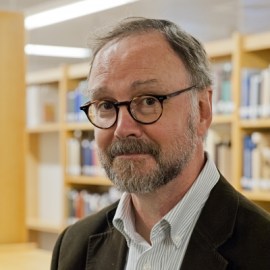
Harold Cook


 Time to Eat the Dogs