Time to Eat the Dogs
A Podcast About Science, History, and ExplorationReplay: The Biggest Exploration Exam Ever (two episodes)

Doctoral candidate Sarah Pickman talks about studying exploration: specifically what it’s like to read three hundred books and articles and to be able to discuss them for hours in front of a committee of professors. This event, the preliminary or comprehensive exam, is the last step a graduate student takes before beginning her dissertation. Pickman also discusses recent trends in exploration literature and her top five list of exploration books.
If you like the discussion, you may also want to listen to the bonus episode where we give our top picks for some unconventional categories of books. Pickman also talks about the exam experience at Global Maritime History in her essays “Surviving the Qualifying Exam” (Part I)(Part II)
Texts discussed:
Jace Weaver, The Red Atlantic: American Indigenes and the Making of the Modern World, 1000-1927
Coll Thrush, Indigenous London: Native Travelers at the Heart of Empire
Nancy Shoemaker, Native American Whalemen and the World: Indigenous Encounters and the Contingency of Race
Isaiah Lorado Wilner, “A Global Potlatch: Identifying the Indigenous Influence on Western Thought,” in American Indian Culture and Research Journal vol. 37, No. 2 (2013), pp. 87-114.
Beau Riffenburgh, The Myth of the Explorer
Sarah Pickman’s Top Five
Surekha Davies, Renaissance Ethnography and the Invention of the Human: New Worlds, Maps and Monsters
Dane Kennedy, The Last Blank Spaces: Exploring Africa and Australia
David Blackbourn, The Conquest of Nature: Water, Landscape, and the Making of Modern Germany
Lisa Messeri, Placing Outer Space: An Earthly Ethnography of Other Worlds
Peter Redfield, Space in the Tropics: From Convicts to Rockets in French Guiana
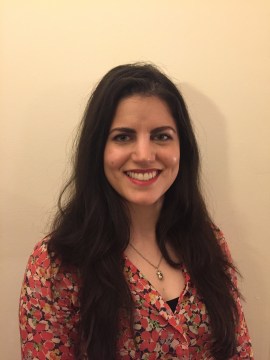
Sarah Pickman
The Biggest Exploration Exam Ever:
Bonus Episode: Exploration Books
Re-imagining People in Anthropological Photographs
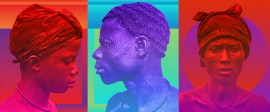
Northcote Thomas’s anthropological photographs reworked by Chiadikobi Nwaubani
Chiadikobi Nwaubani talks about his efforts to find, restore, and publish photographs from the colonial archives of West Africa. He also talks about his work re-interpreting these photographs using art and photo-manipulation.
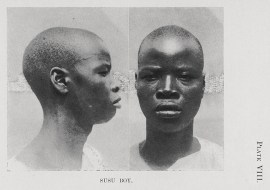
Momo Samura, Sierra Leone, 1914. Described as ‘Susu Boy’ in Northcote Thomas’s Anthropological Report on Sierra Leone (1916)
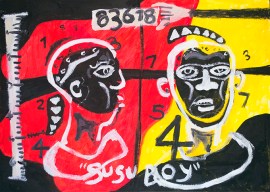
“Susu Boy,” by Chiadikobi Nwaubani, 2018.
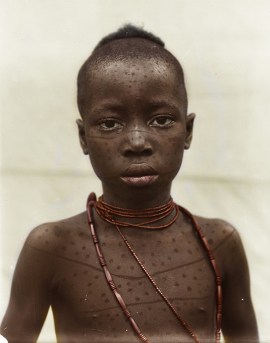
Mooku, a Nigerian girl from Mgbakwu (1911). Colorized by Chiadikobi Nwaubani from an original photograph by Northcote Thomas.
Nwaubani has created an online historical archive of photographs called Ụ́kpụ́rụ́. He has also contributed to the [Re]entanglements project which retraces and reinterprets the journeys of British anthropologist Northcote Thomas during his surveys of Nigeria and Sierra Leone in the early 1900s.
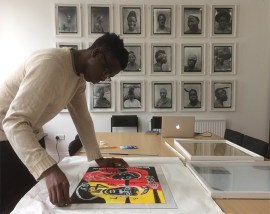
Chiadikobi Nwaubani
Replay: Project Vanguard
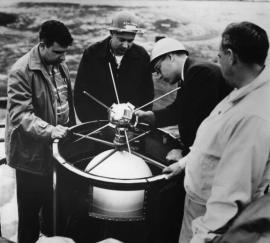
Vanguard team prepares satellite for lauch (1958)
Dr. Angelina Callahan talks about the Naval Research Laboratory’s Vanguard Project. While the launch of Vanguard 1 in 1958 was part of the Cold War “Space Race,” it also represented something more: a scientific platform for understanding the space environment as well as a test vehicle that would provide data for satellites of the future. Vanguard 1 is still flying. At 60 years, it is the oldest artificial satellite in space.
Callahan is the Naval Research Laboratory Historian. She is also a co-author (with John Krige and Ashok Mahara) of NASA in the World: Fifty Years of International Collaboration in Space. Her work has also been featured in NASA Spaceflight: A History of Innovation, the Navy War College Review, Seapower Magazine, and Federal News Radio.
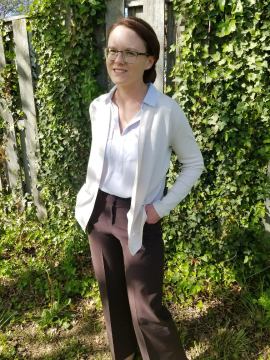
Angelina Callahan
Links:
NRL Celebrates Sixty Years in Space with Vanguard
J. Krige, A. Maharaj, and A. Callahan, NASA in the World
Fifty Years of International Collaboration in Space
Angelina Callahan, “The Origins and Flagship Project of NASA’s International Program: The Ariel Case Study” in NASA Spaceflight: A History of Innovation
Michael J. Neufeld, Von Braun: Dreamer of Space, Engineer of War
David H. DeVorkin, Science with a Vengeance: How the Military Created the US Space Sciences after World War II
The Problem with Andrea Wulf’s Biography of Humboldt
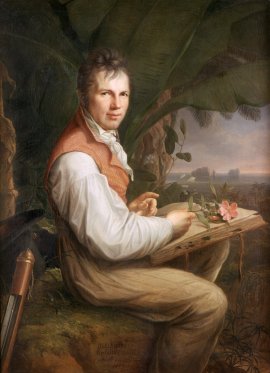
Alexander von Humboldt
Andrea Wulf’s book the The Invention of Nature tells the story of Alexander von Humboldt, one of the world’s most important nineteenth-century explorers. Jorge Cañizares-Esguerra talks about some of the problems of the book, specifically how Wulf’s view of Humboldt divorces him from the intellectual traditions of Central and South American scholars who helped Humboldt imagine the Americas for European and North American readers. Cañizares-Esguerra is a professor of history at the University of Texas at Austin. He is the author of many books including How to Write the History of the New World: Histories, Epistemologies, and Identities in the Eighteenth-Century Atlantic World.
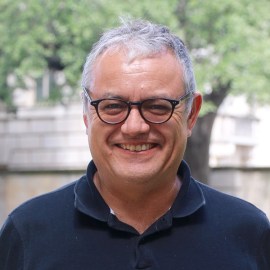
Jorge Cañizares-Esguerra
Replay: Do You See Ice?
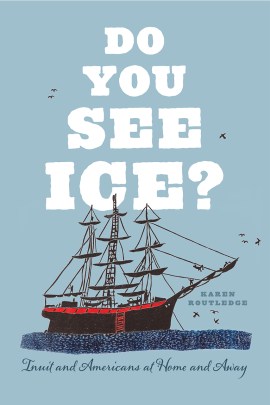
In the 1800s, explorers and whalers returning home from the Arctic described a cold, desolate world, one that could swallow up expeditions without leaving a trace. But this did not describe the Arctic of the Inuit, who called this world their home. Dr. Karen Routledge tells the story of Baffin Island’s Inuit community as they came into contact with western whalers and explorers in the nineteenth century. Even though the Inuit worked closely with outsiders, their views of the Arctic world, their ideas about meaning of home, even their concept of time itself remained very different from the men they encountered. Routledge is a historian for Parks Canada. Her book, Do You See Ice? was recently published by University of Chicago Press.
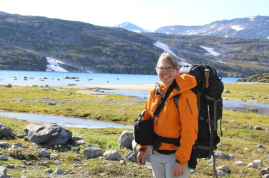
Karen Routledge


 Time to Eat the Dogs