Time to Eat the Dogs
A Podcast About Science, History, and ExplorationReplay: Rethinking Humboldt
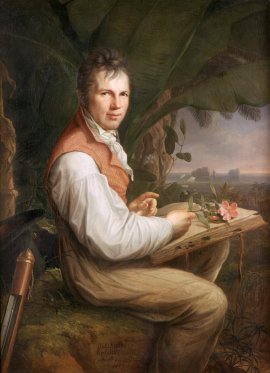
Alexander von Humboldt by Friedrich Georg Weitsch (1806)
It’s hard for 21st century audiences to understand the fame and admiration that followed Humboldt after his 1799 expedition to South and Central America. In the early 1800s, he was the most famous explorer in the world. While his fame would be eclipsed by other explorers, especially in the Anglo-American world, Humboldt is working his way back into the conversation. Patrick Anthony discusses Humboldt and his complicated legacy.
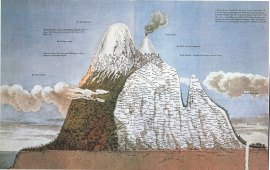
“Geographie des Plantes Equinoxiales.” Tableau Physique des Andes et Pays Voisins (1805)
Anthony is a PhD candidate at Vanderbilt University. His essay “Mining as the Working World of Alexander von Humbolt’s Plant Geography and Vertical Cartography” recently won the Nathan Reingold Prize from the History of Science Society. It is published in the spring issue of the society’s journal, Isis.
Patrick Anthony
Links:
Susan Faye Cannon, Science in Culture: The Early Victorian Period
Mary Louise Pratt, Imperial Eyes: Travel Writing and Transculturation
Michael Robinson, “Why We Need a New History of Exploration”
Aaron Sachs, The Humboldt Current: A European Explorer and His American Disciples
Laura Dassow Walls, Passage to Cosmos: Alexander von Humboldt and the Shaping of America
Women Wanderers of the Romantic Era
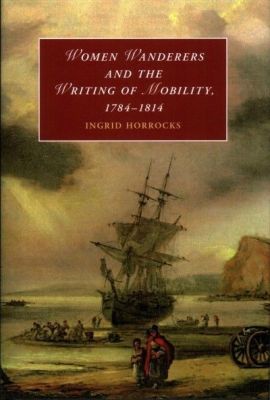
Ingrid Horrocks talks about the way women travelers, specifically women wanderers, are represented in late-eighteenth century literature, particularly in the work of women writers. Horrocks in an associate professor in the School of English and Media Studies at Massey University in Wellington, New Zealand. She is the author of Women Wanderers and the Writing of Mobility, 1784–1814.
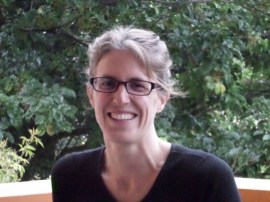
Ingrid Horrocks
Replay: The 1948 Arnhem Land Expedition
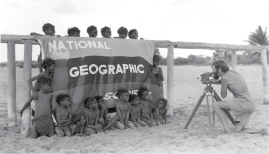
Howell Walker photographing at Umbakumba, 1948. Photograph by Charles P Mountford. Courtesy of the State Library of South Australia, PRG487/1/2/209/1.
Martin Thomas discusses the 1948 Arnhem Land expedition and the controversy that surrounds it. His new documentary, Etched in Bone (Ronin Films), which he co-directed with Beatrice Bijon, traces the events of the expedition and its effects upon the aboriginal communities of Northern Australia. Thomas is a professor of history at the ANU College of Arts and Social Sciences.
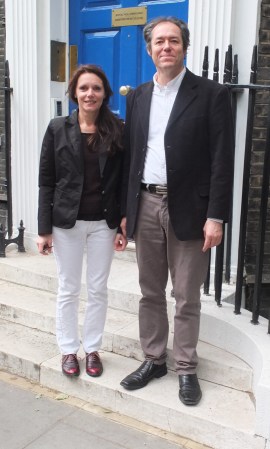
Beatrice Bijon (left) and Martin Thomas (right)
New Insights about Darwin
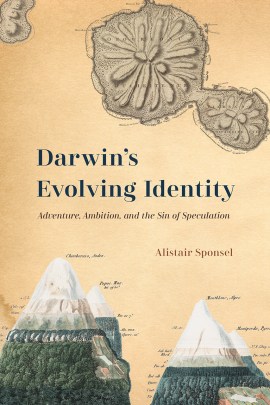
Dr. Alistair Sponsel talks about Darwin’s experiences on HMS Beagle and his early career as a naturalist. His close reading of Darwin’s journals and letters reveals insights about the man that would become known as the father of evolution. Sponsel is the author Darwin’s Evolving Identity: Adventure, Ambition, and the Sin of Speculation.
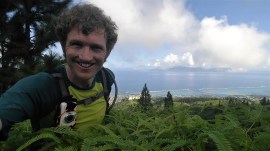
Alistair Sponsel
Replay: Wild Sea: A History of the Southern Ocean
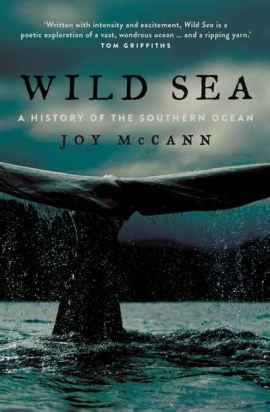
Dr Joy McCann discusses the great circumpolar ocean that surrounds Antarctica. McCann is the author of Wild Sea: A History of the Southern Ocean. She is a historian at the Centre for Environmental History at Australian National University.
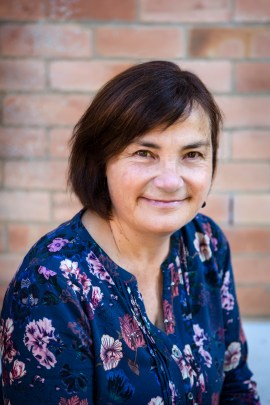
Dr. Joy McCann
Links:
Joy McCann’s Blog: Out of the Blue
Penguins Were a Lonely Explorer’s Best Friends The Atlantic, 2019


 Time to Eat the Dogs