Time to Eat the Dogs
A Podcast About Science, History, and ExplorationReplay: An American in Soviet Antarctica, Part II
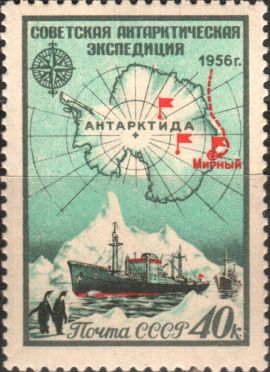
Stamp commemorating the Soviet Union’s Antarctic bases
Stewart Gillmor — the sole American at Mirny Station in 1961 and 1962– continues his discussion of life at the Soviet base: how communism plays out 10,000 miles from Moscow, the problems with planes in Antarctica, and what to do when the diesel generator dies at the coldest place in the world.

Mirny Station
Replay: An American in Soviet Antarctica, Part I
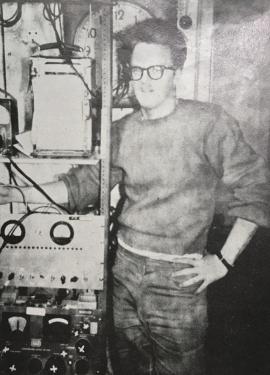
Stewart Gillmore in Mirny Station, 1961.
Stewart Gillmor talks about his fourteen-month stay at Mirny Station, the Soviet Union’s Antarctica base. Gillmor was the sole American at Mirny in 1960-1962 during the height of the Cold War.
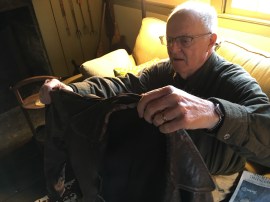
Gillmor holding the Russian coat he used at Mirny Station.
The British Expeditionary Literature of Africa
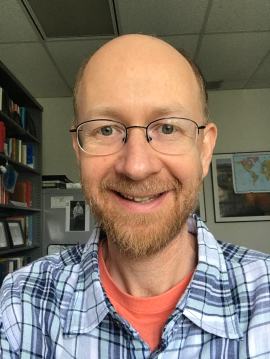
Adrian Wisnicki
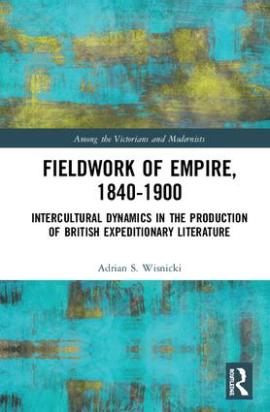
Adrian Wisnicki talks about the British expeditionary literature of the late 1800s. Reading between the lines of Victorian travel accounts, Wisnicki sees outlines of a bigger story — local peoples, landscapes, and ways of life. Wisnicki is an Associate Professor of English at the University of Nebraska-Lincoln and Faculty Fellow of the Center for Digital Research in the Humanities. For the past ten years he has served as the director (along with co-director Megan Ward) of Livingstone Online a digital museum and library devoted to the written, visual, and material legacies of British explorer David Livingstone. Wisnicki is the author of Fieldwork of Empire, 1840-1900: Intercultural Dynamics in the Production of British Expeditionary Literature.
Replay: The Mars Rover Curiosity
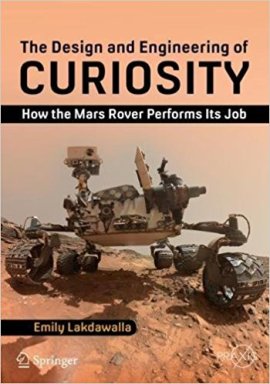
Emily Lakdawalla talks about the design and construction of Curiosity, formally known as the Mars Science Laboratory, one of the most sophisticated machines ever built. Curiosity landed on Mars in 2012 where it has been conducting research within the ancient Gale Crater.
Lakdawalla is a senior editor at the Planetary Society where she writes and blogs about planetary exploration. She is a frequent guest on Planetary Radio. She is also the author of The Design and Engineering of Curiosity: How the Mars Rover Performs Its Job.

Emily Lakdawalla
Links:
Lakdawalla’s Curiosity Goodreads Page
Lakdawalla’s Planetary Society Blog
NASA’s Mars Scientific Laboratory Website
Replay: What the Dead Can Teach Us
Too often keeping patients alive gets in the way of helping them as they approach death. Dr. Pauline Chen shares her experiences as a medical student and transplant surgeon and how they’ve shaped the way she practices medicine.
Chen is the author of Final Exam: A Surgeon’s Reflections on Mortality and the New York Times column “Doctor and Patient.” Her essays have appeared in the Washington Post, New York Times Magazine, and the New York Times Book Review. Her work has been nominated for a National Magazine Award.

Pauline Chen


 Time to Eat the Dogs