Time to Eat the Dogs
A Podcast About Science, History, and ExplorationMental Illness and the Mawson Expedition
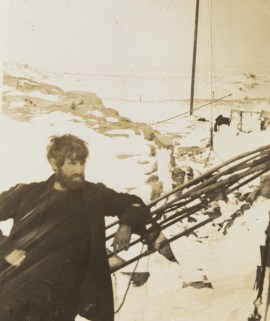
Sidney Jeffryes
Elizabeth Leane talks about Sidney Jeffryes, radio operator for Douglas Mawson’s Australasian Antarctic Expedition in 1913. Jeffryes’ struggle with mental illness challenged Mawson’s expedition party as well as the way Mawson tried to present his expedition to audiences back home. Leane is a professor of English at the University of Tasmania and an Australian Research Council Future Fellow. She’s also the co-author (along with Ben Maddison and Kimberley Norris) of “Beyond the Heroic Stereotype: Sidney Jeffryes and the Mythologising of Australian Antarctic History.”
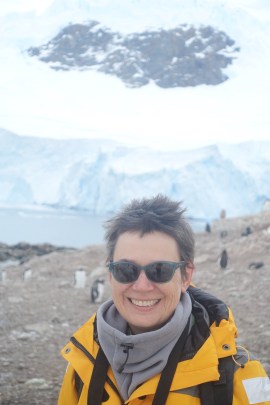
Elizabeth Leane
Replay: Re-imagining People in Anthropological Photographs
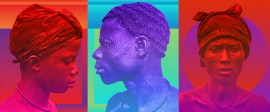
Northcote Thomas’s anthropological photographs reworked by Chiadikobi Nwaubani
Chiadikobi Nwaubani talks about his efforts to find, restore, and publish photographs from the colonial archives of West Africa. He also talks about his work re-interpreting these photographs using art and photo-manipulation.
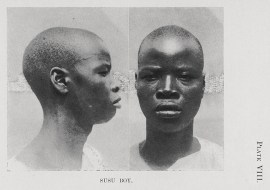
Momo Samura, Sierra Leone, 1914. Described as ‘Susu Boy’ in Northcote Thomas’s Anthropological Report on Sierra Leone (1916)
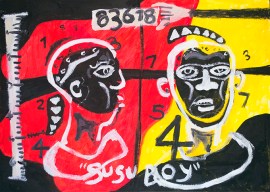
“Susu Boy,” by Chiadikobi Nwaubani, 2018.
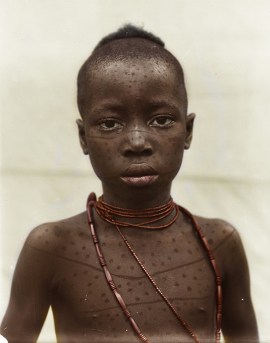
Mooku, a Nigerian girl from Mgbakwu (1911). Colorized by Chiadikobi Nwaubani from an original photograph by Northcote Thomas.
Nwaubani has created an online historical archive of photographs called Ụ́kpụ́rụ́. He has also contributed to the [Re]entanglements project which retraces and reinterprets the journeys of British anthropologist Northcote Thomas during his surveys of Nigeria and Sierra Leone in the early 1900s.
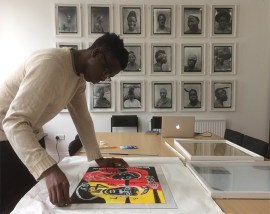
Chiadikobi Nwaubani
Replay: The Problem with Andrea Wulf’s Biography of Humboldt
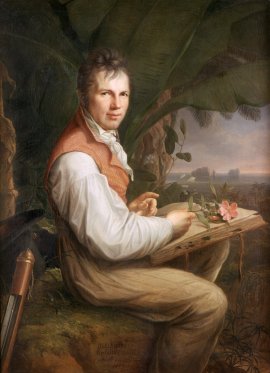
Alexander von Humboldt
Andrea Wulf’s book the The Invention of Nature tells the story of Alexander von Humboldt, one of the world’s most important nineteenth-century explorers. Jorge Cañizares-Esguerra talks about some of the problems of the book, specifically how Wulf’s view of Humboldt divorces him from the intellectual traditions of Central and South American scholars who helped Humboldt imagine the Americas for European and North American readers. Cañizares-Esguerra is a professor of history at the University of Texas at Austin. He is the author of many books including How to Write the History of the New World: Histories, Epistemologies, and Identities in the Eighteenth-Century Atlantic World.

Jorge Cañizares-Esguerra
Replay: The Galapagos Expedition that Vindicated Darwin
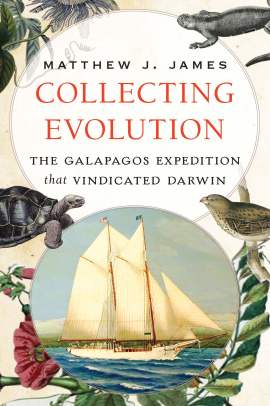
Matthew James talks about the 1905 Galapagos Expedition organized by the California Academy of Sciences. James is a professor of geology at Sonoma State University. He is the author of Collecting Evolution: The Galapagos Expedition that Vindicated Darwin.
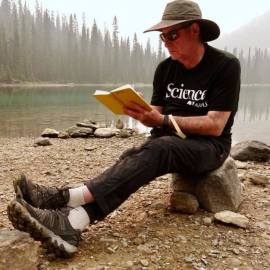
Matthew James
Anticipating the Astronaut
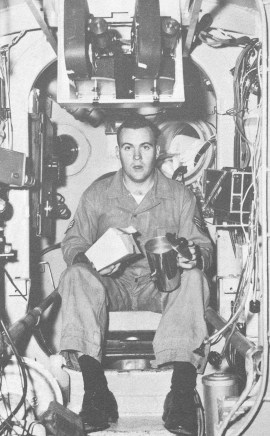
Donald Farrell in a space cabin simulator (1958). Credit: Texas State Historical Association
Jordan Bimm talks about early experiments in space medicine involving subjects who did not resemble the white male test pilots who would become America’s first astronauts. Bimm is a Postdoctoral Research Fellow at Princeton University. He’s the author of Anticipating the Astronaut which is under contract to MIT Press, expected in Spring 2021.
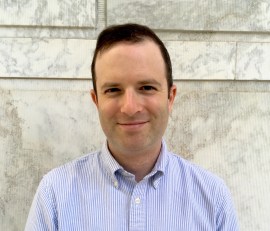
Jordan Bimm


 Time to Eat the Dogs