Time to Eat the Dogs
A Podcast About Science, History, and ExplorationAssembling the Dinosaur
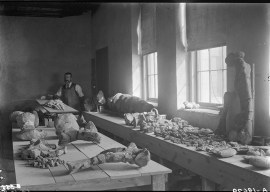
University of Wyoming Bone Room (1890s) Credit: Lukas Rieppel
Lukas Rieppel talks about dinosaur fossils in the Gilded Age – from the discovery and excavation of fossils in the American West to the re-construction of fabulous creatures in museums that were the darlings of wealthy philanthropists. Rieppel is an assistant professor of history at Brown University. He’s the author of Assembling the Dinosaur: Fossil Hunters, Tycoons, and the Making of a Spectacle.

Lukas Rieppel
Replay: Space Science and the Arab World
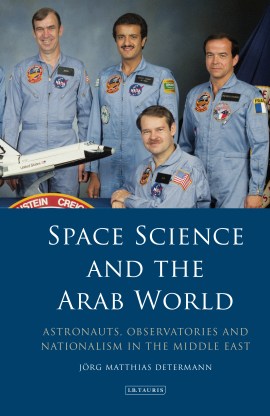
Matthias Determann talks about the importance of the space sciences in the Arab World. Determann is an associate professor of history at Virginia Commonwealth University in Qatar. He is the author of Space Science and the Arab World: Astronauts, Observatories and Nationalism in the Middle East.

Matthias Determann
Starlink is Blanketing the Earth with Satellites

Lisa Ruth Rand talks about the Starlink satellite program. She also talks about Project West Ford, which attempted to create an artificial ionosphere in 1961 by launching millions of copper needles into orbit. Rand is the Haas Postdoctoral Fellow at the Science History Institute in Philadelphia. Her op-ed on Starlink and Project West Ford appeared in the July 8th edition of Scientific American.
Stuff in Space offers an interactive 3D map of objects currently in Earth orbit.

Lisa Ruth Rand
Replay: Travel, Race, and Freedom

Annette Joseph-Gabriel talks with Tiffany Gill about the history of African American travel in the late twentieth century and its significance to Black communities across the lines of class and gender. Joseph-Gabriel is an assistant professor of French at the University of Michigan, College of Literature, Science and the Arts.
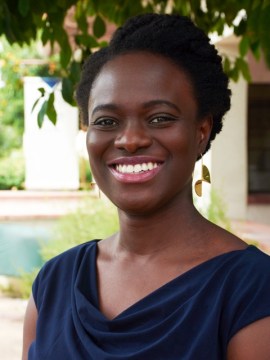
Annette Joseph-Gabriel
Gill is an Associate Professor of Africana Studies & History and Cochran Scholar at the University of Delaware. She is the author of Beauty Shop Politics: African American Women’s Activism in the Beauty Industry and the co-editor of To Turn the Whole World Over: Black Women and Internationalism.

Tiffany Gill
Replay: The History of Arctic Fever
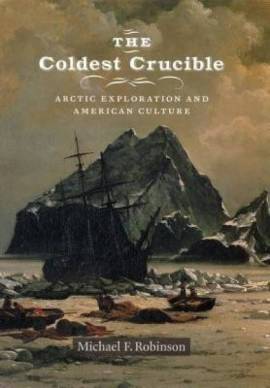
Radio host Kevin Fox interviews me about the history of American Arctic exploration, the subject of my first book, The Coldest Crucible: Arctic Exploration and American Culture. The disappearance of the Franklin Expedition in 1845 turned the Arctic into an object of fascination.
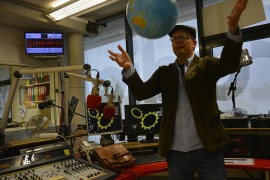
Kevin Fox
By the end of the century, it had become an ‘Arctic Fever.’ Fox is the host of the radio program Geographical Imaginations for RadioFabrik in Salzburg, which is also available on iTunes as a podcast.
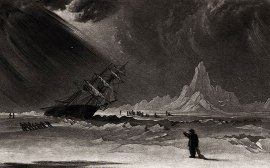
U.S. Grinnell Expedition, 1854


 Time to Eat the Dogs