Time to Eat the Dogs
A Podcast About Science, History, and ExplorationArchive for Popular Culture
The Gertrude Bell Archive
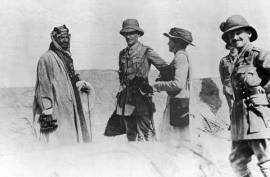 Gertrude Bell and Sir Percy Cox, Mesopotamia, 1917
My students are usually pretty good at the why questions of history. Why did the French revolt against their King? Answers include “Peasant frustration.” “Anger at the monarchy.” “Expensive bread.” It’s the when questions that cause students trouble. Why did the French revolt in 1789? What particularities of this historical moment led to the great unraveling of the French Monarchy?
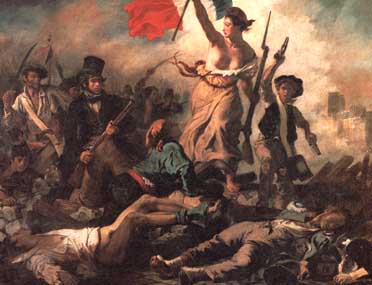
La Liberté guidant le peuple, Eugène Delacroix, 1830
This pattern holds true for discussing women in history, or more specifically, the actions of women travelers and explorers. Why did Annie Peck climb the Matterhorn (1895)? Or Fanny Bullock Workman the Himalayas (1899-1912)? Why did Mary Kingsley canoe her way up the Ogawe River in Africa (1895)? Or Nelly Bly circle the globe in 72 days (1889)? Student answers usually come in some variety of “They had to prove something to the world.” Ok, fair enough. But here is the more interesting question: Why did they all feel the need to prove it at the same time?
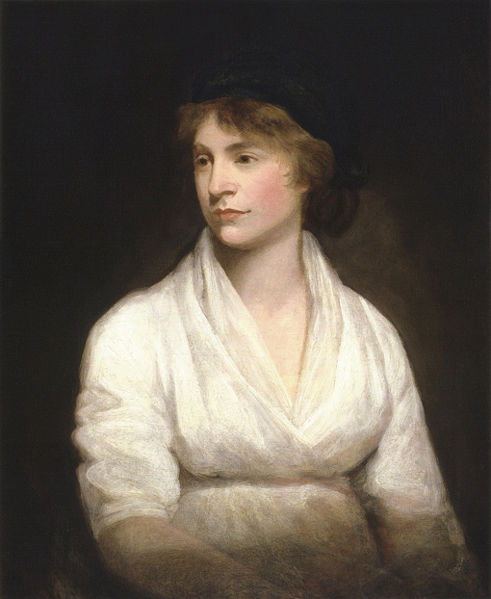
Mary Wollstonecraft, by John Opie, 1797
Mary Wollstonecraft certainly felt she had something to prove. Enlightenment novelist and historian, philosopher and feminist, Wollstonecraft authored A Vindication of the Rights of Woman a full 136 years before Britain fully granted women the right to vote in 1928. But living at the end of the 18th century, Wollstonecraft is something of an outlier in women’s history, a person whose beliefs and actions were at considerable remove from the rest of society. Peck, Workman, and Bly, by contrast, were part of a large social movement that extended across the Atlantic, a movement that gleefully assaulted the idea of a “separate spheres” for men and women.
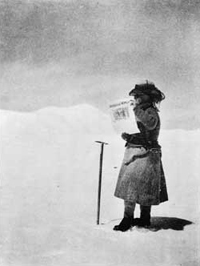
Fanny Bullock Workman holding up "Votes for Women" sign at 21,000 ft
In this sense, Gertrude Bell was a women of her time: born in Britain, Oxford educated, Bell was an omnivorous learner and traveler, fluent in Persian, Arabic, Turkish, and German. She voyaged around the world twice and took up a passion for mountain climbing in the Alps all before “settling down” in the Middle East as archeologist, author, and British political agent during the First World War. She collaborated with T.E. Lawrence to draw up the modern political map of the Middle East including Jordan and Iraq. Yet Bell remains hard to categorize. Sitting at the center of British political activity in the Middle East, Bell also served as honorary secretary of the British Women’s Anti-Suffrage League.
Bell left 1600 letters, 16 diaries, and 7000 photographs, all of which are in the possession of the University of Newcastle upon Tyne. Now the University Library has begun a four-year project to put these materials online. Here for example is Bell’s description of her ascent of the Aiguille du Géant in the Alps:
Demarquille was frozen. I gave him my big woollen gloves. My hands were warmed by the rock work, but I continued to shiver, though not unpleasantly, almost until we returned to the foot of the Aiguille. We crossed a bit of snow and turned to the left under the Aiguille where we found a hanging rope – it was just about here that a guide was killed a fortnight ago by lightening, after having accomplished the ascent by a new road up the N face said to be easier than the old. The first hour or so was quite easy. Straight up long slabs of rock with a fixed rope to hold by. Then a flank march which was rather difficult; the rocks from here to the top of the NE summit are extremely steep. At one point my hands and arms were so tired that I lost all grip in them. A steep bit down, a pointed breche and a very steep up rock leads to the highest summit where there is a cairn.
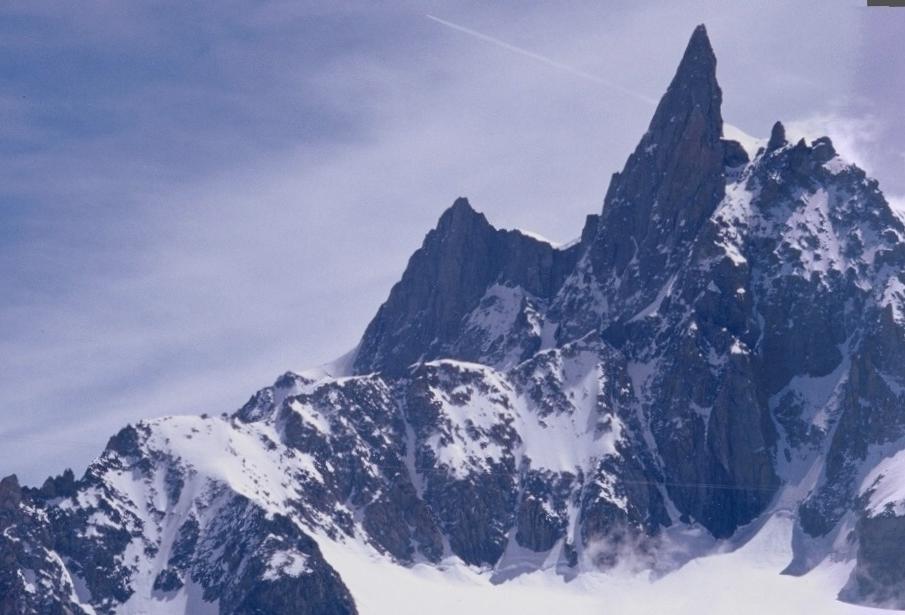
Aiguille du Géant
The Gertrude Bell Archive is a work in progress. Not all of the materials have been scanned. It does not have keyword or full-text search capabilities. Still it deserves to be filed as a bookmark in your growing list of exploration archives.
For more on women explorers, see posts on
Interview with Beau Riffenburgh
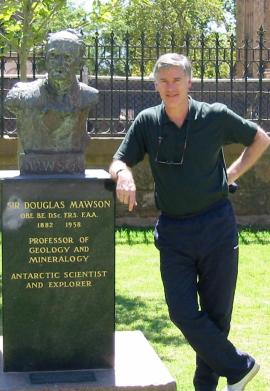
Beau Riffenburgh next to a bust of Sir Douglas Mawson at the University of Adelaide, South Australia, AU
History of exploration was just becoming a hot topic in the Academy when I started my graduate work in the mid-1990s. Academic interest attached itself to post-colonial studies, focusing on regions of the globe where Europeans and Euro-Americans had done most of their empire-building: Asia, Africa, and the Atlantic World.
The world of Polar exploration, however, remained quiet, a terra incognita of historical scholarship. Meanwhile, non-academic historians were churning out polar books in droves, on Robert Peary, Robert Falcon Scott, Ernest Shackleton and others. I suspect that all of this attention caused academic historians to shy away even further, to view polar exploration as suspect, a popular rather than serious subject of inquiry.
It was in this environment that Beau Riffenburgh published his pathbreaking book Myth of the Explorer. Here was a scholarly approach to a “popular” subject, in this case a behind-the-scenes look at the most sensational explorers of the Victorian World. Riffenburgh’s book shattered explorers’ claims to be men of a different world, men built of a different mold. It showed how deeply embedded these men were in the world they left behind, in their values, their careers, and their financial dealings.
Myth of the Explorer thus offered academic historians a bridge to the other side, a way of approaching the sensational explorers with a different set of aims, a different list of questions. Although it is now out of print, Myth of the Explorer remains an essential resource for historians of Victorian exploration and it is cited in the works of Robert Kohler, Felix Driver, Graham Burnett, and Felipe-Fernandez Armesto. Its influence certainly extends to my own book Coldest Crucible.
It is a pleasure to welcome Beau Riffenburgh to Time to Eat the Dogs.
Your first book Myth of the Explorer looked beyond the heroic images of explorers slogging it out in the field to examine explorers’ actions back home, particularly their financial dealings with the popular press. This was a very different kind of exploration book when it came out in 1993. What led you to the project and your approach to it?
I long had been fascinated by exploration, particularly of the polar regions and Africa. I decided after working a number of years in publishing to go back for a PhD just because I wanted to spend several years researching something that really interested me. I had previously earned an MA in journalism, and also had strong interest in the history of the press. My PhD thesis, upon which Myth of the Explorer was based, allowed me to use these two interests to look at the other. Since the press played a significant role in sponsoring, promoting, and creating an interest in exploration, it seemed logical to use the press of the time as a vehicle through which to view exploration. At the same time exploration could be a subject by which to test several hypotheses that I had about the way the growth and use of sensational journalism is generally presented in studies of the history and development of the press.
How was it received?
In general, the book was received very well by reviewers. It was published by a small publisher, but it interested Oxford University Press enough that they sought it out to publish in paperback. I would like to think that it helped influence a number of scholars who have done studies since then.
You served as Publication director for the NFL in the 1980s, writing a variety of books about American football. Did your work for the NFL reveal to you any links between modern sports and 19th century exploration?
I was the senior writer for NFL Properties, the publishing and licensing branch of the NFL, and I essentially was director of historical research. I can’t say that my work there revealed any particular links between sports and exploration, but the switch between the two is not as bizarre as it initially sounds. I was one of several people around the country who conducted a good deal of research on what was sometimes known as the Ohio League, the informal grouping of professional football teams in Ohio and a few surrounding states before the founding of the NFL in 1920. This included many of the teams that went on to join the NFL, such as the Canton Bulldogs. I would like to say that the foremost scholar in this field, and one who is a marvellous researcher, is Bob Carroll, an independent researcher who lives in Pennsylvania and was the key founder of the Pro Football Researchers Association.
Anyway, the main point here is that much of this research was carried out by carefully going through old newspaper accounts of football games in order to obtain data held there but seemingly otherwise lost. When I began my PhD, I continued using nineteenth-century newspapers as my primary data source, and was able to use essentially the same collection methods. In other words, although my subject matter changed dramatically as I went to exploration, my methods remained similar, so it was not a huge change in what I had done before.

Exploration Experience: The Heroic Exploits of the World
In recent years, you have published a number of trade books on exploration. Your latest book, Exploration Experience: The Heroic Exploits of the World’s Greatest Explorers (National Geographic Society, 2008) combines your essays with reproduced documents, photos, and artifacts from famous expeditions. How did the experience of writing Exploration Experience and these exploration books differ from writing Myth of the Explorer?
My two major books of the past five years have been Nimrod (published in the US as Shackleton’s Forgotten Expedition) in 2004 and Racing With Death in 2008. The first was the first account of the first expedition led by Ernest Shackleton, the British Antarctic Expedition (1907-09), on which he attained a farthest south. The second is an account of Douglas Mawson’s Antarctic expeditions, primarily his Australasian Antarctic Expedition (1911-14), on which he made perhaps the most amazing Antarctic journey ever. Both of these are scholarly books, written after extensive research in the archives where original materials are held, but, hopefully, written in a manner than will appeal to a general reader. I believe strongly that there is nothing stopping a book from being both scholarly and interestingly written.
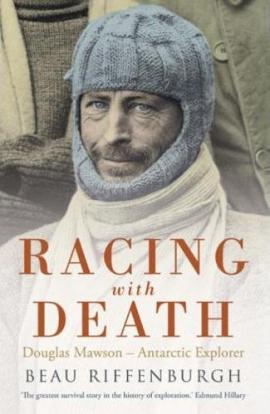
Racing With Death: Douglas Mawson - Antarctic Explorer
Exploration Experience is a different type of book, in that it is heavily illustrated and contains, as you mention, memorabilia from numerous expeditions. Moreover, it is an attempt to give a look at the overall history of exploration, touching on the highlights rather than giving extensive detail about any one expedition. It was fun to write because it includes accounts of exploration in Asia, South America, Australia, and other areas that I had not written extensively about previously. The text is not one long narrative, but rather shorter highlights about different expeditions, so it is a totally different — but equally enjoyable — writing technique.
These differed from Myth of the Explorer in that they were more aimed at a general audience, whereas all along I felt that Myth of the Explorer would be more appropriate for a more specialist audience. I would like to think that all of them are enjoyable reads, but I think it is safe to say that Myth of the Explorer was not something that would grab the exploration enthusiast so easily as my more recent books.
Myth of the Explorer offered a sober, often critical portrait of Victorian explorers. Trade books on exploration, however, tend to be more forgiving of explorers’ motives and actions. Do you feel any tension in moving from one genre of writing to the other?
No, I try to follow the academic process throughout. I collect and analyze data and then present it in a fashion that I feel is fair, hopefully unbiased, and hopefully interesting. Nimrod, once to the ice, is, I hope, an exciting tale of adventure, but the materials for it were still compiled carefully and following the same “rules” of research as Myth of the Explorer. Since I have been writing and editing for a living for more than 25 years, stylistic changes in books are not excessively difficult to make, as shown by the fact that I have written a different book on a different aspect of the Mawson story in a different style. I hope it will be coming out in a year or so.
As an American living in England, you’ve had ample opportunity to compare national cultures. Do Britons and Americans think differently about exploration?
I can’t say that I think folks in Britain and the us think differently about the processes of exploration, but there tends to be a different emphasis perhaps. Regarding the polar regions, older generations in the UK grew up with the story of Robert Falcon Scott as something that everyone knew, and he was a great imperial hero, along the lines of Livingstone or Gordon. Perhaps because of this, and because of the Shackleton connection, in recent decades the Antarctic tends to have been a stronger general interest than the Arctic. The greatest American polar hero, on the other hand, was Robert E. Peary, an Arctic explorer. So although this is a huge generalization with all of the weaknesses that can be expected to accompany it, one finds a bit more Antarctic interest and knowledge in the UK and a bit more Arctic interest and knowledge in the US. This has somewhat changed with the Shackleton-mania that swept through the US and with the growth of tourism to the Antarctic, but it is at least a broad difference. And none of this is to say that neither country had any interests in the other region, as obviously Byrd was a great American hero and the British had any number of Arctic expeditions. Similarly, most Americans will learn more about Lewis and Clark and other explorers of North America, while many folks over here will be much more familiar with African exploration, for which many British explorers were key figures, such as Livingstone, Burton, Baker, etc.
What do you think about the United States’ current Vision for Space Exploration, a plan to send astronauts back to the Moon and ultimately to Mars?
I think that space exploration is very exciting. However, I do think that it is a totally different process than the exploration that was carried out in the nineteenth century. Then, to a great extent, it was based on man’s heart, will, and personal strength and determination. Now the man going into outer space would play a key role, but a very different role, since he is a part of a much larger package that requires a great deal more technological involvement. I think that much of the shift has been from man’s inner strength to his intellect.
What’s your next project?
I am currently working on a follow-uo to Exploration Experience that concentrates on polar exploration, using the same format. I am also hoping to write a lengthy book about an explorer in a totally new (for me) area of the world, but I have been asked by the potential publishers not to discuss it at this time.
A mystery to whet the appetite. Beau, thanks for speaking with us.
Nate Silver, Baseball Analyst, Prophet of the Galactic Empire
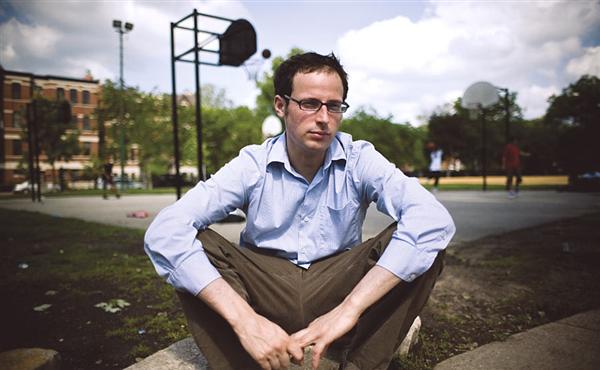
Nate Silver
Like most of the free world, I spent October following the U.S. presidential election. For me this meant looking over the dailies, a graph of the national tracking average, and a red/blue map of the Electoral College. This was about the extent of my political forecasting. Not so Nate Silver, statistical boy-genius, baseball analyst, and author of the political projection site FiveThirtyEight.com. Silver’s predictions have caused quite a stir because they have been so prescient. Based on his analysis of polls, he called the election for Obama. . . in March. Call him lucky. Then he predicted 49 of 50 states correctly on election night with a 6.1% margin for Obama, within 0.4 of the actual margin. Silver can add these to a growing list of oracle-like achievements: calling the results the Super Tuesday within 13 delegates (out of 847), predicting the ascendency of the Tampa Bay Rays and the 90-loss season of the Chicago White Sox. Silver now markets a number of statistical models including PECORA, QERA, and SECRET SAUCE (an algorithm for the Big Mac?).
Silver’s uncanny ability to predict things that seem murky to the rest of us reminds me Isaac Asimov’s Foundation Trilogy, published in 1951-53. Asimov’s story is set in a Galactic Empire which contains thousands of inhabited planets and quadrillions of human beings. The stunning size of this empire allows one man, Hari Seldon, to develop a set of statistical models for predicting the future of civilization, a field of study he calls “psychohistory.” Seldon’s algorithms have no ability to predict the actions of a single individual, any more than one could predict the toss of the coin. The single flip is always unknowable, but not so a hundred flips, a thousand, ten thousand, a series that becomes more predictable with each iteration. It is a science which gains precision as the data aggregates.
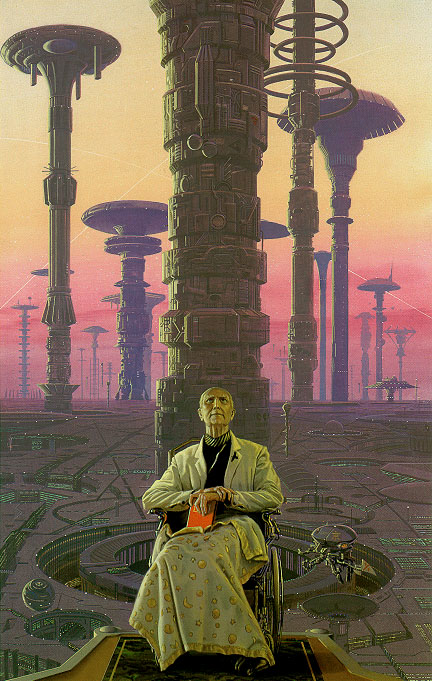
Hari Seldon
The story of Silver and Seldon make for good reading. But they also touch upon a very storied debate among historians about the forces that propel history. For centuries, scholars viewed this force (or “agency” as it is called in the Academy) as a power contained within the individual. In other words, one could understand the ebb and flow of empires by following the actions of powerful individuals: popes, kings, and revolutionaries. Certainly this continues to be a popular way of looking at the forces of history, as can be seen by the hefty shelf space afforded “Biography” at Borders and Barnes and Nobles. But among academic historians, the “Great Man” vision of history has lost much of its blush. Individuals continue to matter, but to many of us, the agents of history reside in the realm of the extra-human: institutions, churches, states, and the ephemeries of culture.
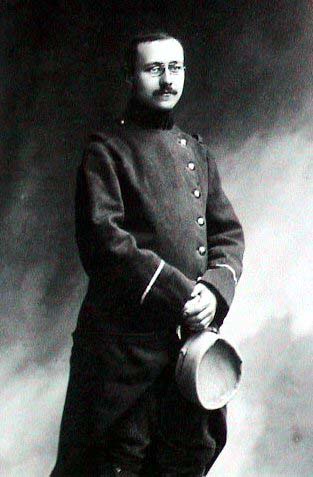
Marc Bloch
Nowhere was this more apparent than in the French Annales School of the early 20th century. Its founders, Marc Bloch and Lucien Febvre grew tired of the emphasis on individuals and big events: wars, coups, congresses, and assassinations. Instead they saw history as a tectonic thing, a gradual unfolding of events caused by millions of people influenced by their habits, geography, and material culture. Here in episodes of “longue durée” lay the true causes for the rise and fall of empires.
So welcome Nate to the world of many parts. We expect big things.
A Blog of One’s Own

I have tried to avoid the question “why blog?” here at Time to Eat the Dogs. It’s not a bad question. But it’s one that academic bloggers seem to be drawn to like seals to herring. Most non-academic bloggers do not feel so compelled. Why the obsessive interest?
The kind answer: academic bloggers, particularly those in the humanities and social sciences, spend much of their time in the Academy scrutinizing the mysterious ways of human culture. As blogs become part of culture, it’s almost instinctive for the academic to ask “why are we doing this?”
Less kind: self-interest, or more accurately self-protection, compels academics to explain their bloggish ways. As much as the Academy is a place of learning and critical debate, it is also a place steeped (some might say stratified) in tradition. Nowhere is this more true that in writing and publishing. From their first days as graduate students, academics are trained to understand the intricacies of publishing: the hierarchy of peer-review journals, the differences between academic and trade presses, the proper format of query letters, the dilemmas of annotated footnoting. Blogs have no place (yet) in this universe of words.
Indeed, in the great publishing chain-of-being, blogs rank near the bottom, somewhere between Mad Magazine and the Hallmark card. Not that blogs inspire anger or animosity. After all, why get worked up over something that doesn’t matter? No, for the unblogged academic majority, I suspect, the “web log” connotes something trendy, frivolous, and self-absorbed (and indeed, these connotations sometimes apply). When I mention to colleagues that “I blog,” I am met with patient smiles, as if I said “I cross-dress.” Nothing illegal or suspect, just a too little outré.
In short, I think academic bloggers answer the question “Why blog?” more for the benefit of their disbelieving academic colleagues than the general public. This is why authors asking “Why I blog?” sound as if they are answering the question “Why am I a Bolshevik?”
So what inspires me to wade into this issue now, after having avoided it for six months? I just read two excellent discussions of the “why blog” question from fellow historians of science Ben Cohen and Will Thomas. Both pieces take the question to new, interesting places.
In “Why Blog the History of Science?” Cohen maintains that academics find many motives to blog, but that they ultimately fall somewhere on an axis with broad communication on one end and novel contribution on the other:
Those who write a Web-log (“blog”) find themselves somewhere along that axis, either with the belief that they are generating and/or influencing public conversation or with the motivation to explore a given subject in depth.
Cohen concludes that his own motives are not fixed, that he slides back and forth along the axis depending on the topic and intended audience. As such, Cohen blogs with a number of different goals in mind: pedegogical, civic, and intellectual.
In Blogging as Scholarship Thomas uses Cohen’s piece as the starting point to further examine “the insider blog” which Thomas sees as a “laboratory of scholarship.” Over the centuries, universities have developed a number of ways for scholars to communicate with each other (via journals, seminars, and conferences) which do not require logging into WordPress or Blogger. But Thomas points out some of the ways that blogs extend or amplify the useful functions of scholarly communication (which he identifies as articulation, speculation, recovery, and criticism).
Time to Eat the Dogs probably rests somewhere between Cohen’s cabinet of curiosity blog The World’s Fair and Thomas’s more inside-baseball blog Ether Wave Propaganda.
Cohen and Thomas nicely cover the spectrum of academic blogs as tools of public and professional communication. Yet there is also a personal dimension to academic blogging, one that keeps me posting even when the other objectives seem abstract or distant.
1. The Blog as Writers’ Workshop. I credit graduate school with honing my critical faculties as a scholar, teaching me a great deal about historical subjects, and giving me various methods for studying them. I also credit it with distorting my voice as a writer. Not to blame it all on graduate school. In truth, my professors valued good writing and pushed me to deliver solid, jargon-free prose. Yet even this wasn’t enough to keep me from becoming assimilated into the collective, Borg-ian voice of the discipline, a voice that academics integrate into their own writings almost unconsciously.

Learning the Discipline
Blog writing, even within the disciplines, seems to follows looser conventions. Some of this, perhaps, comes from the expectation that blogs are supposed to be more free-wheeling. I think it also comes from the pacing of blog writing. I try to write about three posts a week. This has made it easier to keep limber as a writer, especially during the semester when the demands of teaching shut down bigger projects. It also makes it difficult to over-write (as was often my problem in graduate school). My blog has forced me to write faster, to speak more plainly, and to get to the point more quickly.
2. A Blog of One’s Own. Virginia Woolfe lamented the restrictions placed upon women writers, restrictions which kept them away from the writer’s table to attend the demands of spouse and family. We live in a different world than Woolfe’s, yet the dilemma of writing vs. family remain. I wrote most of my dissertation without kids. I have three kids now and it seems impossible to think of my next book unfolding in the same way as my first one. There will be no more obsessive twelve hour days in the archives, no six-month writing fellowships far from home. But blog writing takes place in the corners of the over-stuffed life, an hour at lunch or in the late evening. These scraps of time always feel insufficient to take on the leviathan book projects that sit on my shelf, but they are enough to write 300 words about an item of interest.
3. The Great Uncoiling. As the items of interest pile up, I feel like my work is taking on a breadth that I have long sacrificed for depth. I entered graduate school with a surfeit of interests. But after taking a master’s degree, I began the long, slow spiraling-in on the subject that would become my thesis, the monograph that would eventually make me an expert in the narrow and the arcane. Blogging has offered me a way of unwinding the process, of venturing outward, testing the ground, roaming somewhere else, and testing it again. Since I’ve started blogging, I’ve taken on issues that fall outside of my areas of expertise. In a sense, it feels like I am returning to 1995 and 1996, years when I read far, wide, and ecumenically as a masters student. Even then, I thought of this peripatetic reading as the means to an end rather than an end in and of itself. Still the journey was thrilling and, in retrospect, necessary. So here I am again, spiraling out, with blog as muse, dilettante, co-pilot.
Darwin in Four Minutes
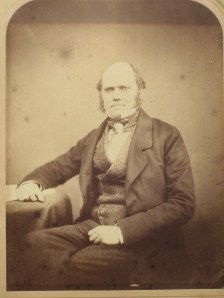
Charles Robert Darwin (1809-1882), expert in barnacle taxonomy, lived his life as an omnivorous reader, letter-writer, and pack-rat. He attended college and traveled abroad, married his cousin Emma, and settled at Down House. There he wrote books, doted on his many children, and suffered bouts of chronic dyspepsia.
We don’t remember Darwin much for these details, eclipsed as they are by his work on evolution. But they are worth noticing if only to make a simple point. Darwin did not live life in anticipation of becoming the father of modern evolutionary biology, a status that seems almost inevitable when we read about Darwin’s life now. Despite the distance of time and culture which separates us from Darwin, he went about his business much as we do: working too much, getting sick and getting better, fretting about others’ opinions, and seeking solace among his friends and family.
In spite of the scrutiny paid to evolution, or perhaps because of it, we continue to see Darwin through a glass darkly, distorted by a body of literature that, despite sophisticated analysis and a Homeric attention to details, reduces his life to the prelude and post-script of the modern era’s most important scientific theory. This is not to beat up on the “Darwin Industry” which has produced a number of superbly researched, balanced portraits of Darwin. But the nuance of such works cannot overcome the weight of Darwin as a mythic figure in the popular imagination.
So what should we remember about Darwin?
He was not the “father” of evolution. The idea that species could change over time had a long history that predates Darwin. “Transformism,” as evolution was called, had many adherents including French naturalists Comte de Buffon and Jean-Baptiste Lamarck. Even Darwin’s grandfather, Erasmus Darwin, took up the cause, defending the idea in his book Zoonomia (1794-96). But by the mid 19th century, transformism carried with it the whiff of quack science and radicalism. For the empirically-minded European naturalist, accepting transmutation of species was akin to believing in Sasquatch, an idea made all the more unpalatable because it brought with it an uncomfortable proximity to lower social classes and leftist political causes.
Darwin’s reputation rested on different grounds. He did not become the buzz of London because he supported transformism. Rather, he brought to the defense of transformism a stunning, almost overwhelming, body of evidence. In Origin of Species, published in 1859, Darwin gathered his data from a number of different fields: comparative anatomy, taxonomy, biogeography, geology, and embryology. Darwin had come to the idea of evolution relatively early in his scientific career. A sketch of an evolutionary tree appears in Darwin’s notebook in 1837. But Darwin kept his views close to his chest, amassing arguments and pieces of evidence over the next twenty years.
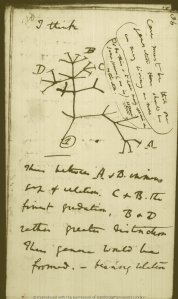
But this wasn’t the only reason why Darwin’s monograph flew off bookshelves faster than The Da Vinci Code. Origin of Species posited an entirely novel mechanism of evolution, natural selection, which explained why species change over time. According to Darwin, all populations quickly outgrow the ability of their environments to sustain them. Ultimately individuals of a species are forced to compete with one other for limited resources, winnowing the ranks of survivors to those who are best adapted to the conditions around them. These survivors pass on their successful traits to their offspring and change the constitution of the population accordingly.
Sounds tidy enough, but natural selection had to compete with a number of other possible mechanisms for evolution. For Buffon, species “degenerated” over time, moving away from their original form. For Lamarck, species changed when individual organisms become modified during their lifetimes and passed down these modifications to their offspring (also known as the inheritance of acquired characteristics). For others, evolution showed the handiwork of the Creator who nudged species, humans in particular, up the ladder of perfection.
In today’s world of creationist parks, polarized school boards, and dueling fish decals, the battle line has been drawn over the idea of evolution. Do species change over time? This is the question that sends evolutionists and biblical literalists charging down the hill at each other like the kilt-clad armies of Mel Gibson. But this was not always the case. In Darwin’s day, evolution had broad (though not universal) support from naturalists as well as liberal members of the clergy.
It was not evolution but natural selection which ruffled feathers. For many nineteenth-century Britons, natural selection seemed Deist at best and nihilist at worst. After all, what room did Darwin allow for God if nature was doing all of the selecting? As a result, many chose to believe in a theistic or “teleological” version of evolution which accepted Darwin’s evidence for evolution but rejected the mechanism he thought lay behind it.
To be fair, even Darwin had his doubts about whether natural selection could explain all aspects of species change. Later editions of Origin of Species left the door open to other mechanisms of evolution, particularly the inheritance of acquired characteristics. Only in the early twentieth century did natural selection finally win the day among professional scientists.
All of this had led some modern critics of Darwin to point out that his work falls short of certainty, that gaps in the evidence, particularly in the existence of intermediate fossils, doom the ideas of Origin of Species to the status of theory. Nothing about this charge would have upset Darwin. Indeed, he said as much himself in Origin of Species, devoting sections of the book to “Difficulties on Theory,” and “The Imperfection of the Geological Record.”
Where critics see lemons, Darwin saw lemon meringue pie (recipe circa 1847). While Renaissance scholars once aspired to certainty in the study of nature, this had changed by the 19th century as naturalists realized that the “see it with my own eyes” standard of proof worked poorly in trying to understand phenomena that took place far away or in the deep past. Indirect evidence could never yield certainty, but it could be used to develop provisional ideas that gained or lost strength on their ability to account for new data. By this standard, Darwin’s two theories, evolution and natural selection, have held up amazingly well over the past 150 years. That Darwin was comfortable in accepting his work as “theory” may seem like evolution’s Achilles heel to Creation Scientists and Intelligent Designers, but it is exactly this feature which places his research firmly within the era of modern science.
Thanks to Dr John van Wyhe, Director of The Complete Works of Darwin Online, for permission to use Darwin Online images for this post.
Other posts on Darwin:
Digital Archive: Charles Darwin
Darwin Sites and Blogs:
History of Science in the 19th Century:


 Time to Eat the Dogs