Time to Eat the Dogs
A Podcast About Science, History, and ExplorationArchive for Explorers
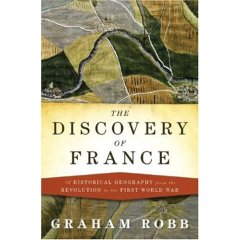
The Discovery of France
The muse is a strange bird. We try to ignore it, focus on the work at hand, and remember the mantra that “ninety percent of any project is hard work.” (The Puritans must have coined this phrase. Or Reader’s Digest? Joseph Stalin?). The muse leaves me alone in these moments of productive toil, waiting until I am without pencil or palm pilot, usually in the shower or out running in Elizabeth Park. These are, for some reason, my brightest moments. There must be a good psychological explanation for this. Whatever it is, these places form the mystic triangle of my intellectual life: study, shower, park.
But it was my son Theo who played muse yesterday. We were at the public library and I was headed downstairs with my kids when he broke away, running towards the New Books Section with the lurching gait common to 18-month-old children and drunken elderly men. I caught him in New Non-Fiction, and stood there long enough to notice Graham Robb’s new book, “The Discovery of France.”
I’m only 40 pages in, but have seen enough to realize how nicely Robb’s project connects to the ideas of exploration I wrote about in my last post. To recap: the modern era (1789-present) is filled with those who have viewed exploration narrowly as the engine of geographical discovery, a way to put people in places where they haven’t been before (or, if that’s not possible, to put white people in places where white people haven’t been before).
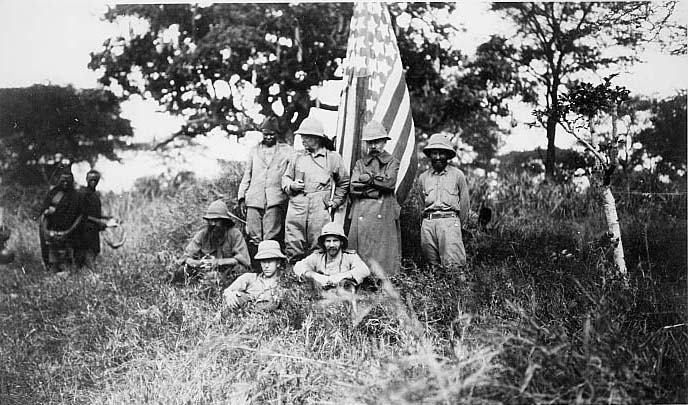
Anglo-American Hunters in Africa
Yet there have always been critics of this view from 19th century figures such as Alexander von Humboldt and Simon Bolivar to 20th century historians such as William Goetzmann. Why do we care? Many reasons. But perhaps the most compelling one is this: how we think about exploration shapes our policies on exploration. Specifically, the goal of putting humans in places they’ve never been before has gotten more difficult and more expensive. Designing craft that can hurl living beings into space and then return them, still breathing, to earth requires gargantuan sums of money. As such, they suck the life blood out of smaller, more useful, scientific projects that would give us a better, holistic, and more integrated understanding of our solar system.
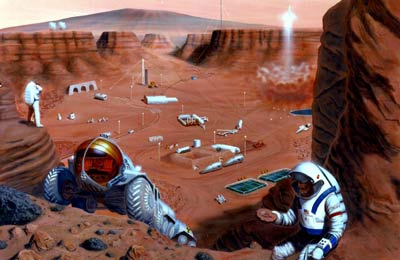
People on Mars: Expensive
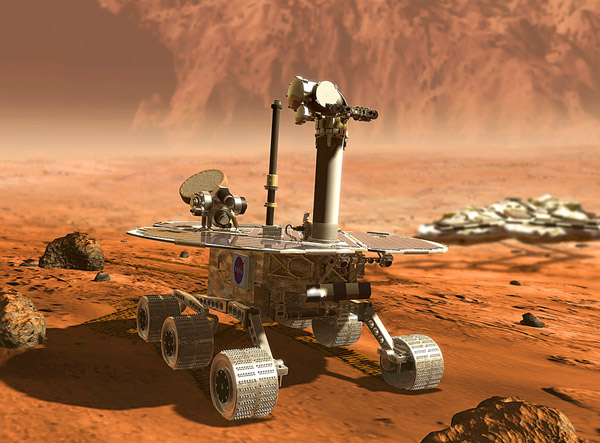
Robots on Mars: Cheap
Robb’s project has nothing to do with space. But it has everything to do with re-conceiving exploration in its broadest terms. We, the scholars of the voyage, usually apply our questions to westerners who are mucking around (and mucking up) places far from home. In this case, Robb – adopting a Humboldtian perspective – turns the question upside down: how do civilized societies explore their own backwaters and terrae incognitae? Specifically, how does rural 18th-century France appear when viewed through the looking-glass of the Enlightenment explorer? Robb’s answer: exotic at best, savage at worst, always dangerous, sometimes violent. At the moment when Versailles is sending expeditions to measure and catalog the world (by Condamine, Bougainville, and La Perouse), it is woefully ignorant of regions a carriage-ride away from Paris. It was here, in these rural regions of France that Jacques Cassini sent out observers to complete a massive survey of France and here, Robb observes, that “on a summer’s day in the early 1740s, a young geometer on the Cassini expedition was hacked to death by the natives.”
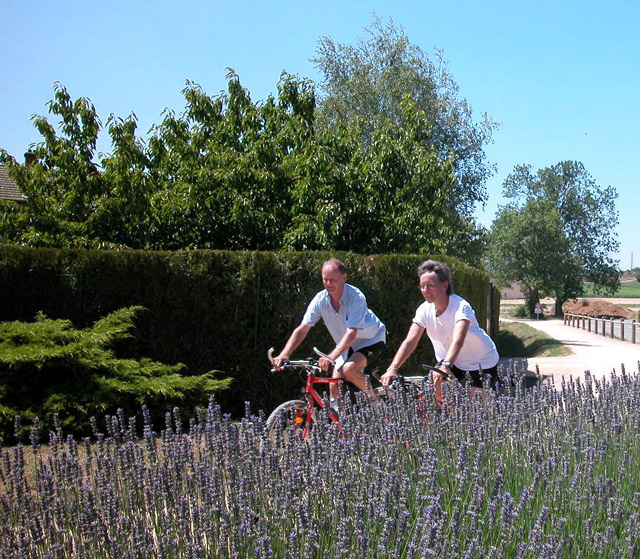
Gaul: Dangerous Country
But there is more to Robb’s project than this grisly, if delicious, irony. His book exposes the limits of one line of thinking that had become too popular in the academy, namely that exploration was a monolithic enterprise, the eager forward guard of empire, ruthlessly and efficiently preparing the way for conquest and colonization. Admittedly, there is some truth to this. But it is hard to believe that European empires were monolithically controlling anything when we learn that Paris was scarcely more in control of the province of Savoie than its far-flung colony of St Dominigue. For those who’ve drunk deeply from the well of Foucault and Said, this is something to take seriously. The “gaze” of the scientist alighted on many objects, local, as well as global, white as well as native. The pompadoured aristocrats of Paris found their “others” not only in souks of Cairo, but among the shepherds of the Pyrénées.
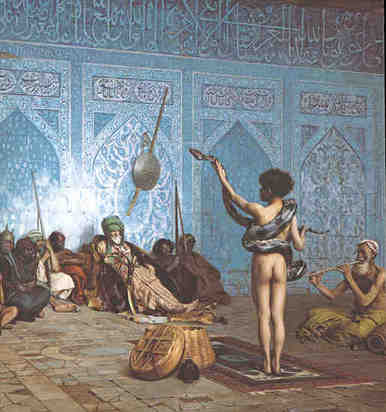
What is Exploration?

You would think I’d have figured this question out after so many years of working on it. To be honest, I don’t feel any closer to an answer than I did twelve years ago when I began a field in the history of exploration for my prelim exams. The shortest, least satisfying (and dare I say, most academic) of answers would be to say that, well, it depends.
Some think of exploration as the investigation of unknown regions, a capacious view that extends to the voyages of Christopher Columbus as easily as those of Alexander von Humboldt or Lewis and Clark. Others have given it a more precise meaning. As the OED declares, Exploration is an activity “for the purpose of discovery.” This is the view adopted by William Goetzmann in his path-breaking book Exploration and Empire (1966). In Goetzmann’s words, Exploration “is purposeful. It is the seeking. It is not the mere happenstance of discovery which “can be produced by accident.” This may not seem like an earth-shattering distinction, but it would probably be enough to cast Columbus out of the sacred pantheon of explorers. He wasn’t, after all, as interested in discovering new lands as he was finding new routes to old ones. I imagine that Columbus would have been rather peeved to learn that his West Indies were no where near Asia. Fortunately he died before Magellan figured this out.
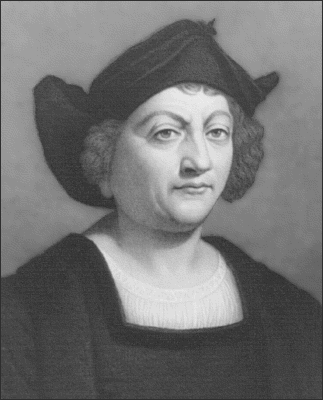
I know where I am
There are other ways that exploration means different things to different people. Many popular books on exploration treat it, more or less, as the engine of discovery, a process that culminates in the “First Footprint” (if no one is around) or the “First Encounter” (when inconsiderate natives have left footprints of their own).

But to others, these firsts are only the beginning of a longer, systematic process of investigation which may continue for years after the initial geographical discovery. Arriving in South America in 1799, one could say that Alexander von Humboldt was about 300 years too late for discovery. He spent four years trekking through South and Central America, botanizing and criticizing the Spanish regime. Such was the influence of Humboldt that Simon Bolivar called him “the true discoverer of America.”
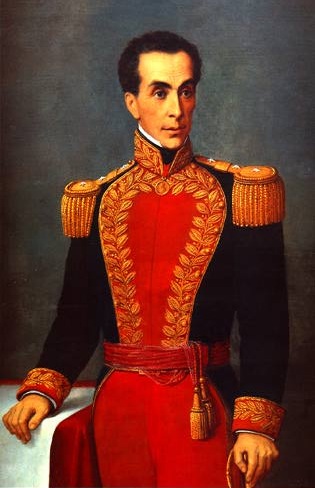
Simon Bolivar: Revolutionary and Humboldt Groupie
A century later, Hugh Robert Mill would voice similar views:
As exploration proceeds, and as it is followed up by detailed scientific study, wave after wave of knowledge flows over the earth’s surface, each forming, as it consolidates, the ground upon which the next will spread. (Mill, McClure’s Magazine (Nov 1894) 3:540)
Stated somewhat differently, Goetzmann applies this view of exploration to the American West:
The country beyond the Mississippi, as we now know it, was not just “discovered” in one dramatic and colorful era of early-nineteenth-century coonskin exploration. Rather it was discovered and rediscovered by generations of very different explorers down through the centuries following the advent of the shipwrecked Spaniard Cabeza de Vaca. (Exploration and Empire, x)
Differences in the meaning of exploration may seem like so much academic bean-counting, but they have serious consequences. One imagines, in reading George Bush’s 2004 Vision of Space Exploration, that the image of an American bootprint in the cold, red dust of Mars figured strongly in his calculations to ramp-up human exploration of the solar system.
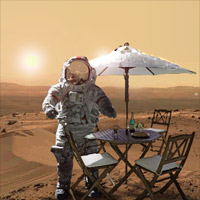
Other space scientists, however, have watched this NASA directive play out with alarm. As science budgets get cut to make room for new launch and crew vehicles (on this see this post as well as this one), the Bolivarian view of exploration gets sacrificed to “we got there first.”
On ideas of exploration, see also:
Digital Archive: Livingstone Online
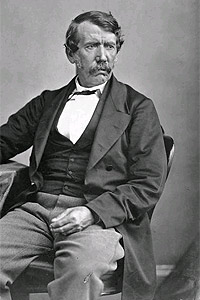
As someone more familiar with explorers from this side of the pond, my encounters with David Livingtone, British missionary and African explorer, have been mediated by others: biographers, Henry Morton Stanley, or the press reports of the New York Herald. No longer is this the case. Professor Christopher Lawrence of the Wellcome Trust Centre of the History of Medicine has established Livingstone Online, a place where you can read Livingstone’s own words, primarily letters from the holdings of Wellcome and other archives in the UK. Livingstone Online also offers good contextual background on science and medicine in 19th century British society. Taken together with Google Book’s collection of full text Livingstone works (including Missionary Travels and Researches in South Africa), we now have the key sources to uncover the man (if not, alas, the Nile).
Listen to Chris Lawrence discuss the Livingstone project here.
Let’s Get Geophysical

As some of you know, we are in the midst of the International Polar Year (IPY) 2007-2009, a global program to coordinate research in the Arctic and Antarctic. This IPY follows three earlier ones: in 1883-1884, 1932-33, and 1957-1958 (which was, technically, the International Geophysical Year IGY). The first IPY was the brainchild of Carl Weyprecht, an Austrian explorer who had grown tired of watching explorers race into the Arctic on bids to attain “Farthest North,” lose their toes to frostbite, then return home with pockets empty.

Carl Weyprecht
The “Race for the Poles” was, Weyprecht realized, a race but little else. As such, it was at odds with the needs of polar research, which required observers to stay in one place long enough to take note of what they were seeing, record measurements, and collect data. Only in this way would scientists begin to figure out how the polar regions functioned holistically, and then, how they influenced the rest of the world, particularly global weather and climates.
For over a century, science and transnational collaboration have been the twin pillars of the IPY philosophy. In combining them, scientists hoped, they could uncover the mysteries of the polar regions, all the while avoiding the need to subject their projects to the demands of the glory-hungry explorers and jingoistic leaders.
Yes, well, it was a lovely idea. In truth none of the IPYs were free from megalomaniacs (on sledges or in political office). During the first IPY, the United States outpost at Lady Franklin Bay, under the command of Adolphus Greely, dutifully collected research.
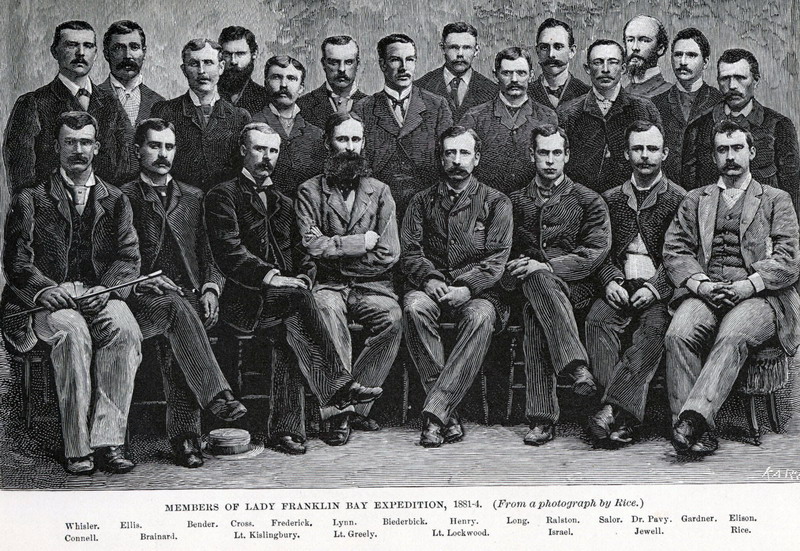
The Greely Party in 1881
That is, until, Greely saw an opportunity to beat the record of “farthest north” held by the British. Two months of sledging and 600 miles later, Greely’s party established a new “farthest north” record of 83°24,′ exactly three nautical miles farther than the one set by the Nares Expedition in 1875. Science and latitude records were forgotten, though, with the expedition’s demise from cold and starvation. The failure of relief ships to reach Greely resulted in the deaths of most of his party. Nor did the spirit of the IPY carry on after the expedition’s rescue. The impressive pile of data collected by stations all over the Arctic could not compete with reports of Greely’s incompetence, evidence of cannibalism, and the execution of a crew member for stealing food.

The Greely Party in 1884
Fifty years later, an international meteorological congress tried to resurrect the idea of scientific collaboration with IPY-2, which took a new set of questions about magnetism, the aurora, and radio science, to the poles. Yet coming as it did in 1932, in the depths of the Great Depression, IPY-2 fell short when the money ran out.
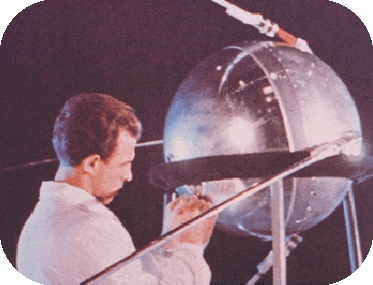
The IGY of 1957-1958, conceived in the midst of the Cold War, seemed just the kind of feel-good, collaborative effort needed to reduce tensions between East and West. Unfortunately the first offspring of IGY was Sputnik. As the tiny satellite beeped its way over the Western hemisphere, it brought tears to the eyes of Russians, and visions of nuclear-tipped ICBMs to anxious Americans.
Despite talk of science and collaboration, then, the legacy of the IPYs has featured much of the vain-glorious and nationalistic pap that Weyprecht had been trying so earnestly to avoid. What then, can we hope to achieve in IPY-4? If my experience at the IPY-sponsored North By Degree conference is any indication, I think the ultimate benefit of getting people together is, well, getting people together. No one can offer a guarantee of future accomplishments. Most IPY subjects and discussions are too wonky to make good headlines. But ultimately the international IPY is a form of social communion, a way of building relationships. We had tense moments in Philadelphia – but we all stayed in the room – and continued to talk and argue about our positions for the extent of the conference. It is from this messy back and forth, I think, that real collaborative projects grow.
Digital Archive: Charles Darwin
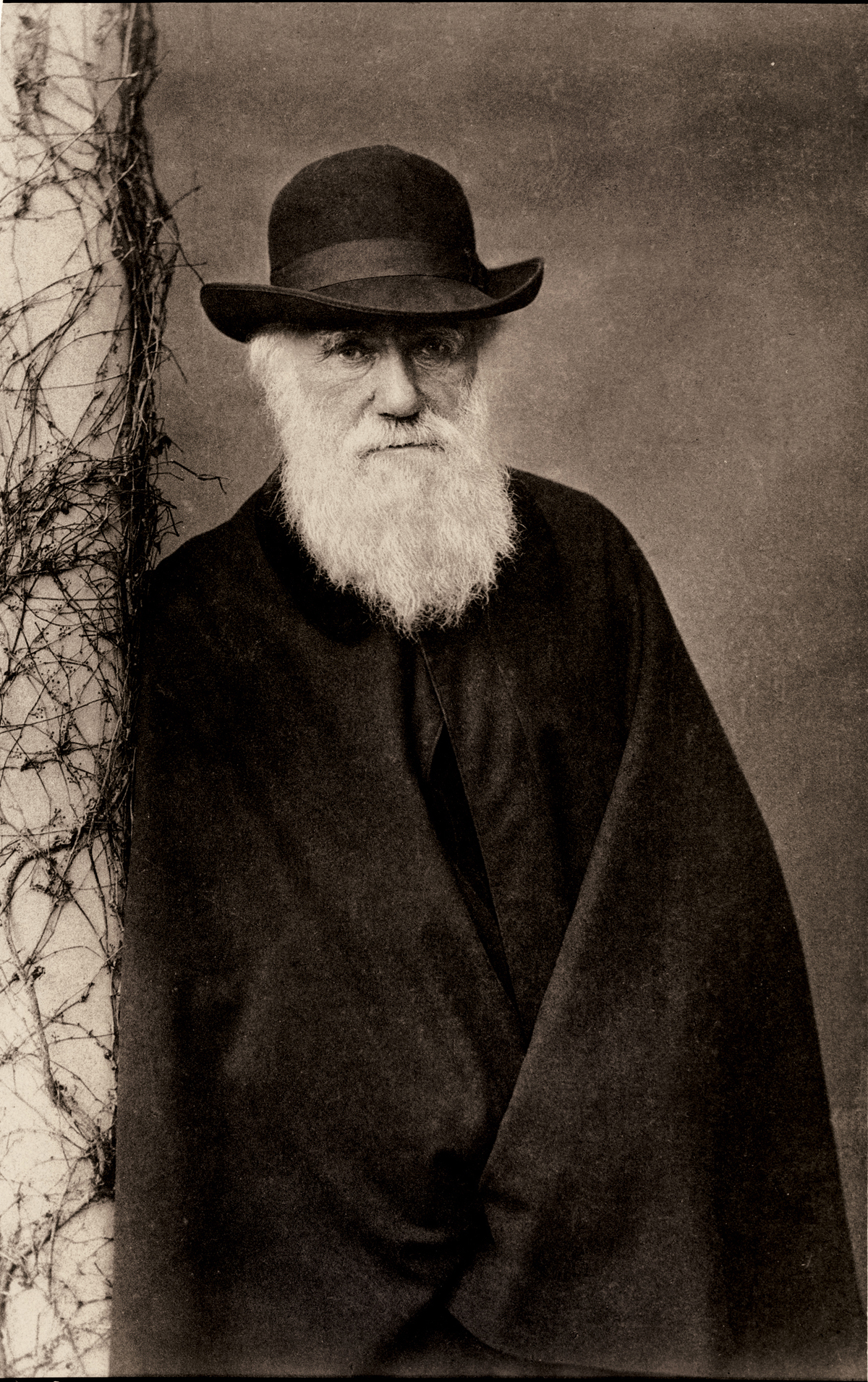
Grave, sober Darwin. The melancholic Santa, staring out at us as if we were vandalizing his sleigh. This is the Darwin we remember: the tired revolutionary, the Devil’s Chaplin, a man so afflicted by ailments that he was a prisoner of Down House where he lived. Yet Darwin’s story — and the revolution he set off — grows out of his experiences as a youthful explorer, a roving naturalist aboard HMS Beagle.
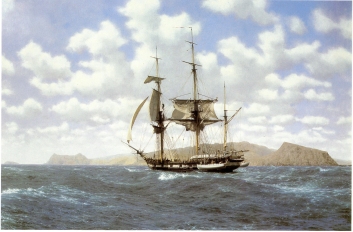
HMS Beagle by John Chancellor
We already know about the Galapagos Islands, an iconic place in the story of evolution. But the voyage of the Beagle offered Darwin many experiences that raised questions: why did the giant fossil remains of South America resemble species still living there? Why would God create two separate species of flightless birds, the Rhea and the Ostrich, on separate continents instead of just one? So much has been said about Darwin (and some of it, especially by Janet Browne, has been said so well) that I don’t feel like saying more.
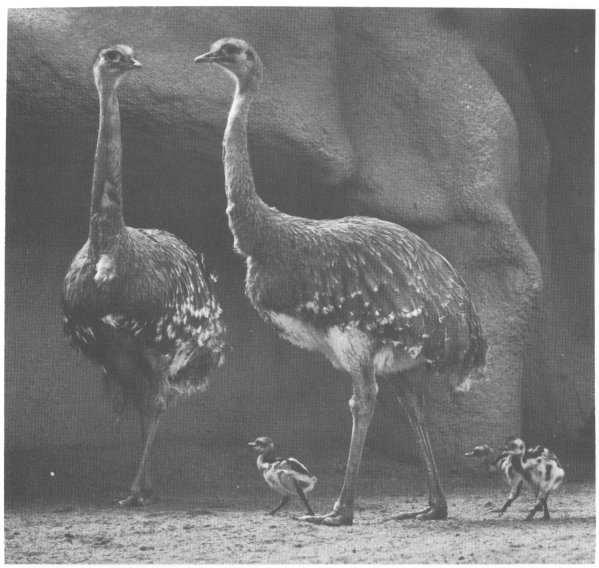
Rheas
Except that there is a website that every student of exploration should know about: The Complete Works of Charles Darwin Online. It is not simply that you can read virtually every published word that spilled from His Most Worthy Naturalist’s pen (and most of the unpublished words too), but also that you can see how Darwin’s life and work were closely linked to the work of other scientist-explorers. Here are hundreds of notes, letters, and references to Alexander von Humboldt (South America), Joseph Dalton Hooker (Himalayas), Thomas Huxley (New Guinea and Australia), and Alfred Russell Wallace (Malay Archipelago). If you find yourself moved, (perhaps mutated) by the experience, your next click should be on The Dispersal of Darwin, a blog for fans, scholars, and committed Darwinistas.
The 20th century biological revolution which was ushered in by Watson and Crick (and, it should be remembered, Rosiland Franklin) have given us a new image of the biologist as lab scientist, complete with black rimmed glasses and pocket protector.
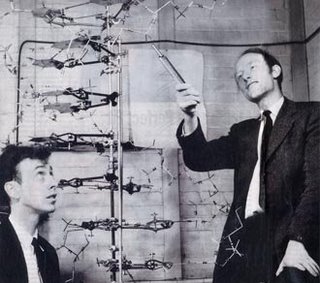
Watson and Crick: Smart, Not Outdoorsy
Let us not forget that the 19th century revolutionaries were a stunningly itinerant bunch, surveying species and ecosystems all over the globe. Darwin, in particular, was not afraid to get his boots dirty. We should remember this when we see images of the shuffling grand old man of science.
See also Darwin in Four Minutes
Visit the sites:


 Time to Eat the Dogs