Time to Eat the Dogs
A Podcast About Science, History, and ExplorationArchive for Expeditions
Digital Archive: Conrad Martens
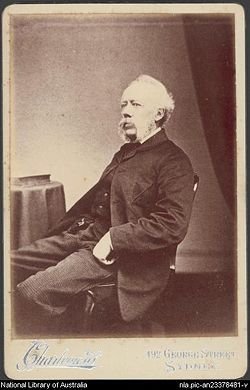
Conrad Martens
Before I starting working on the frost-bitten, scurvy-riddled, dog-eating world of Arctic explorers, I researched more inviting places, such as Valparaiso Chile, “the Vale of Paradise.” In the 19th century, Valparaiso was a popular port for European and North American voyagers, a place for crew to load up on provisions, repair hullwork, mend sails, and dive into debauchery before the long sail across the Pacific.
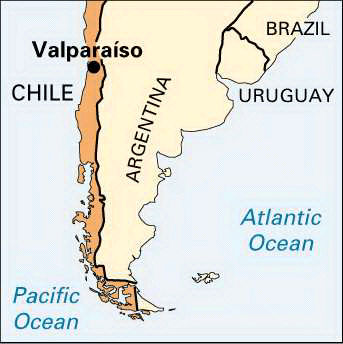
The U.S Exploring Expedition stopped here, as did the U.S. Astronomical Expedition, and even HMS Beagle, disembarcking a sprightly young, recently-graduated Charles Darwin into town for some quick surveys of the Cordilleras before heading out into the Pacific (with a minor port-of-call in the Galapagos on the way). My masters thesis “Describing the Vale of Paradise: Valparaiso Chile in the Years after Humboldt” looked at the way these various scientific expeditions talked about Valparaiso, and more importantly, how they rendered it in images.
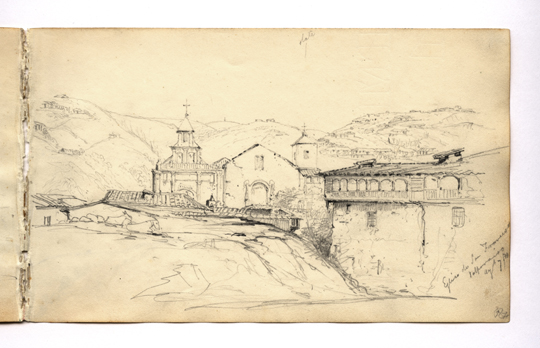
Eglise de San Francisco, Valparaiso Chile, Conrad Martens, 1834
Darwin did not leave much in the way of illustrations of the town, but the Beagle’s draughtsman, Conrad Martens did. Martens’ landscapes are quiet, almost languid, places, a world apart from the pulse-pounding wind-swept, volcano-erupting landscapes of his fellow Romantics. As I sat in the stacks of the Wisconsin Historical Society looking at these far away places, they gave me a feeling of Darwin’s world…an imperfect impression to be sure, but a feeling nevertheless. Thanks again to the Beagle Project Blog, great conduit of all things Darwin, I have learned that Martens work is now available for all to see at the Cambridge University Library’s website. They have scanned two of the four extant Martens sketchbooks made from the voyage. They include, be still my heart, lovely Valparaiso.
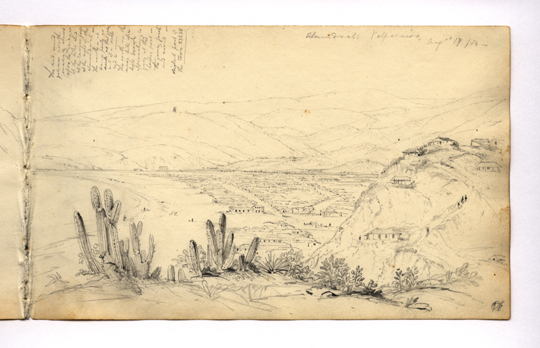
View of Valparaiso from the Bluffs, Conrad Martens, 1834
Voyage to Pittsburgh
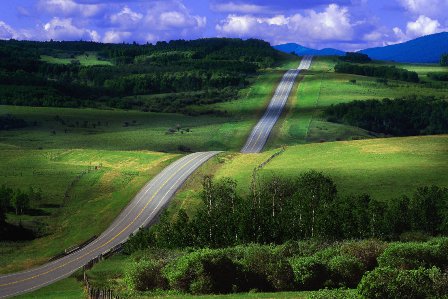
Tomorrow I leave for the History of Science Society Annual Meeting in Pittsburgh. I thought I would save a few bucks by driving, since Connecticut is practically neighbors with Pennsylvania (apart from a small wedge of New York). But I didn’t factor in that Pittsburgh is at the western extreme of the state, closer to West Wheeling, West Virginia than Hartford CT, an embarrassing oversight for someone who claims to know something about U.S. geography and exploration. So I will pay for my mistake by sixteen and a half hours of donuts and talk radio. I’m bringing my camera to chronicle the journey. I will try to post while I’m in the field (or at the conference) so until then, happy travels.
Routes Up the Mountain
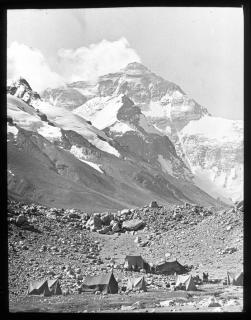
Mt Everest, 1924 Expedition, by Bentley Beetham
Two weeks ago I wrote a post criticizing the modern commercial ethos of Himalayan climbing. As I continue to dig deeper into the history of Himalayan climbing (guided by the excellent book Fallen Giants), I am beginning to realize what diverse motives brought western climbers into the Himalayas and Karakorum. Nineteenth century climbers, like Arctic explorers, saw climbing in romantic and nationalistic terms, but they also viewed it in other ways as well.
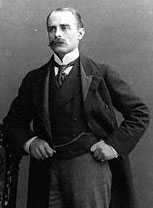
Francis Younghusband
The story of Sir Francis Younghusband, British Army officer, shows the importance of empire in the exploration of these regions. In addition to adding to the West’s geographical knowledge of these distant ranges, Younghusband spent his days outmanovering the Russians and trying to occupy Tibet. Yet Younghusband was, as modern climbers go, rather atypical. He did not seek to summit peaks as much as to survey and move through ranges. As much as he was an agent of empire, he was also deeply affected by the mystical traditions of India and Tibet.

Aleister Crowley
So too was Aleister Crowley, whose role in the failed K2 expedition of 1902 has been eclipsed by his reputation as “The Great Beast 666,” and “The Wickedest Man in the World.” Crowley’s love of mountains was life-long and also an opportunity for spiritual reflection.

Albert Mummery
Alfred Mummery, on the other hand, saw mountains as the testing grounds for technical climbing and technological advancement. Mummery, inventor of the Mummery tent, first attempted to climb Nanga Parbat in 1895 and died in the attempt. It seems that Mummery viewed mountains tactically, rather than strategically, and thus, as Steward Weaver tells it, failed to see the Himalayas in their proper scale. For Mummery, the Himalayas were an overgrown version of the Alps.

Alexander Kellas
Still others, such as Alexander Kellas, were “traversers” climbing up one side of the mountain and down the other – an enormously difficult and dangerous thing to do on 8000 meter peaks. Kellas spent his time on the mountain trying to figure out the physiology of altitude sickness, leading to new ideas about mountain acclimatization. One wonders what Kellas would have observed from the Royal Geographical Society’s Everest expeditions in the early 1920s. He died before reaching Everest base camp in 1921.
Readers who find these stories interesting should check out Bill Buxton’s excellent online mountain bibliography.
Digital Archive: James Cook
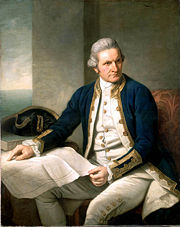
Captain James Cook
In his book New Lands, New Men, William Goetzmann describes the 18th and 19th centuries as the “Second Age of Discovery.” The First Age of Discovery, kicked off by the Mediterranean powers of the 15th century, developed maritime routes to Africa, Asia and the Americas. Best known of these early discoverers is Christopher Columbus who sought to extend Spanish dominion, proselytize natives, and bring home piles of loot, objectives followed by his 16th and 17th century successors.
By the 18th century, however, the goals of exploration had changed. Empire and commerce still had their place in voyages of discovery, but they increasingly made room for other, secular objectives such as natural history, ethnography, and natural philosophy, changes that reflected new attitudes about knowledge and learning back home in Europe.
Captain James Cook, who led three expeditions to the Pacific in the 1760s and 1770s, became the poster-child of Enlightenment voyaging. Of modest birth and education, Cook was not himself a philosopher of nature. But his command of three discovery expeditions – to study the transit of Venus, discover the extent of the Antarctic continent, and investigate the possibility of a Northwest Passage – set the benchmark for scientific expeditions to come over the next century. Cook’s chronicles and those of his men of science (Joseph Banks and Johann Forster) provided models for the expeditions of Jean-Francois de la Perouse (France), Alessandro Malaspina (Spain), and Charles Wilkes (United States) among others.
Cook’s serendipitous discovery of the Hawaiian Islands in 1778 (which he named the Sandwich Islands) was also, ultimately, the cause of his demise. After a series of quarrels with Hawaiians of the Big Island, Cook was killed in a skirmish with islanders on the beach of Kealakekua Bay.
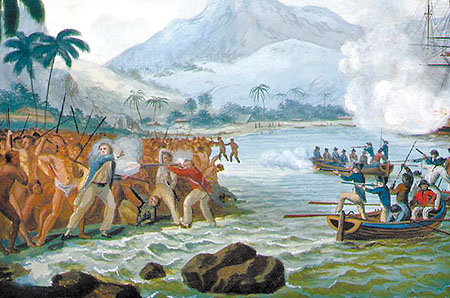
The Death of Cook
The National Library of Australia and the Center for Cross-Cultural Research have developed an impressive website on Cook’s legacy, South Seas: Voyaging and Cross-Cultural Encounters in the Pacific. Focusing on Cook’s first voyage, South Seas offers accounts from Cook, Joseph Banks, Sydney Parkinson, and John Hawkesworth. A world map of Cook’s route allows the viewer to zoom in features of interest, identifying the dates of Cook’s passage, landfalls, as well as diary entries for dates mentioned. A set of four “Cultural Atlases” offer maps and descriptions of the native peoples which Cook visited in Tierra Del Fuego, the Society Islands, Botany Bay, and Endeavour River. South Seas also offers some indigenous histories and European reactions to Cook’s voyage.
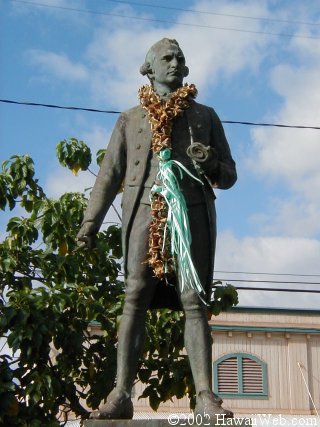
Cook welcomes visitors to Waimea, West Kauai
There are a few “links to nowhere” on South Seas. Perhaps the project ran out of funding before it was fully completed. But even in its unfinished form, there are gems here for the student of Enlightenment voyaging.
Also on Cook see:
The Mariner Museum’s Age of Exploration
The Historical Record of New South Wales on Google Books
Many of the full text books on South Seas are also available on Google Books for viewing or download
The Coldest Crucible: Web Simulcast
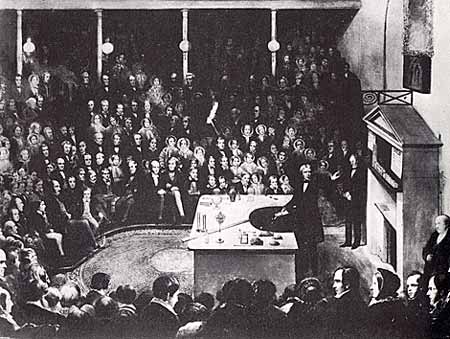
I’m at the University of Delaware this week to give some lectures related to my book, The Coldest Crucible. My Wednesday night talk will be simulcast on the web (and on Second Life, a world I have never visited). The lecture starts at 7:30 EST and goes for about an hour. I think the webcast will be archived if you have something more pressing to attend to at 7:30 like open heart surgery. For everyone else, I expect to see you there. Wish me luck!


