Time to Eat the Dogs
A Podcast About Science, History, and ExplorationArchive for Expeditions
Asia on Top
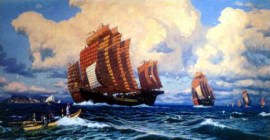
Zheng He's fleet sailing the Western (Indian) Ocean, 1405-1433. 20th century painting, artist unknown.
Exploration seems an inclusive concept, a big-tent activity that admits anyone with a geographical goal and a good pair of shoes. But like most terms, exploration has hidden meanings and rules, ones that restrict certain places, people, and activities.
For example, Americans have made a national mythology out of exploration, creating a genealogy of pioneers and explorers that extends from Lewis and Clark in 1804 to Neil Armstrong in 1969. Were extraterrestrials listening in to the speeches of the 2008 Democratic National Convention, they would be forgiven for thinking that Americans single-handedly discovered the world. (For more on exploration talk at the DNC, read this)
Yet even the most blinkered American manifest-destinorians would have to extend the “spirit of exploration” to Europeans. Otherwise they would have to exclude the Renaissance all-stars of exploration, Christopher Columbus, Vasco da Gama, and Ferdinand Magellan, from their ranks.
Protestant Americans wrestled with exactly this issue in the 19th century, ultimately deciding to embrace southern European explorers as a part of their own cultural heritage. In their favor, Columbus and his successors were white Christians, even if they suffered from being papists, speaking Spanish and Italian, and drinking wine on Sundays.
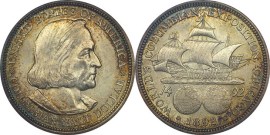
Columbian Exposition Commemorative Half Dollar, 1892
But this is about as inclusive as Americans have been willing to get. Expeditionary activities of African and Asian nations are duly reported of course. Western press agencies keep us apprised of the South African National Antartic Programme (SANAP) and the Chinese Shenzhou Space Program. But one detects in western press coverage a view that these accomplishments are adaptations to a Western philosophy of discovery, a mimetic activity rather than something which expresses core features of Asian or African culture.
Put differently, exploration has become the symbolic equivalent of baseball, an activity played all over the world, but still seen in the U.S. — now and forever more — as an archetypally American game (debts to cricket aside).
Were we to sit down with early European navigators in the 15th century, I think they would be astonished by all of this Euro-American strutting and preening. After all, exploration took off in Europe because Europeans felt they were being pushed off the stage of world events.
Despite the pageantry of statues and paintings, the European Age of Discovery was less about curiosity than fear and admiration, an appreciation for non-European powers, particularly in Asia, that held the keys to European collapse or prosperity.
For medieval Europeans, the Orient was the center of the world. It was the font of Judeo-Christian religious history, the site of the Holy Land. It was the center of global commerce and trade, particularly luxury items. While Frankish farmers ate mutton and plowed their fields in scratchy woolens, Marco Polo enchanted readers with stories of silks, teas, and concubines from Cathay.
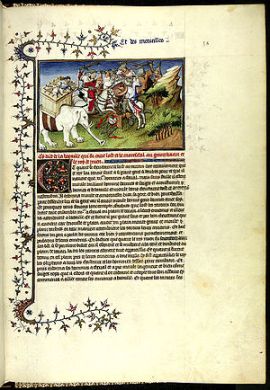
Travels of Marco Polo, manuscript page, 1298
Meanwhile Crusaders brought back cinnamon and clove from the Spice Islands and cottons from India. As for geopolitical power, any Pole, Serb, or Castilian from the late Medieval period would have stories to tell about the powerful pagans of the East. One forgets that before the centuries of European hegemony, European border kingdoms were continually reacting to events from empires East: Mongols, Persians, and Ottomans.
Evidence for this comes from many sources. The importance of the East is pounded into the English language of geography. For example, the word for Eastern lands “Orient” (Chaucer, 1375 CE) soon begot words of directionality such as “orientality” (Browne, 1647 CE) and “to orient” (Chambers, 1728 CE).
Moreover, European cartography expressed a Eastern-centric vision of the world. European T-O maps produced in late medieval Europe usually faced East and centered on Jerusalem. It was common for such maps to also overlay important religious symbols such as the body of Christ or the sons of Noah on the world’s continents.
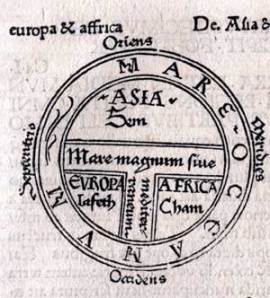
T-O map from the Etymologiae of Isidorus, 1472. Asia is on top, Europe is bottom left, Africa is bottom right. The names of Noah's sons are placed under each continent.
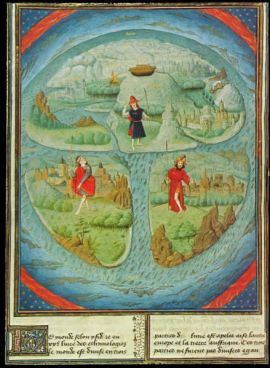
Mappa Mundi showing Noah's ark and three sons on three continents in La Fleur des Histoires, Valenciennes, 1459-63
European conquests in Asia and America in the early 16th century did much to boost European self confidence. (See for example, Abraham Ortelius’s frontispiece for his 1580 Atlas in my post on cannibalism)
There is much more to be said about Asia in the history of exploration, particularly 19th century conceptions of the East and Edward Said’s influential work Orientalism. All of that will have to wait for another post though. For now, here are a few links on history, travel, and exploration in Asia:
The Silkroad Foundation “The Bridge Between Eastern and Western Cultures”
The Athena Review Journal of Archeology, History, and Exploration
Astene Association for the Study of Travel in Egypt and the Near East
The F-Word
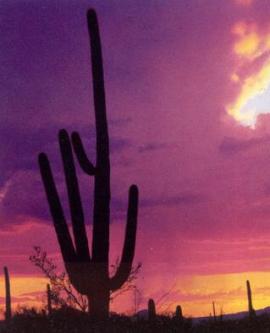
The word “Frontier” lives a double-life. In the public world of bookstores and Star Trek episodes, it carries itself with bearing, symbolizing something wild and lawless, a place of promise, adventure, and renewal. Within the Academy, however, “frontier” carries the whiff of the disreputable, a word that has fallen into disuse. Once praised and powerful, it now stoops on stair-landings to rest.
The decline of the “frontier” within the Academy has been long and precipitous. Made famous by Frederick Jackson Turner’s 1893 essay “The Significance of the Frontier in American History,” it’s been the inspiration of dozens of books and hundreds of articles.
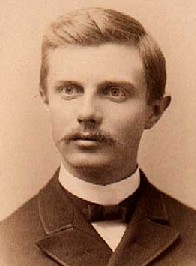
Frederick Jackson Turner
Why? Because Turner linked the frontier to the story of American progress, arguing that it rejuvenated American culture by placing pioneers into contact with the wild, savage world at the edges of civilization. In the process, pioneers had to break from the strictures of the civilization they left behind and re-imagine life from the ground up. In the process, Turner argued, they recapitulated the long arc of human society from savagery to civilization, infusing American society with the energy of their innovations.
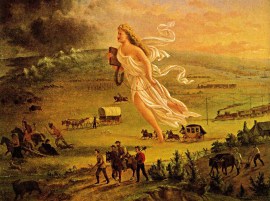
American Progress, John Gast, 1872
The frontier thesis was (and in some quarters, still is) seen as a compelling story of American uniqueness. In it, supporters found a story to justify a view of Americans as a special, exceptional people.
Still, the frontier thesis found itself under attack from many quarters. In the 1980s, New Western Historians argued that the frontier thesis did not accurately present the progression of changes in the West, nor did it explain the broader arc of American progress. Moreover, frontier was a word that privileged one perspective in the story of the West: the pioneers who viewed these lands as wild and savage rather than the indigenous peoples who called them home.
Between those supporting the thesis and those criticizing it, discussion of the Frontier Thesis seemed to be everywhere, a subject so fecund that it threatened to overwhelm all other subjects within the discipline. All of this ultimately led historian Patricia Limerick to label “frontier” as the F-Word, a term that had become a hindrance, rather than a help, to historian scholarship.

Patricia Limerick
What to do? In her 1992 book Imperial Eyes, Mary Louise Pratt abandoned the term frontier, replacing it instead with the phrase “contact zone,” a less loaded term for the place of encounters between indigenous peoples and Euro-Americans.
I see the wisdom in Limerick and Pratt’s decisions. And yet still, I think there’s still a place for frontier, particularly within the field of the history of exploration. Limerick is right to argue that frontier is a loaded term, one that brings with it a particular tilt. It shares this ground with other loaded terms such as “discovery” and “exploration,” concepts which only make sense from the perspective travelers rather than natives.
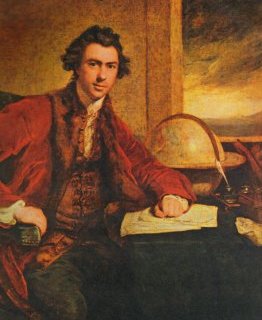
Joseph Banks
Yet by definition, stories of exploration adopt the perspective of people traveling into the field. For expeditionary scientists — such as Alexander von Humboldt, Joseph Banks, Charles Darwin, and Alfred Russell Wallace — the grand stage of global travel did represent frontiers, places of profound mystery, inspiration, and otherness.
That their perspective represented a limited frame of reference is clear. Still, within this frame of reference, we see powerful transformations of thought and identity. Expeditionary letters and field sketches express the weight of these events, the frontiers of new experience.
On Cannibalism
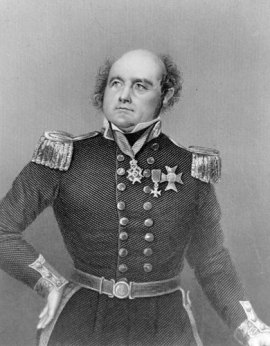
Sir John Franklin
In 1845 the Franklin Expedition sailed from England as the jewel of British polar enterprise. With 129 men and two steam-powered, hull-reinforced ships, HMS Erebus and HMS Terror, the Franklin Expedition promised to deliver on the centuries-long search for the Northwest Passage.
Sir John Franklin, expedition commander, was one of the toughest, most experienced veterans of the fleet. A previous overland expedition to the polar sea had brought him to the edge of starvation and fame back in England as “The Man Who Ate His Own Boots.”
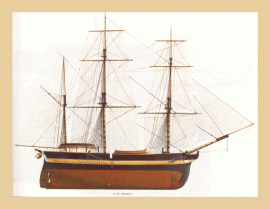
H.M.S. Erebus
Thus it was surprising when Franklin did not return from the Arctic in 1846 or 1847. In 1848, with still no word, the Admiralty sent a series of expeditions to look for him, focusing on the northern coast of America and islands off its shores. They found no sign of the expedition. Lack of news deepened the mystery surrounding the lost expedition and fueled public interest.
In 1850, the discovery of Franklin’s winter camp on Beechey Island gave hope to those that thought the expedition had traveled further west (or perhaps North into the Polar Sea) and was still intact.
But Dr. John Rae, of the Hudson Bay Company, had grisly news to report in his dispatch to the Admiralty on 29 July 1854:
During my journey over ice and snow this spring…I met with Esquimaux in Pelly Bay, from one of whom I learned that a party of “white men” (Kabloonas) had perished from want of food some distance to the westward… From the mutilated state of many of the corpses, and the contents of the kettles, it is evident that our wretched countrymen had been driven to the last resource, — cannibalism — as a means of prolonging existence.
Rae’s report touched off a furor in Britain. Charles Dickens, editor of Household Words, could not believe that Franklins’ men would have resorted to such behavior, even on the verge of death. Instead, he advanced the theory that the Inuit had probably set upon the dying party themselves.
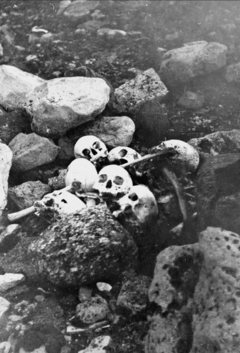
Remains of the Franklin Party, King Williams Island, 1945
To the modern reader, the idea of eating human flesh for reasons of survival seems understandable if rather unpalatable. Why, then, was Dickens so outraged? Thirty years later, Americans would express similar outrage when the New York Times revealed evidence of cannibalism during the Greely Expedition to Lady Franklin Bay (1881-1884).
Of all of the behaviors associated with savagery in the 19th century, none carried the same freight as cannibalism. Since Columbus returned to Europe in 1493 with reports about the man-eating propensities of the Caribes, Europeans viewed cannibalism as a marker of human societies at the lowest rung of civilization. (Even the name cannibalism is indelibly tied to the native peoples of the Americas since it derives from “Canibes,” a variant of Caribes, which is the etymological root of Caribbean).
When Abraham Ortelius published the world’s first commerical atlas in 1580, Theatrum Orbis Terrarum (Theater of the World), he included a frontispiece with goddesses for each of the known continents. As Europe sits preeminant at the top of the columns, flanked by the “semi-civilized” societies of Asia and Africa, America reclines naked at the bottom, holding an arrow and cradling a human head.
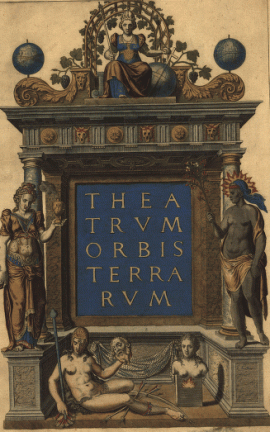
Frontispiece, Theatrum Orbis Terrarum, Abraham Ortelius, 1580
Maps of the New World showed figures of cannibals with the frequency of mountains and palm trees, even though few of these scenes were based upon eyewitness reports.
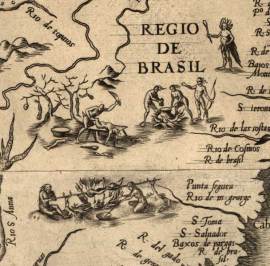
Cannibals, detail of Diego Gutiérrez, Americae sive qvarta e orbis parties nova et exactissima description, 1562
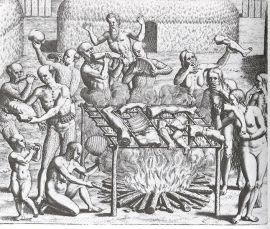
Cannibals in Brazil, Hans Staden, 1557
Cannibalism gave New World narratives of exploration a bit of spice. But more importantly, it confirmed an idea that was already widespread: that Europeans existed on a different level of civilization and that the occasional injustices of European colonization still represented a step forward for the “savage peoples” of the Americas.
As the 19th century witnessed an increasing number of accounts of white explorers caught eating their own kind, the dissonance was sometimes too much. Dickens remains convinced that Franklin’s men had fallen prey to some other fate. And as for the decimated, half-eaten corpses of the Greely Expedition? After quick discussion with the Secretary of the Navy, Greely informed the press that the bodies had been used as “bait” for capturing shrimp.
This and That

Beware of Hartford, place of pestilence. Flu has moved through my campus like a gasoline fire, with over 100 students out of class. At the same time, a weird and malevolent norovirus is moving through the Hartford public school system, cleaning out classrooms while janitors run screaming. If this wasn’t enough, my son’s daycare was almost empty yesterday because he, along with half of his classmates, came down with conjunctivitis (the rest were out with stomach flu). I call myself lucky. Feverish, brain stuffed with cotton, I’ve made it through with a maniacal head-cold.
No heavy thoughts today, then, just some places to visit:
Interdisciplinarity is a term that gets approving nods from most academics. We should all work together! But it usually ends here. On the table of academic bounty, interdisciplinarity is the curly parsley: lovely to look at, but no one ever eats it.
Yet Andrew Stuhl’s interesting post on interdisciplinarity lays out some of the efforts being made across the disciplines. Maybe there is reason to hope.
The Arctic Blue Books Online represents a massive trove of British reports on Arctic expeditions in the 19th century. Cataloged with care and prodigious effort by Andrew Taylor, the 6000+ pages of the Blue Books are now available online along with Taylor’s helpful indexes and finding aids. Where else can one find index references to “Cannibalism” and “Calves Foot Jelly” in the same place?
Finally, Peter Etnoyer of Deep Sea News tells us that the narrative and scientific reports of Challenger Expedition (1872-76), a stunningly ambitious attempt to sound, trawl, fish, and net a new science of the sea, are currently online (along with lovely image scans) here.
This week we remember British explorer Charles Darwin who turns 200 on Thursday. For those living close by, I’ll be giving a lecture tonight at U Conn-Avery Point on Darwin in the Age of Exploration (Branford House). Good pictures and free coffee to those who attend.
Why Expeditions Fail
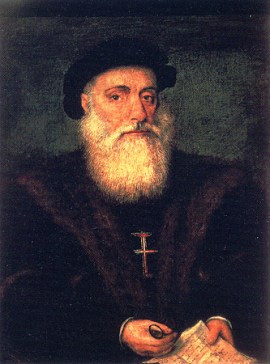
Vasco da Gama by Gregorio Lopez, 1524
It almost goes without saying that exploration is dangerous work. Vasco da Gama left for India with 180 men. He returned to Portugal with 60. John Franklin’s 1845 expedition to discover the Northwest Passage resulted in an impressive 100% fatality rate. Even expeditions to places well-mapped and long-traveled carry risk. Planning an ascent of K2 in the Karakoram Range? Chances are better than 1 in 4 that you will die in the attempt.
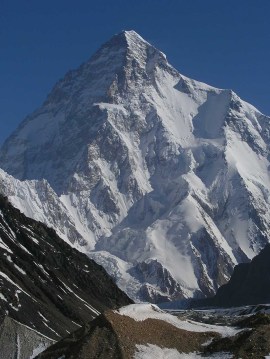
K2, Karakoram Range, India
Where does danger lurk? One immediately thinks of physical and biological hazards, of gale-force winds, hull-crushing pack ice, capricious avalanches, & malarial fevers.
But these forces are only efficient causes, the sharp edge of the reaper’s scythe.
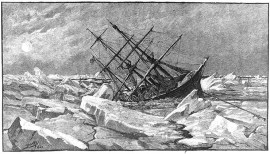
The Sinking of the Jeannette, based on a sketch by M. J. Burns, 1881
When 37 Americans died in two Arctic expeditions from 1879-1884, it was clear to everybody that the men died from starvation and exposure (well, mostly: one man drowned and another was shot for stealing food). But most Americans looked beyond these causes to contributing factors, to poor ship design and faulty relief efforts.
Yet if we look more closely, we see that, more often than not, the expedition party itself is largely to blame for its own failures. Reading the historical record, it becomes clear that one of the most difficult tasks of expeditionary life was not weathering the elements but enduring one’s peers. The 1870 Polaris Expedition to the North Pole fell apart when its pious and imperious commander Charles Hall suffered convulsions (and ultimately died) after drinking arsenic-laced coffee (probably prepared by his disgruntled science officer).
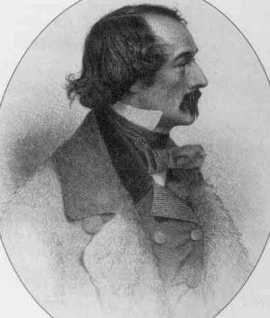
Elisha Kent Kane
For most of the nineteenth century, Elisha Kane was America’s celebrity explorer, a man revered for his eloquence, cultivation, and high-mindedness. Most of Kane’s men, however, thought he was an insufferable prig. Indeed, more than half of his crew turned against Kane in the Arctic, attempting to escape the Arctic without his approval. Almost all of this was hidden from public view, expunged from the narratives of the expedition written by Kane and his men.
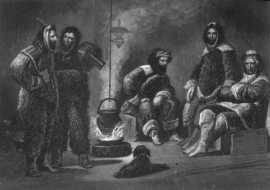
The Kane Party, 1854
Still one gets subtle glimpses, even from Kane’s own work. The image above was published in Kane’s best-selling narrative of his expedition, Arctic Explorations. In the scene, Kane sits in the center, surrounded by his officers. Kane looks weary and somewhat annoyed, staring down to the right. On the right, two of his officers stare forward towards the viewer, looking at different points. On the left, two other officers are engrossed in conversation, one with a shotgun slung over his shoulder. Whispering about plans perhaps? Indeed, the only one in the scene looking admiringly at Kane is his dog. Or perhaps he’s just hungry.
These might seem like sepia-colored anecdotes from long ago. But expeditions continue to live or die on the ability of their members to get along, to communicate well, and to improvise effectively when things go wrong. Such is one of the findings of Michael Kodas who wrote about last year’s debacle on K2.

Artist rendition of Crew Exploration Vehicle (CEV) leaving Earth orbit
With this in mind, I wonder how much “unit cohesion” is on the minds of NASA’s administrators as it plans its mission to Mars. Two years is a long time to spend in a capsule with one’s mates, even with DVDs.


