Time to Eat the Dogs
A Podcast About Science, History, and ExplorationArchive for November, 2008
Thank You FHSA

This morning the Forum for the History of Science in America presented me with their 2008 Book Prize for my book The Coldest Crucible. Officer Paul Lucier presented the prize:
On behalf of the membership and officers of the Forum for the History of Science in America, it is my pleasure to announce that the 2008 Forum Prize Committee has unanimously agreed to award this year’s book prize to Michael F. Robinson for The Coldest Crucible: Arctic Exploration and American Culture, published in 2006 by the University of Chicago….this is a history of science of a very different sort. Instead of focusing on how the explorers collected specimens or tried to map the icy unknown, Robinson explains, in very clear and refreshingly concise fashion, how the Arctic and its explorers tried to collect sponsors and funding, and how they tried to present themselves and their expeditions as relevant to a large public.
My last time in Pittsburgh was in 1998, also at a History of Science meeting. It was the occasion of my first academic paper. I read it, hunched over a podium, to four elderly men in varying states of consciousness. I was tense, the paper was dry, but I don’t think anyone was awake enough to notice. The paper made me wonder why I spent so much time working on these subjects when no one was ever going to read or care about them.
It feels particularly good, then, to receive this award in Pittsburgh (at the same hotel no less). Thank you FHSA! Thanks too to for the generous write-ups in the Hartford Courant and the University of Hartford’s UNotes Daily.
Voyage to Pittsburgh
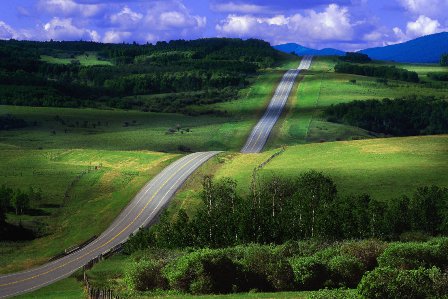
Tomorrow I leave for the History of Science Society Annual Meeting in Pittsburgh. I thought I would save a few bucks by driving, since Connecticut is practically neighbors with Pennsylvania (apart from a small wedge of New York). But I didn’t factor in that Pittsburgh is at the western extreme of the state, closer to West Wheeling, West Virginia than Hartford CT, an embarrassing oversight for someone who claims to know something about U.S. geography and exploration. So I will pay for my mistake by sixteen and a half hours of donuts and talk radio. I’m bringing my camera to chronicle the journey. I will try to post while I’m in the field (or at the conference) so until then, happy travels.
Routes Up the Mountain
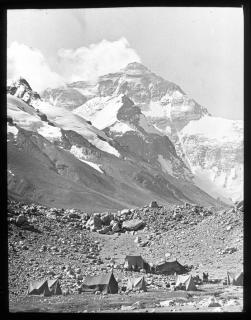
Mt Everest, 1924 Expedition, by Bentley Beetham
Two weeks ago I wrote a post criticizing the modern commercial ethos of Himalayan climbing. As I continue to dig deeper into the history of Himalayan climbing (guided by the excellent book Fallen Giants), I am beginning to realize what diverse motives brought western climbers into the Himalayas and Karakorum. Nineteenth century climbers, like Arctic explorers, saw climbing in romantic and nationalistic terms, but they also viewed it in other ways as well.
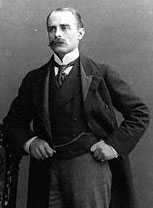
Francis Younghusband
The story of Sir Francis Younghusband, British Army officer, shows the importance of empire in the exploration of these regions. In addition to adding to the West’s geographical knowledge of these distant ranges, Younghusband spent his days outmanovering the Russians and trying to occupy Tibet. Yet Younghusband was, as modern climbers go, rather atypical. He did not seek to summit peaks as much as to survey and move through ranges. As much as he was an agent of empire, he was also deeply affected by the mystical traditions of India and Tibet.

Aleister Crowley
So too was Aleister Crowley, whose role in the failed K2 expedition of 1902 has been eclipsed by his reputation as “The Great Beast 666,” and “The Wickedest Man in the World.” Crowley’s love of mountains was life-long and also an opportunity for spiritual reflection.

Albert Mummery
Alfred Mummery, on the other hand, saw mountains as the testing grounds for technical climbing and technological advancement. Mummery, inventor of the Mummery tent, first attempted to climb Nanga Parbat in 1895 and died in the attempt. It seems that Mummery viewed mountains tactically, rather than strategically, and thus, as Steward Weaver tells it, failed to see the Himalayas in their proper scale. For Mummery, the Himalayas were an overgrown version of the Alps.

Alexander Kellas
Still others, such as Alexander Kellas, were “traversers” climbing up one side of the mountain and down the other – an enormously difficult and dangerous thing to do on 8000 meter peaks. Kellas spent his time on the mountain trying to figure out the physiology of altitude sickness, leading to new ideas about mountain acclimatization. One wonders what Kellas would have observed from the Royal Geographical Society’s Everest expeditions in the early 1920s. He died before reaching Everest base camp in 1921.
Readers who find these stories interesting should check out Bill Buxton’s excellent online mountain bibliography.


 Time to Eat the Dogs